



Winter hits different when your house actually feels warm. Not just the thermostat kind of warm, but that deeper comfort that makes you want to stay in on Saturday nights.
These seven warm home touches won’t cost a fortune or require calling contractors. Most you can do this weekend with stuff from Target or things you already own but haven’t thought to use differently.
- Soft Textiles: Blankets and throws that actually make you warmer, not just Instagram-ready
- Warm Lighting: Ditching the overhead fluorescents for something that doesn’t feel like a dentist’s office
- Natural Elements: Plants and wood that survive winter indoors
- Personal Touches: Your actual stuff, not catalog-perfect styling
- Cozy Scents: Candles that smell like something, not “clean linen”
- Comfortable Seating: Places you’ll actually want to sit for more than five minutes
- Warm Drinks Station: Because hunting for tea bags in three different cabinets kills the mood
1. Soft Textiles for Layered Warmth
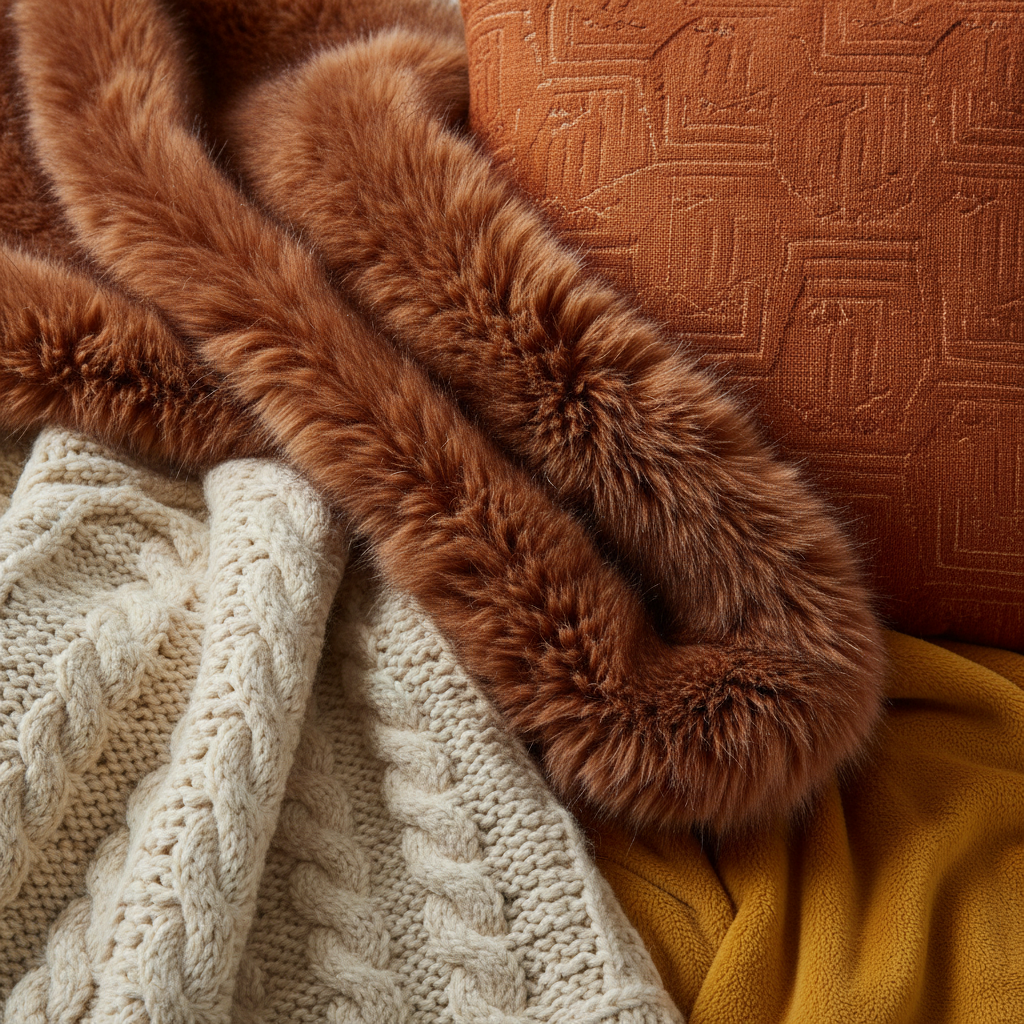
Blankets are the easiest fix for a cold house. But there’s a difference between the scratchy throw your aunt gave you and something that actually adds warmth.
Start with what you can feel. Wool keeps you warmer than cotton, obviously, but a chunky knit cotton throw from West Elm works fine if wool makes you itchy. The Pendleton blankets at Costco run around $40 and last forever. Faux fur throws look expensive but IKEA’s TEJN costs maybe $15 and feels surprisingly decent for what’s basically fancy polyester.
Layer different textures instead of matching everything. A nubby linen pillow next to a velvet cushion creates visual interest through thoughtful interior styling. Your couch doesn’t need to look like a hotel lobby.
Rugs matter more than you think, especially if you have hardwood floors. Those thin decorative rugs do nothing. Get something with actual pile. The Safavieh rugs on Amazon aren’t gorgeous but they’re thick enough to make bare feet happy. An 8×10 runs about $120, less than you’d spend on dinner out twice.
For bedrooms, flannel sheets are worth the hype. L.L.Bean’s are expensive but Target’s Threshold flannel sheets work fine and cost under $30 for a full set. The difference between regular cotton and flannel on a January night is significant. It’s time to live out those cozy bedroom dreams.
Don’t overthink colors. Cream and gray work with everything, but a burnt orange throw or deep green blanket adds warmth without clashing with most furniture. Unless your couch is already bright orange. Then maybe stick with neutrals.
2. Warm Lighting to Create a Cozy Glow
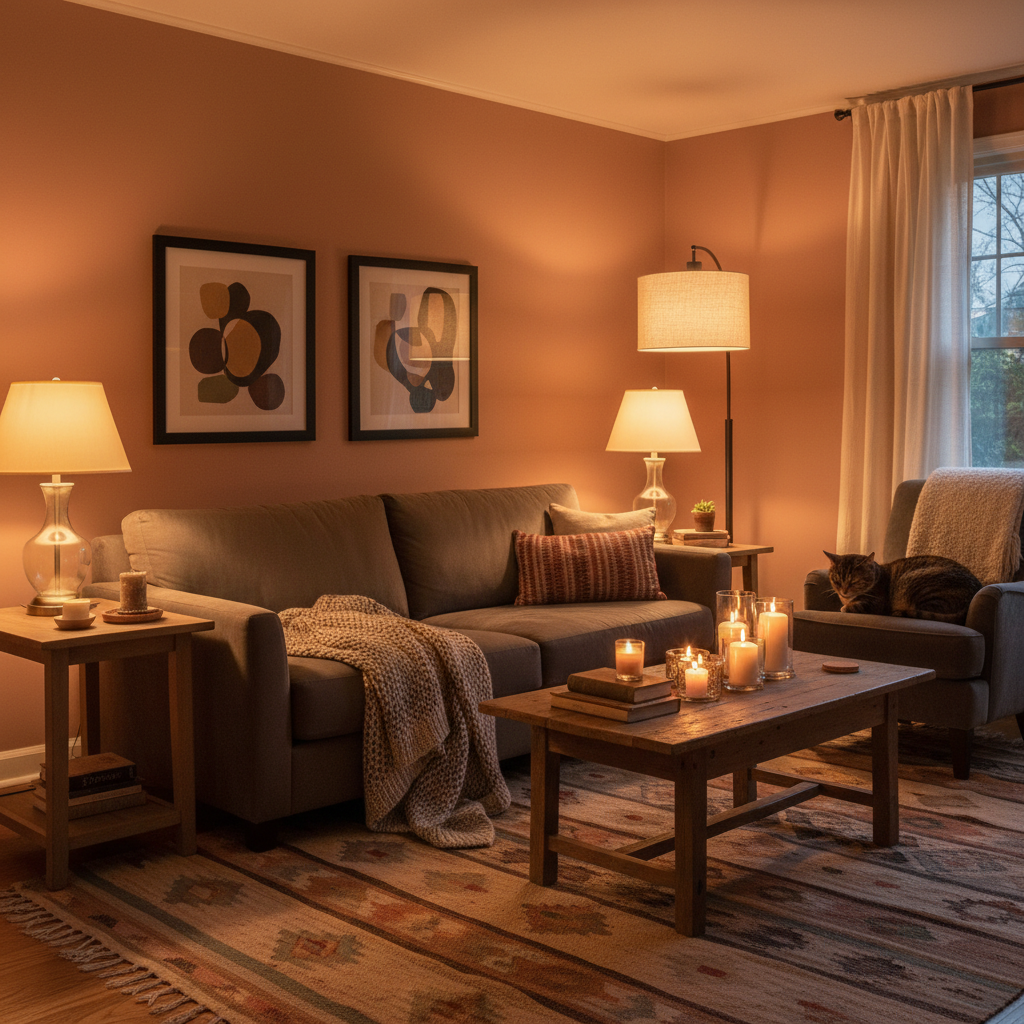
Overhead lighting is the enemy of coziness. Those bright ceiling fixtures make everything look flat and institutional.
Get some actual lamps. Table lamps, floor lamps, even those clip-on reading lights. The IKEA Foto pendant lamp costs $25 and casts nice warm light. Their Holmö floor lamp is maybe $15 and works great in corners where you need soft background lighting.
Bulb temperature matters. Look for 2700K on the package, which means “soft white.” Those 5000K “daylight” bulbs are fine for your garage but terrible for relaxing. Phillips makes warm LED bulbs that dim properly, unlike some cheaper ones that just flicker weirdly.
Candles work if you remember to blow them out. Bath & Body Works three-wicks last longer than those tiny expensive ones from boutique stores. Target’s Threshold candles smell decent and cost around $8. Just avoid anything that smells like “fresh spring rain” or other made-up scents.
String lights aren’t just for college dorms. The warm white LED ones create nice ambient lighting. Hang them along a bookshelf or around a window frame. The battery-operated ones from Amazon save you from hunting for outlets.
Dimmer switches make regular lamps infinitely more useful. Most take about ten minutes to install and cost $15 at Home Depot or similar versions on Amazon. Being able to adjust brightness throughout the day changes how rooms feel.
Salt lamps probably don’t have magical health benefits, but they cast a nice orange glow and cost maybe $20. Better than nothing if you need one more light source.
3. Natural Elements to Bring the Outdoors In

Plants make rooms feel alive, but half of them die by February because nobody researches what actually survives indoors.
Snake plants are nearly indestructible. Zanzibar Gem (ZZ) plants tolerate neglect. Pothos grow in basically any light condition and you can propagate them in water glasses, so one $10 plant becomes five plants. The fiddle leaf figs everyone posts on Instagram are finicky and expensive. Skip those.
Home Depot and Lowe’s have better plant prices than trendy nurseries. A decent-sized snake plant costs maybe $15 there versus $40 at boutique plant shops. The plants are usually healthier too since they move inventory faster.
Wood adds warmth without requiring green thumbs. Floating shelves in walnut or oak look substantial. CB2 has some nice ones around $50. Even wooden picture frames instead of metal ones soften spaces through natural home decor elements.
Wicker baskets hold stuff and add texture. Target’s Brightroom line has decent ones under $30. Fill them with extra blankets or magazines instead of letting clutter pile up on surfaces.
Branches in tall vases work well if fresh flowers feel too expensive or high-maintenance. Eucalyptus lasts weeks and smells good. Trader Joe’s sells bunches for $3. Curly willow branches are free if you know someone with a tree.
Those Pinterest-perfect fiddle leaf figs and monstera plants look amazing but they’re honestly kind of fussy. Start with something that won’t die if you forget to water it for two weeks. Check out this Pick Up Limes guide on caring for houseplants, to keep your new green babies alive as long as possible.
4. Personal Touches That Tell a Story

Stock photos of random families don’t make your house feel homey. Your actual photos do, even if they’re not perfectly curated.
Print some pictures. Shutterfly and CVS make it cheap and easy. Mix frame sizes instead of using identical ones in a grid. Thrift stores have interesting vintage frames for $2-5 each. Sand them down and spray paint if the finish looks dated.
Books should reflect what you actually read, not what looks impressive. Stacking some horizontally breaks up rows of vertical spines. Use a few books as risers for small objects instead of hiding everything away.
Travel souvenirs and family heirlooms add character that you can’t buy. That ceramic bowl from your grandmother or the weird sculpture you bought in Santa Fe tells your story better than mass-produced decor through meaningful room personalization.
Collections look intentional when grouped together. All your vintage cameras on one shelf, or ceramic mugs displayed instead of hidden in cabinets. Three of something looks purposeful. One looks forgotten, seven looks cluttered.
Artwork doesn’t need to be expensive or museum-quality. Etsy has prints starting around $10. Local art fairs often have interesting pieces under $50. Frame your kid’s actually good drawings instead of everything they bring home.
Personal doesn’t mean sentimental clutter everywhere. Edit ruthlessly but keep the things that make you smile when you see them.
5. Creating Warm Home Touches Through Cozy Scents

Scent affects mood more than most people realize. But those plug-in air fresheners smell artificial and give some people headaches.
Candles work if you buy decent ones. Yankee Candle gets expensive but their scents are strong and last. Bath & Body Works has sales constantly, so never pay full price. Target’s Threshold candles smell fine and cost half as much.
Avoid candles that smell like food unless they smell like actual food. “Vanilla cupcake” usually smells like fake vanilla and regret. Plain vanilla, cinnamon, or pine smell like what they claim to be.
Essential oil diffusers let you control intensity. The basic ones on Amazon cost around $25. Eucalyptus oil makes everything smell spa-like. Lavender works for bedrooms. Orange or lemon oils smell clean without that fake citrus scent.
Reed diffusers require no electricity and last months. Anthropologie’s cost $30 but you can make your own with safflower oil and actual reeds for maybe $8 total. This DIY approach to winter home fragrance saves money while creating custom scents.
Fresh herbs on windowsills smell good and you can cook with them. Rosemary, thyme, and mint are hard to kill and smell better than most commercial scents. Plus you feel productive growing something useful.
Baking bread or simmering cinnamon sticks on the stove creates temporary but powerful good smells. Works better for specific occasions than everyday ambiance, though.
6. Comfortable Seating to Relax and Unwind

Uncomfortable furniture makes you avoid your own living room. Those rigid dining chairs look sleek but nobody wants to linger after dinner.
Throw pillows help but only if they’re actually soft. The decorative ones that feel like cardboard defeat the purpose. Down alternative fill costs less than real down and doesn’t go flat as quickly. Target’s pillows are decent, IKEA’s are hit or miss depending on the line.
Reading nooks don’t require tons of space. A comfortable chair near a window with a small side table and good lighting creates a retreat. The IKEA Poäng chair costs around $80 and holds up well. Add a footstool and you’ve got a proper relaxation spot for cozy winter reading sessions.
Ottoman storage serves double duty. West Elm’s versions look nice but cost $200+. Target has similar ones for $60 that work fine and hold extra blankets.
Recliners get a bad reputation but the modern ones don’t look like dad furniture. CB2 and West Elm make sleek versions, though they’re pricey. Even a basic one from Costco beats a stylish chair that hurts your back.
Floor cushions work well for extra seating that stores easily. The large ones from Cost Plus World Market are comfortable enough for movie nights and stack neatly when not needed.
Your couch matters most since that’s where you spend the most time. Firm cushions last longer than soft ones but aren’t as immediately comfortable. There’s no perfect answer, just know what you prefer before spending hundreds of dollars.
7. Warm Drinks Station for Winter Beverages

A dedicated spot for hot drinks makes you more likely to actually make them instead of settling for whatever’s quickest.
Use a small tray or section of counter near your kettle. Include good mugs, not the chipped ones you keep meaning to replace. Thrift stores have interesting vintage mugs for $1-2 each. Having mugs you actually like makes tea feel more special.
Stock basics that keep well. Good loose leaf tea costs more upfront but tastes better than most tea bags. Harney & Sons and Celestial Seasonings make decent options. Coffee beans stay fresh longer than ground coffee if you have a grinder.
Hot chocolate improves with actual cocoa powder and milk instead of packets with powdered creamer. Ghirardelli cocoa powder costs maybe $4 and makes dozens of cups. Add cinnamon or vanilla extract for variety in your winter beverage selection.
Honey, real maple syrup, and brown sugar taste better than artificial sweeteners in hot drinks. Store them in small containers near your station so everything’s within reach.
An electric kettle heats water faster than stovetop and doesn’t require watching. The basic ones cost $20-30 and work fine. The temperature-controlled versions are nice for tea nerds but not necessary.
Cinnamon sticks, star anise, and cardamom pods turn regular drinks into something more interesting. They keep for months and a little goes a long way. Add them while heating milk for hot chocolate or steep with tea for budget-friendly winter entertaining options.
Keep it simple enough that you’ll actually use it. If setup takes five minutes, you’ll skip it on busy mornings and drink instant coffee instead.
Frequently Asked Questions
Q: What are some affordable ways to add warm home touches?
A: Rearrange what you already have before buying new stuff. Move lamps to different rooms, swap throw pillows between rooms, or group books and objects differently. Dollar Tree has decent candles for $1.25. Thrift stores are goldmines for blankets, frames, and mugs. Even just cleaning windows lets in more light, which makes spaces feel warmer.
Q: How can I make my home feel cozy without a fireplace?
A: Layer multiple light sources at different heights. A table lamp, floor lamp, and string lights create more warmth than one overhead fixture. Use warm-toned LED bulbs instead of cool white ones. Electric space heaters with fake flames look surprisingly realistic and cost $50-100. Group furniture closer together to create intimate conversation areas.
Q: What are some good scents for creating a cozy winter atmosphere?
A: Vanilla and cinnamon are classics for good reason. Pine or fir oils smell like actual Christmas trees without the needles everywhere. Sandalwood feels warm and grounding. Orange and clove remind people of mulled cider. Avoid anything described as “winter fresh” or “crisp,” which usually means artificial and cold-smelling.
