



Victorian interior flair feels intimidating at first. All that velvet and those busy patterns. But honestly, it’s more approachable than most people think, especially if you cherry-pick the elements that work for modern living.
The Victorian era lasted from about 1837 to 1901, and people back then weren’t subtle about showing wealth. Everything was ornate, layered, richly colored. Your average Victorian parlor had more pattern mixing than a contemporary maximalist Instagram account. And somehow it worked.
Here are 10 tips and ideas to creating a Victorian vibe in your home with a good amount of interior flair:
- Rich jewel tones that make beige look boring.
- Wallpaper with serious attitude.
- Antique furniture that weighs more than your car.
- Decorative accessories everywhere, and I mean everywhere.
- Lighting fixtures that qualify as sculpture.
- Fabrics so plush you want to take a nap on them.
- Architectural details that modern builders forgot exist.
- Fresh flowers because Victorians invented the idea that homes should smell good.
- Reading nooks designed for actual humans.
- Fireplaces as the ultimate focal point.
Let’s get into it!
1. Embrace Rich, Jewel-Toned Colors

Benjamin Moore’s Hunter Green or Sherwin Williams’ Evergreens are good starting points if you want authentic Victorian color. Deep emerald, burgundy, navy, plum. Colors that look expensive even when they’re not.
Victorians painted entire rooms in these saturated tones. Walls, trim, sometimes even ceilings. Modern paint technology makes this easier than it was in the 1800s. Back then, you needed actual pigments from semi-precious stones for some of these colors, which explains why only wealthy families could afford the full treatment.
Try Benjamin Moore’s Calypso Green or Behr’s Graceful Red for something that photographs well but isn’t overwhelming in person. Bold, saturated colors can work so well when balanced properly – see our exploration of modern applications of dramatic color in black room design for contemporary drama for more on this. Use eggshell or satin finishes. The slight sheen catches light differently throughout the day, making the color feel more complex.
One room at a time works better than going full Victorian mansion immediately. Start with a powder room or dining room. Smaller spaces can handle intense color more easily, and you’ll get a feel for living with it before committing to your main living areas. This approach to home styling allows you to experiment without overwhelming your entire space.
Gold and cream work as accent colors, though Victorians used more bronze and deep ivory than the bright golds you see in some reproductions. West Elm’s metallic accessories actually work well here. Their brass candlesticks run about $35 each, picture frames around $25.
2. Incorporate Ornate Wallpaper with Intricate Patterns
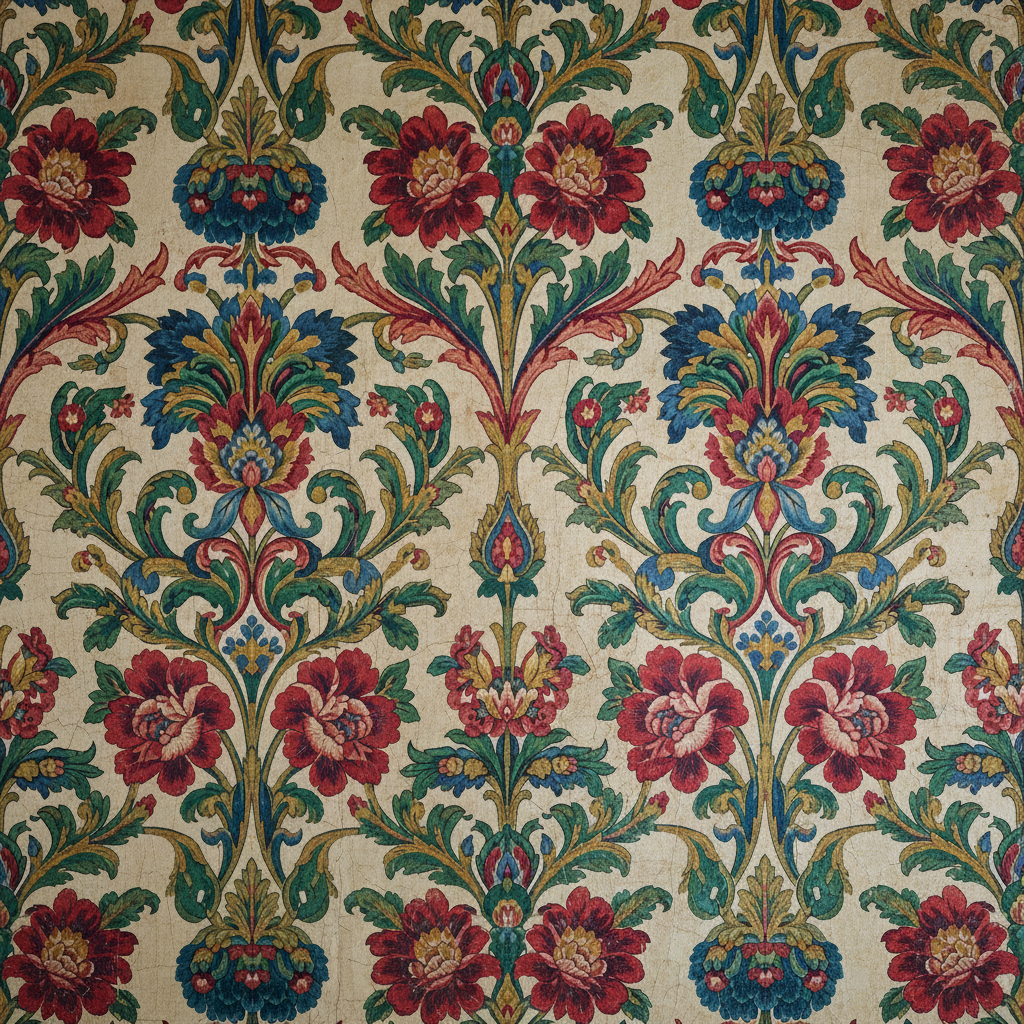
Wallpaper selection separates authentic Victorian style from Victorian-ish. The patterns were complex, often featuring multiple colors and textures within a single design. Floral damasks, geometric patterns that make your eyes work, sometimes even flocked wallpaper with raised textures you can feel.
Bradbury & Bradbury makes reproduction Victorian wallpapers that cost around $80 to $200 per roll. Expensive, but historically accurate down to the printing methods. For budget options, York Wallcoverings carries Victorian-inspired patterns starting around $25 per roll. Not quite as detailed, but they get the spirit right.
Feature walls work better than papering entire rooms, especially if you’re not completely sold on pattern mixing yet. Try wallpaper on the wall behind your bed or in a dining room. The bathroom is another good testing ground since you need less wallpaper and the smaller space contains the visual intensity.
Flocked wallpaper adds texture but collects dust. Worth knowing before you commit. The raised fibers that make it feel luxurious also make it harder to clean than smooth wallpaper. Plus it costs more, usually $40-60 per roll for anything decent.
Pattern mixing was standard in Victorian homes, but they followed rules we’ve mostly forgotten. Similar color palettes. Varying scale, so a large floral paired with a smaller geometric. Different textures to create visual hierarchy. Modern eyes aren’t trained for this interior design approach, so start conservative and add complexity as you get comfortable.
3. Adorn with Antique Furniture and Classic Pieces

Real Victorian furniture is heavy. Like, surprisingly heavy. Solid wood construction, often mahogany or walnut. If you can easily move a Victorian dining table by yourself, it’s probably a reproduction.
Estate sales in older neighborhoods yield better finds than antique stores, where prices reflect the dealer’s overhead. Facebook Marketplace has gotten surprisingly good for Victorian pieces, though you’ll need to drive to pick things up. A genuine Victorian settee runs $400 to $1,200 depending on condition and location.
Reproduction furniture from companies like Design Toscano offers the look without the weight or price tag. A reproduction Victorian armchair starts around $300, compared to $800-plus for restored antiques. The carved details might be cast resin instead of hand-carved wood, but from across the room you can’t tell.
Look for button tufting, carved wood details, cabriole legs. These are distinctly Victorian elements that separate the style from other periods. Renaissance Revival pieces feature heavier carving and darker wood. Rococo Revival tends toward lighter colors and more curved lines.
Upholstery matters more than the furniture frame sometimes. Rich fabrics transform even basic furniture into something that reads as Victorian. Velvet, brocade, damask. Jewel tones again. A modern chair reupholstered in burgundy velvet looks more Victorian than an authentic Victorian chair covered in contemporary cotton.
Mix periods within the Victorian era rather than trying to match everything exactly. Real Victorian homes accumulated furniture over decades. Perfect matching actually looks less authentic than thoughtful variety in your furniture arrangement.
4. Display Decorative Accessories and Curiosities with Victorian Interior Flair
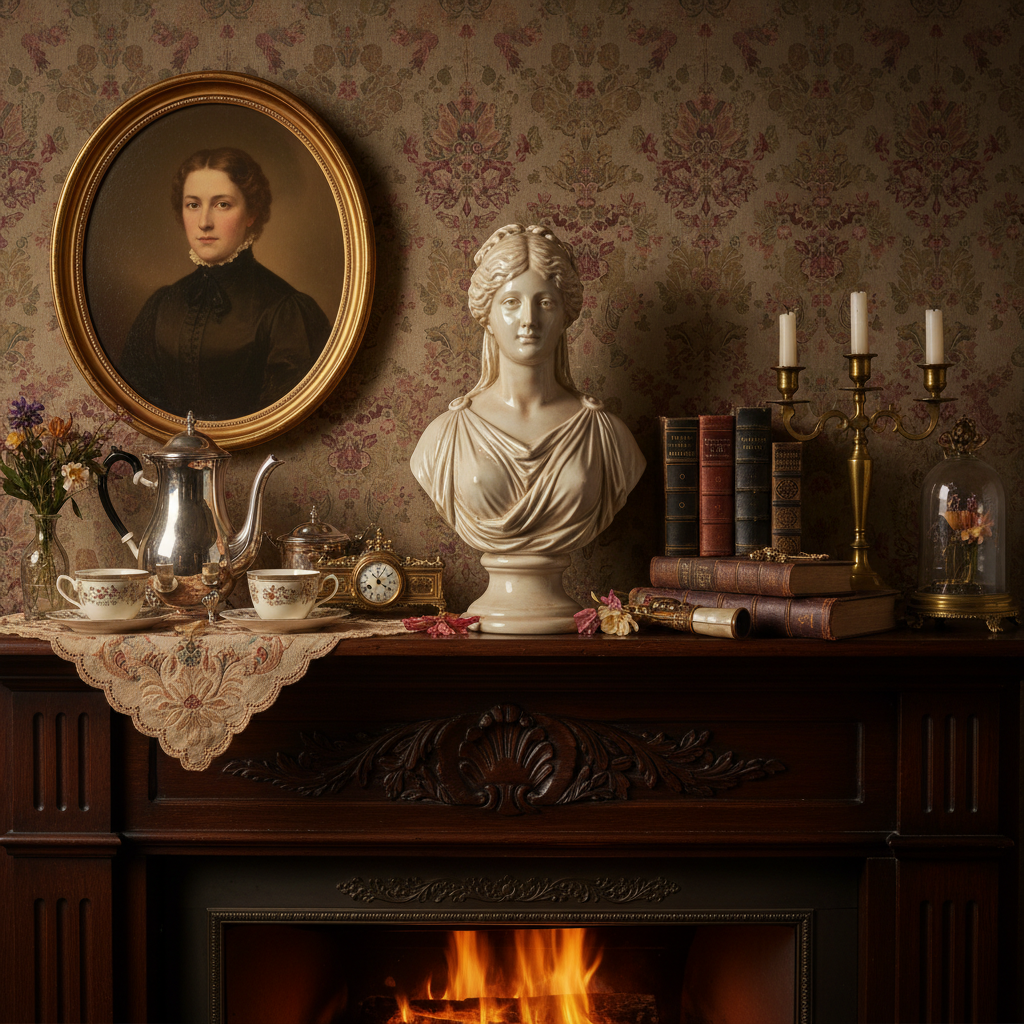
Victorians collected everything. Natural specimens, travel souvenirs, family portraits, books, silver, porcelain. The idea was to demonstrate education, worldliness, and prosperity through your possessions.
Modern minimalism teaches us to edit ruthlessly, but Victorian style requires abundance. Controlled abundance, though. Group similar items together. Three to seven pieces work better than single items scattered around. Your eye needs somewhere to rest. If Victorian maximalism feels overwhelming, our effortless living room ideas offer the opposite philosophy. All the beauty, but with simplicity that’s easy to maintain.
Antique books add authentic Victorian atmosphere and cost almost nothing at thrift stores. Look for leather bindings, gilt lettering, sets of classic literature. Stack them on side tables, fill bookshelves, use them to add height under other decorative objects. Dickens, Tennyson, botanical guides. Doesn’t matter if you read them.
Silver and silver-plate items catch light beautifully and photograph well. Candlesticks around $15-40 each at estate sales, small picture frames for $10-25, serving pieces that you might actually use. Real silver requires polishing, but silver-plate looks similar and needs less maintenance.
Framed photography wasn’t common until later in the Victorian period, so portraits were usually paintings or drawings. Print reproductions of Victorian-era portraits for about $15-30 framed. They add the right historical mood without the cost of authentic artwork. Plus you don’t have to explain who Great-Aunt Millicent was to houseguests.
Fresh flowers count as decorative accents. Victorians used them extensively, often in elaborate arrangements that showed off both wealth and gardening skills. Modern grocery store flowers work fine if you choose varieties that look period-appropriate. Roses, peonies, hydrangeras rather than tropical flowers that wouldn’t have grown in Victorian gardens.
5. Install Elaborate Lighting Fixtures for Ambiance
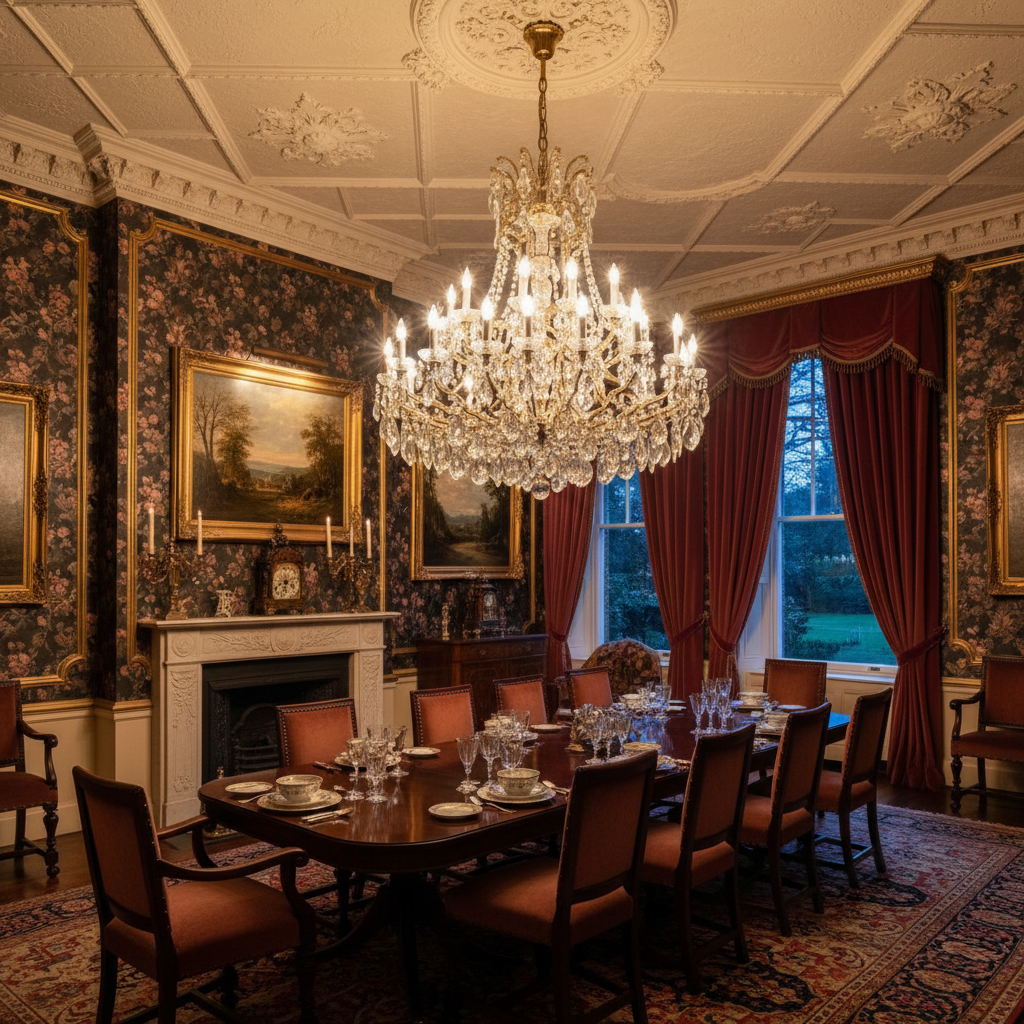
Gas lighting was cutting-edge technology during the Victorian era, so light fixtures were status symbols. Crystal chandeliers, ornate sconces, table lamps with decorated bases and fabric shades.
A genuine Victorian crystal chandelier costs $1,500 to $8,000 depending on size and condition. Reproductions from companies like Schonbek start around $400 for smaller pieces. IKEA’s Hemma fixtures can work in secondary spaces for under $100, though they’re obviously modern interpretations.
Layered lighting matters more than any single fixture. Chandeliers provide ambient lighting, table lamps add task lighting, sconces create accent lighting. Victorians didn’t have the luxury of bright electric bulbs, so spaces felt more intimate and shadowy than modern rooms.
Dimmer switches help recreate that atmospheric quality with modern electric fixtures. LED bulbs that mimic gaslight color temperature, around 2200K to 2700K, look more authentic than daylight bulbs. The warm, slightly yellow light feels cozier and more historically accurate.
Table lamps with fringed fabric shades were Victorian staples. They’re harder to find now, but companies like Victorian Trading Co carry reproductions. Expect to pay $150 to $400 for something that looks convincing. The fringe serves no practical purpose but adds movement and texture.
Wall sconces flanking fireplaces or mirrors were common Victorian placements. Modern electrical codes make installation more complex than it was originally, so factor in electrician costs if you’re adding new fixtures rather than replacing existing ones. Budget around $200-400 for professional installation per fixture.
6. Opt for Plush Textiles: Velvet, Brocade, and Damask

Victorian textiles were tactile. Fabrics you wanted to touch. Velvet, silk, wool damask, heavy brocades. Everything had weight and substance. Cotton felt cheap by comparison.
Velvet upholstery costs more than cotton but lasts longer and ages better. Fabric stores carry cotton velvet for around $15-25 per yard, silk velvet for $40-80 per yard. Enough difference that you’ll notice in both feel and appearance. Silk velvet has depth that cotton velvet can’t match.
Curtains in Victorian homes were layered. Sheer panels closest to the window, heavier drapes over them, sometimes with decorative valances on top. The goal was light control and privacy, but also visual richness. Modern homes with larger windows need less coverage, but the layering principle still works.
Throw pillows let you experiment with Victorian fabrics without major commitment. A few burgundy velvet pillows on a modern sofa start shifting the room toward Victorian style immediately. Cost around $30-60 each for good quality. Target’s Project 62 line actually carries decent velvet pillows for under $25.
When creating a cozy Victorian living room setup, upholstering existing furniture in period-appropriate fabrics often costs less than buying Victorian pieces. A standard armchair needs about 3-4 yards of 54-inch fabric. Professional upholstery runs $300-800 depending on the piece’s complexity, but transforms contemporary furniture completely.
Pattern mixing with textiles follows the same rules as wallpaper. Similar colors, different scales, varying textures. A large floral brocade pairs well with smaller geometric patterns or solid velvets in coordinating colors. The Victorians were better at this than we are, probably because they had more practice.
7. Add Architectural Details: Crown Molding and Wainscoting

Victorian homes had architectural details that modern construction skips to save money. Crown molding, chair rails, wainscoting, decorative ceiling medallions. These elements add visual interest and make rooms feel more finished.
Home Depot carries basic crown molding starting around $2-4 per linear foot. More elaborate profiles cost $8-15 per foot. Installation adds another $3-8 per foot if you hire professionals, though crown molding is a reasonable DIY project for people comfortable with miter saws.
Wainscoting was both decorative and practical in Victorian homes, protecting walls from furniture damage while adding visual weight to lower wall areas. Panel wainscoting looks more authentic than beadboard, though beadboard costs less and installs easier. Figure $8-15 per square foot installed for panel wainscoting.
Paint treatments make architectural details more prominent. Contrasting colors between molding and walls, or between wainscoting and upper wall areas. Victorians often painted trim in cream or white against darker wall colors, but darker trim against lighter walls can work too.
These budget-friendly Victorian design ideas include ceiling medallions around light fixtures that were standard Victorian details which disappeared from modern construction. Reproduction medallions in polyurethane foam cost $25-150 depending on size and detail level. They install with construction adhesive and look convincing once painted to match your ceiling.
Picture rail molding about 12 inches below the ceiling line was another Victorian standard. It allowed hanging artwork without nails in the wall, using decorative chains or wires instead. Still functional in modern homes, especially for people who change artwork frequently or live in rental properties.
8. Showcase Floral Arrangements: Fresh or Faux
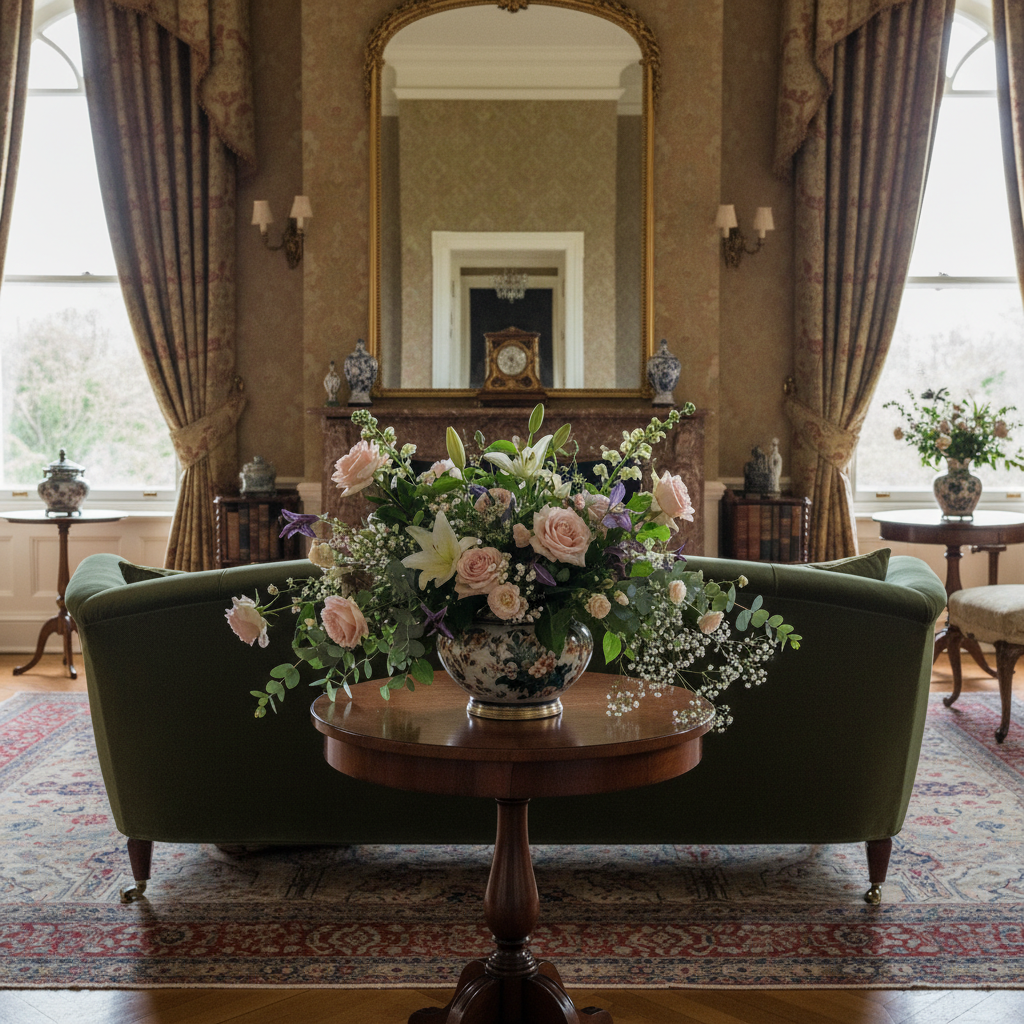
Fresh flowers were everywhere in Victorian homes. Elaborate arrangements, single specimens in bud vases, pressed flowers in frames. Flower arranging was considered an essential feminine accomplishment, like playing piano or speaking French.
Victorian flower choices reflected what was available seasonally and what grew well in formal gardens. Roses, peonies, lilacs, hydrangeas, lilies. Avoid obviously tropical flowers like birds of paradise or proteas that wouldn’t have been available to most Victorian households. They didn’t have overnight shipping from Ecuador.
Ornate vases matter as much as the flowers. Cut crystal, decorated porcelain, silver or silver-plate vessels. These cost $25-200 depending on size and material, but they’re reusable investments that support the overall Victorian aesthetic. Estate sales again, or check TJ Maxx for crystal vases around $15-35.
Silk flowers have improved dramatically in recent years. High-quality silk arrangements cost $40-100 but last indefinitely and don’t require water changes. Look for flowers with realistic color variation and textures rather than obviously artificial uniformity. The cheap stuff still looks cheap.
Pressed flower displays were popular Victorian crafts. You can buy antique botanical prints for $15-50 each, or make your own using flowers from your garden and simple pressing techniques. Frame them in groups for more impact. Three or five prints work better than even numbers.
Floral patterns in wallpaper, upholstery, and accessories should coordinate with your fresh flower choices. Not matching exactly, but complementary color palettes that feel intentional rather than accidental. If your wallpaper has pink roses, maybe use burgundy dahlias in your arrangements.
9. Create Cozy Reading Nooks with Victorian Elements

Victorians invented the concept of comfortable home leisure. Before their era, homes were primarily functional. The Victorian middle class created spaces specifically for relaxation, reading, conversation. Revolutionary idea at the time.
A proper Victorian reading nook needs seating that encourages settling in for long periods. Deep armchairs, well-stuffed cushions, good back support. Modern recliners work fine if they’re upholstered in appropriate fabrics and colors. La-Z-Boy makes models that don’t scream “man cave” if you swap the fabric.
Lighting for reading was always a concern in Victorian homes. Table lamps, floor lamps, positioning near windows to maximize daylight. LED bulbs that mimic incandescent color temperature work better for extended reading than harsh white light. Your eyes get less tired.
Side tables for books, tea cups, reading glasses. Victorians used small, ornate tables that could hold necessities without dominating the space. Antique plant stands work perfectly and cost $40-120 at estate sales. Modern accent tables from World Market or Cost Plus work too if they’re the right scale.
Throw blankets in Victorian homes were functional as well as decorative. Houses were harder to heat evenly, so personal warming layers were essential. Wool throws, quilted coverlets. Modern throws in velvet or wool damask serve the same purpose with appropriate style. Pottery Barn carries some that look convincingly period for around $60-120.
Window seats were common Victorian features that work well as reading nooks. Add cushions upholstered in period fabrics, install good reading lights, include storage underneath for books. Even modern homes can incorporate window seat elements with some basic carpentry and a few weekends.
10. Incorporate Fireplace Features as Focal Points

Fireplaces were the heart of Victorian homes, both literally and figuratively. Central heating didn’t exist, so fireplaces provided essential warmth. But they were also social centers and opportunities for decorative display.
Victorian mantels were substantial. Heavy wood, often carved with elaborate details. Marble surrounds for wealthy families, painted wood for middle-class homes. The mantel shelf served as display space for family photographs, decorative objects, seasonal arrangements.
Modern electric fireplaces can provide Victorian ambiance without the maintenance of wood-burning units. Companies like Dimplex make units with realistic flame effects and period-appropriate surrounds starting around $300. The higher-end models actually look convincing, especially in dimmer lighting.
Fireplace accessories were both functional and decorative. Andirons, fire screens, tool sets. Many of these items are available as reproductions or can be found at antique stores for $50-200 per piece. They add authentic details even if your fireplace is primarily decorative rather than functional.
Seating arrangements in Victorian parlors focused on the fireplace. Chairs and sofas positioned for conversation and warmth. This works in modern homes too, creating intimate gathering spaces that feel more welcoming than furniture arranged around televisions. These timeless Victorian decorating tips help establish room aesthetics that prioritize human connection over technology.
Mantel decorating follows Victorian principles of abundant display. Candlesticks, small framed portraits, decorative boxes, seasonal flowers. Symmetrical arrangements look more formal, asymmetrical groupings feel more natural. Both approaches were used in period homes, depending on the room’s function and the family’s personality.
