


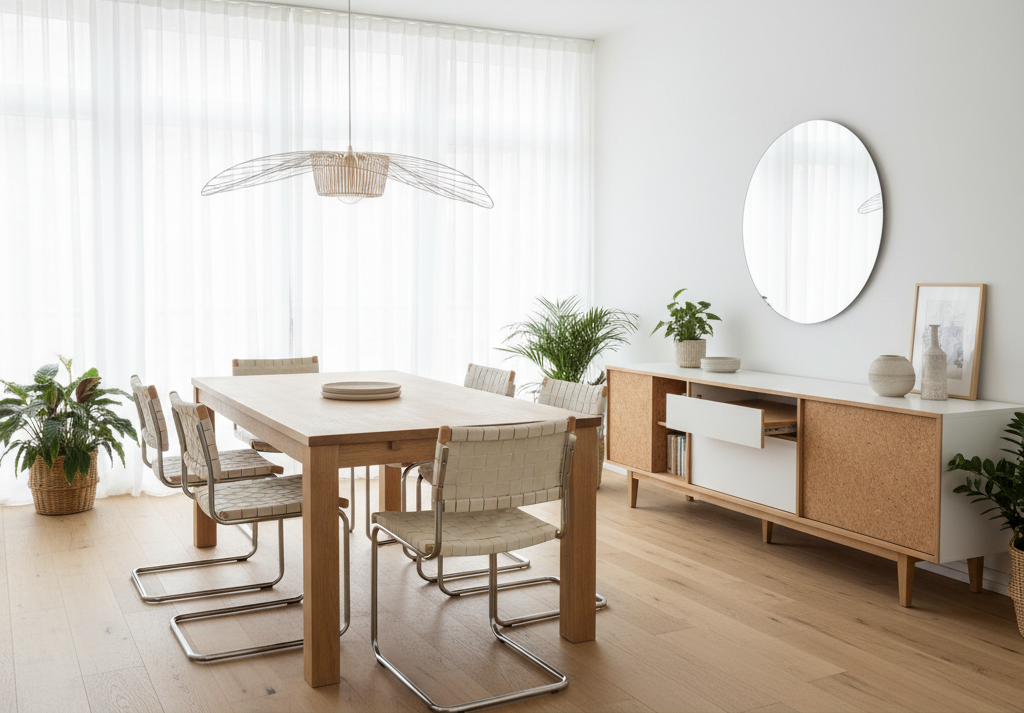
Your dining room shouldn’t just look good. It needs to actually work for how you live, whether that’s cramming six people around a table meant for four or hiding extra chairs when your space feels too crowded. Smart versatile dining pieces solve these everyday problems without sacrificing style.
Most dining furniture does one thing well. These seven pieces do several things well, which matters more than you’d think when you’re dealing with a space that needs to flex between Tuesday night takeout and hosting your in-laws for Thanksgiving.
Overview: Furniture That Actually Earns Its Keep
Smart dining pieces solve real problems. They expand when you need more space, tuck away when you don’t, and store stuff you’d otherwise have no place for. Multi-functional dining furniture transforms how you use your space.
- Extendable Dining Table: Goes from everyday size to dinner party size without buying a second table
- Stackable Dining Chairs: Extra seating that disappears into a closet
- Dining Bench: Seats three adults or five kids, depending on the day
- Sideboard or Buffet: Storage for all the dining stuff plus a place to set food during parties
- Rolling Bar Cart: Mobile drink station that works in any room
- Ottomans: Seating that doubles as storage and doesn’t look like furniture
- Wall-Mounted Shelves: Display and storage without taking up floor space
1. Extendable Dining Table: The Space-Saving MVP
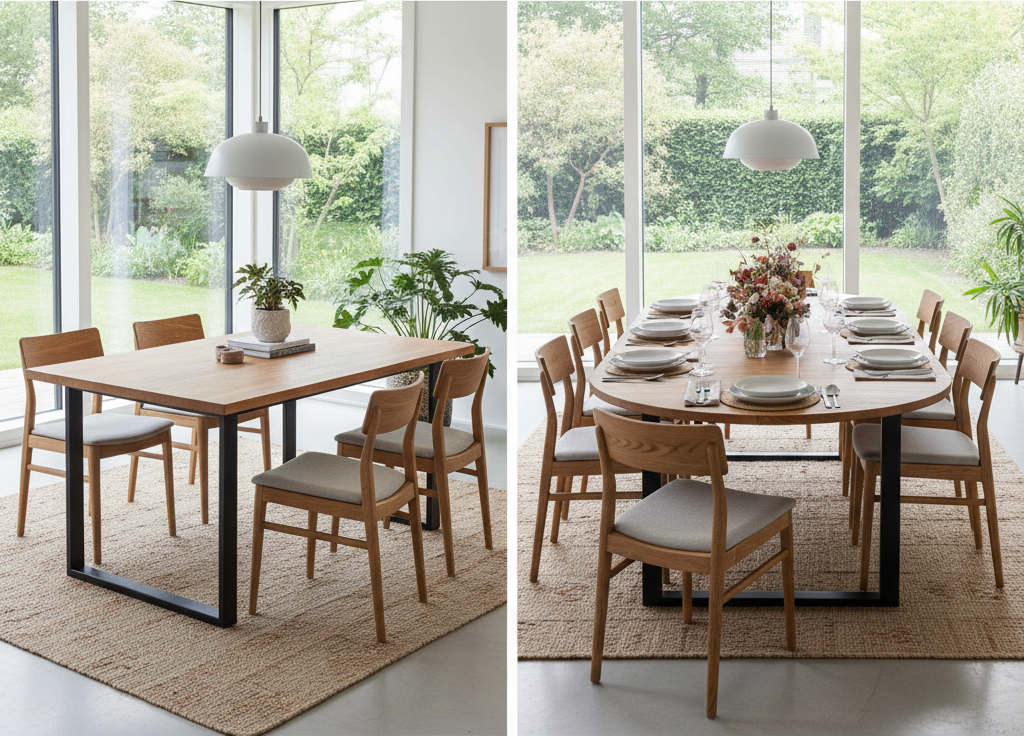
An extendable table is probably the smartest furniture purchase you can make. Most days it sits at maybe 48 inches, perfect for your family of four. Add the leaf and suddenly you’ve got room for eight without rearranging your entire house.
The mechanism matters more than you’d expect. Butterfly leaf tables store the extra piece inside the table itself, which is convenient but limits how much bigger the table can get. Usually you’re looking at adding about 18-24 inches. Separate leaf extensions can make a table REALLY big, but then you need somewhere to store that leaf when you’re not using it.
IKEA’s Ekedalen extends from about 47 inches to 70 inches for around $200. It’s pine veneer, so not heirloom quality, but it works. West Elm’s Mid-Century expandable table starts around $700 and looks significantly more grown-up. The Pottery Barn Benchwright table costs more like $1,200 but feels substantial enough that you won’t worry about it wobbling when fully extended.
It’s true that solid wood costs more, but it handles an expansion mechanism better over time. Those cheaper engineered wood tables can get loose at the connection points after a few years of extending and contracting. Glass tops look sleek and wipe clean easily, but you’ll see every fingerprint and water spot.
Before buying anything, actually measure your room with the table extended. You need about 36 inches between the table edge and the wall for people to pull out chairs and walk behind them comfortably. Most people forget this and end up with a table that technically fits but makes the room feel cramped when it’s expanded.
2. Stackable Dining Chairs: Storage That Makes Sense
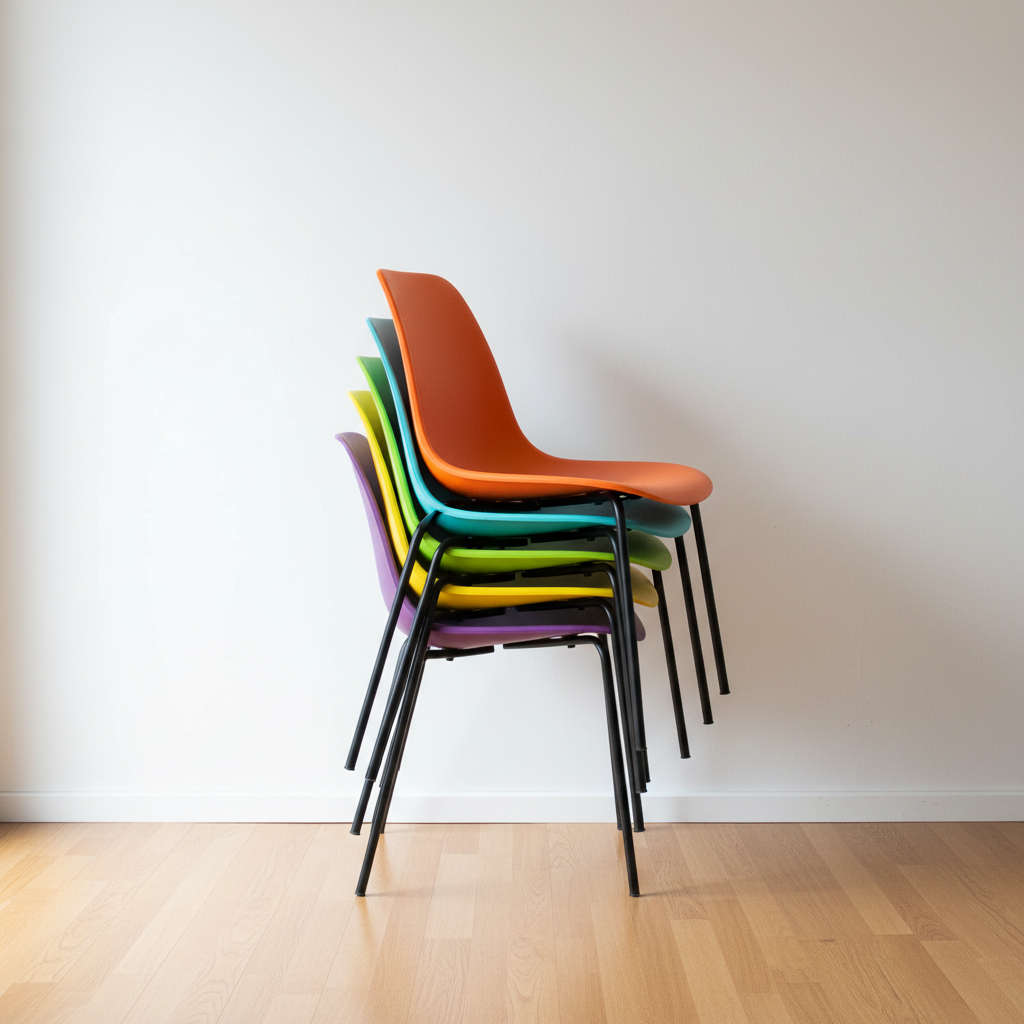
Stackable chairs solve the “where do I put extra chairs” problem that nobody thinks about until they own eight dining chairs and use four of them regularly. Good stackable chairs stack up to about five high and take up roughly the same floor space as one regular chair.
The cheap plastic ones from Target work fine for casual spaces. Around $25 each, they come in decent colors, and you can literally hose them off if someone spills red wine. But they feel like cheap plastic chairs, so probably not ideal if your dining room is trying to look sophisticated.
Metal stackable chairs like the Tolix-style ones look more intentional. CB2 sells their version for about $70 each. They’re powder-coated steel, so they’re sturdy, and the industrial aesthetic works with both modern and farmhouse-style dining rooms. They’re not the most comfortable for long dinner conversations though.
For something more comfortable, look at chairs with some kind of seat padding. The Hay Soft Edge chairs stack well and have a curved plywood seat that’s actually comfortable for extended sitting. Around $200 each, which isn’t cheap, but they look like regular dining chairs that happen to stack rather than obviously temporary seating.
Storage matters as much as the chairs themselves. A hall closet works if you have one. Otherwise, they stack nicely in a corner of the dining room or even in a bedroom closet if you’re dealing with a small apartment.
3. Dining Bench: Seating That Adapts
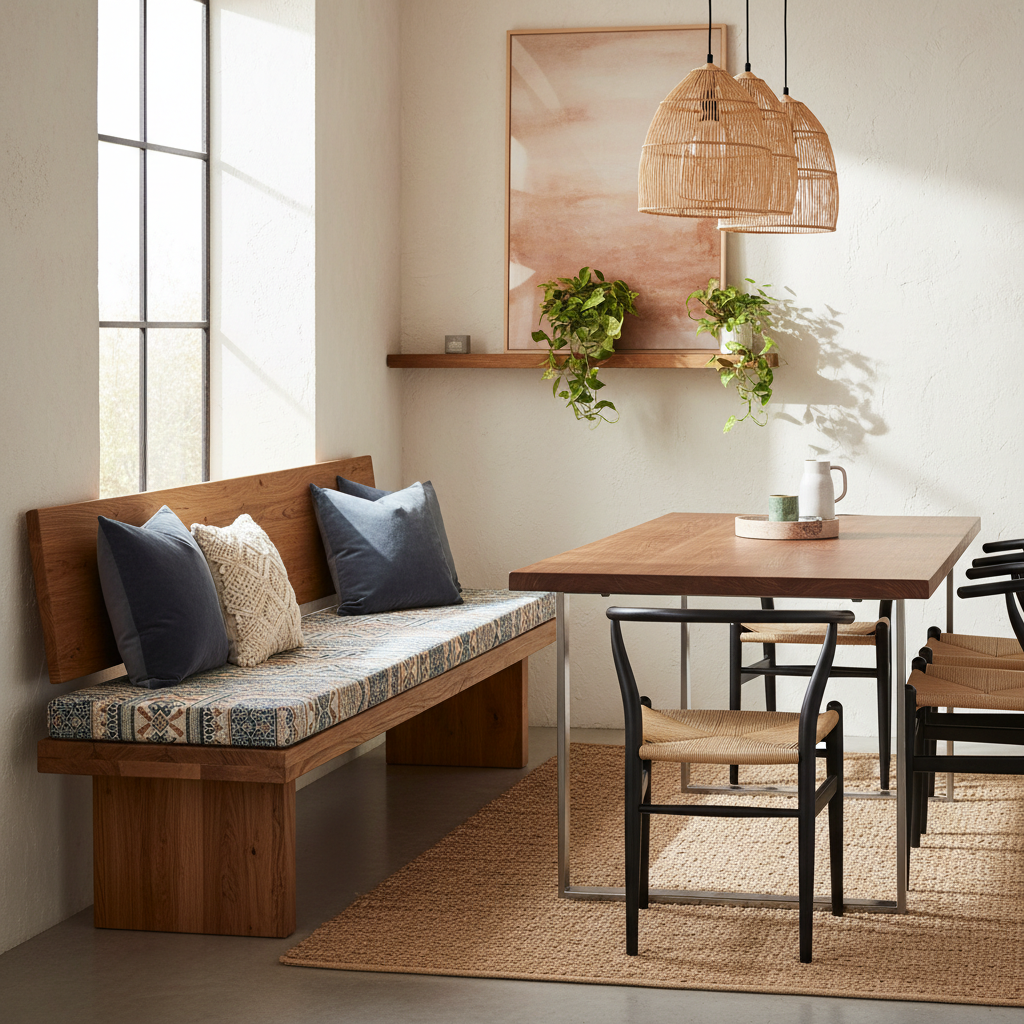
Benches are underrated. Two chairs seat two people. A bench the same length can squeeze in three adults or definitely fit four kids. Plus they tuck completely under the table, making the room look less cluttered.
Against a wall works best. It creates a built-in banquette feeling without the built-in commitment or cost. You can add back cushions against the wall for comfort, and the bench itself can have a seat cushion that ties on.
Length should match your table or be slightly shorter. A 48-inch bench works with a 60-inch table. Much shorter and it looks oddly proportioned. Much longer and people end up perched on the ends with their knees hitting the table legs.
Storage benches cost more but solve multiple problems. The West Elm Penelope storage bench runs around $400 and fits table linens, placemats, or board games inside. Basic wooden benches from places like World Market start around $150 and you can add your own cushion.
The cushion makes a bigger difference than you’d expect. A thin cushion looks nice but doesn’t add much comfort. Go for at least two inches of foam, preferably three. Indoor/outdoor fabric like Sunbrella holds up better to spills and general family life.
4. Sideboard or Buffet: The Dining Room Workhorse

A sideboard is basically a dresser for your dining room, except it holds plates and serving dishes instead of clothes. But more importantly, it gives you a place to set food during dinner parties so your table doesn’t get overwhelmed with serving dishes.
Size should relate to your table length. A 60-inch sideboard works with most dining tables. Much smaller and you don’t get enough storage. Much larger and it dominates the room unless you have a really big space.
Look for a mix of storage types. Drawers work well for silverware and table linens. Cabinets hide larger serving pieces and the random dining room stuff you need but don’t want to see. Some open shelving lets you display nice dishes or serving pieces.
The CB2 Suspension sideboard costs around $1,000 and has a clean, modern look with plenty of storage. Pottery Barn’s Benchwright sideboard matches their table collection and runs about $1,400. IKEA’s Ivar sideboard is solid pine for around $200, but you’ll probably want to stain or paint it.
Height matters for serving. Around 36 inches works well for most people. Much lower and you’re bending over awkwardly to serve food. Much higher and shorter people can’t reach comfortably.
The top surface needs to be durable since you’ll be setting hot dishes on it. Solid wood can handle heat but might get water rings. Laminate wipes clean easily but can chip. Marble looks expensive but stains easily.
5. Rolling Bar Cart: Party on Wheels

Bar carts aren’t just for people who drink a lot. They’re mobile serving stations that work for coffee service, dessert display, or even just moving drinks from the kitchen to wherever people are hanging out.
Two-tier carts work better than three-tier ones. Three tiers look impressive but the bottom shelf ends up too low to be useful for anything except storage. Two tiers give you room for bottles or a coffee maker on the bottom, glasses and accessories on top.
Wheels should actually roll smoothly. Test this if you’re buying in person. Some cheaper carts have wheels that stick or wobble, which defeats the whole purpose. Locking wheels help keep the cart stable when you’re actually using it as a serving surface.
The West Elm Brass + Wood bar cart runs around $300 and looks sophisticated enough for a formal dining room. World Market has several options in the $150-250 range that work well for more casual spaces. CB2’s brass carts start around $400 but feel substantial and look like actual furniture.
When you’re not entertaining, a bar cart can hold plants, books, or just serve as a decorative accent piece. It’s furniture that doesn’t look like it’s waiting for a party.
6. Ottomans: Stealth Seating

Ottomans work as backup seating when you need a few extra spots around the table. They’re low enough to tuck under a console table or side table, so they don’t clutter the room when you’re not using them.
Size matters for using them as dining seating. Too low and people feel like they’re sitting on the floor. Around 18 inches high works for most standard dining table heights. Much higher and they’re essentially short chairs.
Storage ottomans serve double duty. Target’s round storage ottomans cost about $60 and hold extra table linens or board games. The square ones from CB2 run around $200 but look more sophisticated and have sturdier construction.
Fabric choice affects both durability and cleanability. Leather wipes clean easily but costs more. Performance fabrics like those from companies that make furniture specifically for families handle spills better than regular upholstery fabric.
Two ottomans work better than one large one for flexibility. You can separate them when you need individual seating or push them together when you want a larger surface area.
7. Versatile Dining Pieces for Wall-Mounted Storage
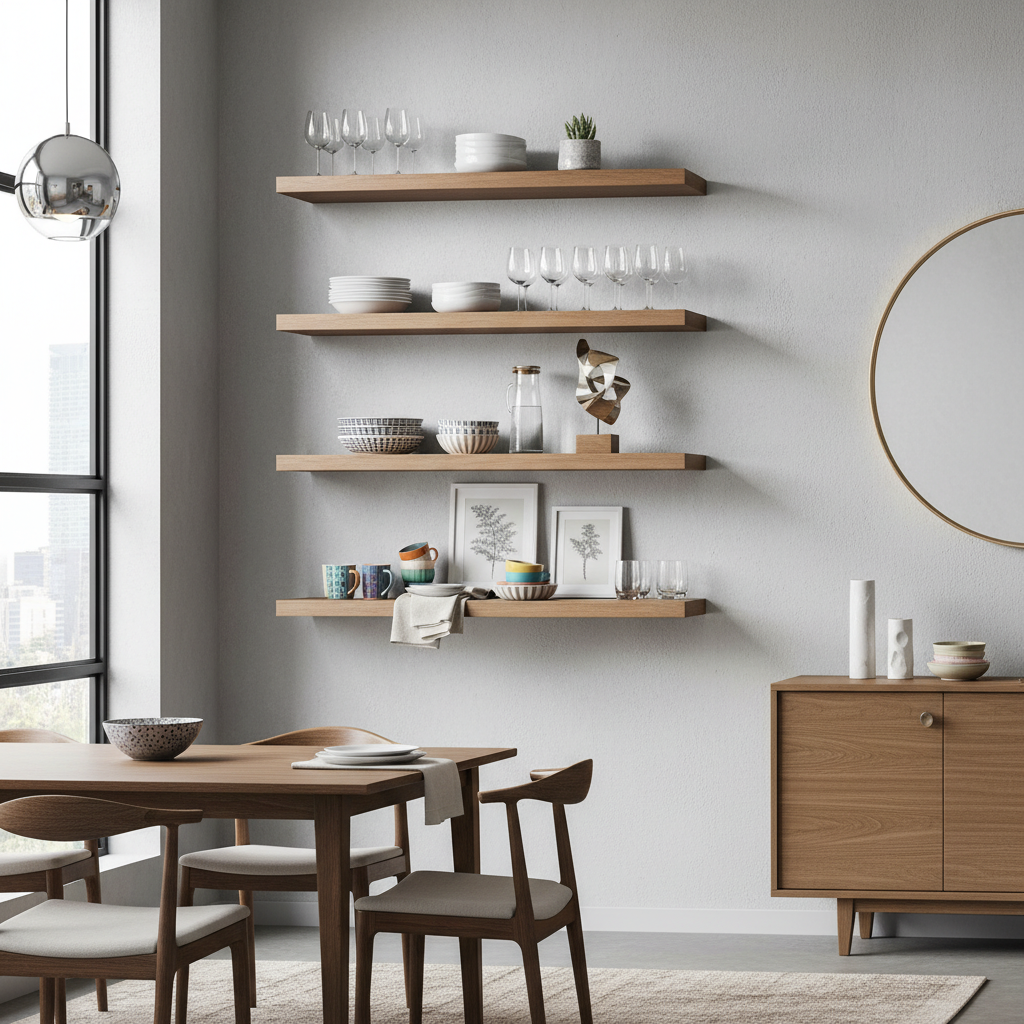
Wall-mounted shelves give you storage and display space without using any floor area. In small dining rooms, this matters more than in larger spaces where you have room for additional furniture.
Floating shelves look cleaner than shelves with visible brackets, but they can’t hold as much weight. Good for dishes and glassware. Not good for storing heavy serving pieces or appliances.
Two or three shelves work better than a single shelf for both function and visual balance. Space them about 12-15 inches apart vertically. Closer together and the shelves look cramped. Further apart and the grouping loses visual coherence.
IKEA’s Lack shelves cost about $10 each and come in several lengths. They’re basic but functional. CB2’s Perf shelves run around $50-80 each but have more sophisticated hardware and come in different materials.
Installation matters more for shelves than for most furniture. They need to hit wall studs for anything heavier than decorative objects. Toggle bolts work for drywall but have weight limits.
What you put on the shelves affects how the whole room looks. Mix functional items like glasses with decorative pieces like small plants or artwork. All functional looks cluttered. All decorative looks like you’re trying too hard.
Frequently Asked Questions
Q: What are the key benefits of investing in versatile dining pieces?
A: These adaptable pieces solve multiple problems with single purchases. An extendable table means you don’t need separate everyday and entertaining tables. Stackable chairs give you extra seating without permanent clutter. This approach works especially well in smaller homes where every piece of furniture needs to work harder. You get flexibility for different situations without filling your space with single-purpose items that sit unused most of the time.
Q: How do I choose the right size of extendable dining table for my space?
A: Measure your room with the table both collapsed and extended, not just the table itself. You need at least 36 inches between the table edge and walls or other furniture for people to pull out chairs and walk around comfortably. Start with your regular dining needs for the collapsed size, then figure out the largest group you realistically host for the extended size. Most people overestimate how often they’ll use the extension, so don’t buy more table than you actually need.
Q: What are some creative ways to use a dining bench in a small space?
A: Push it against a wall to create a banquette effect with back cushions for comfort. Use storage baskets underneath for extra linens or games. In really small spaces, a bench can double as a coffee table when you add a tray on top. Choose one with storage inside for seasonal items you don’t access frequently. Add a cushion that ties on so you can easily remove it for cleaning or change the look seasonally.
