


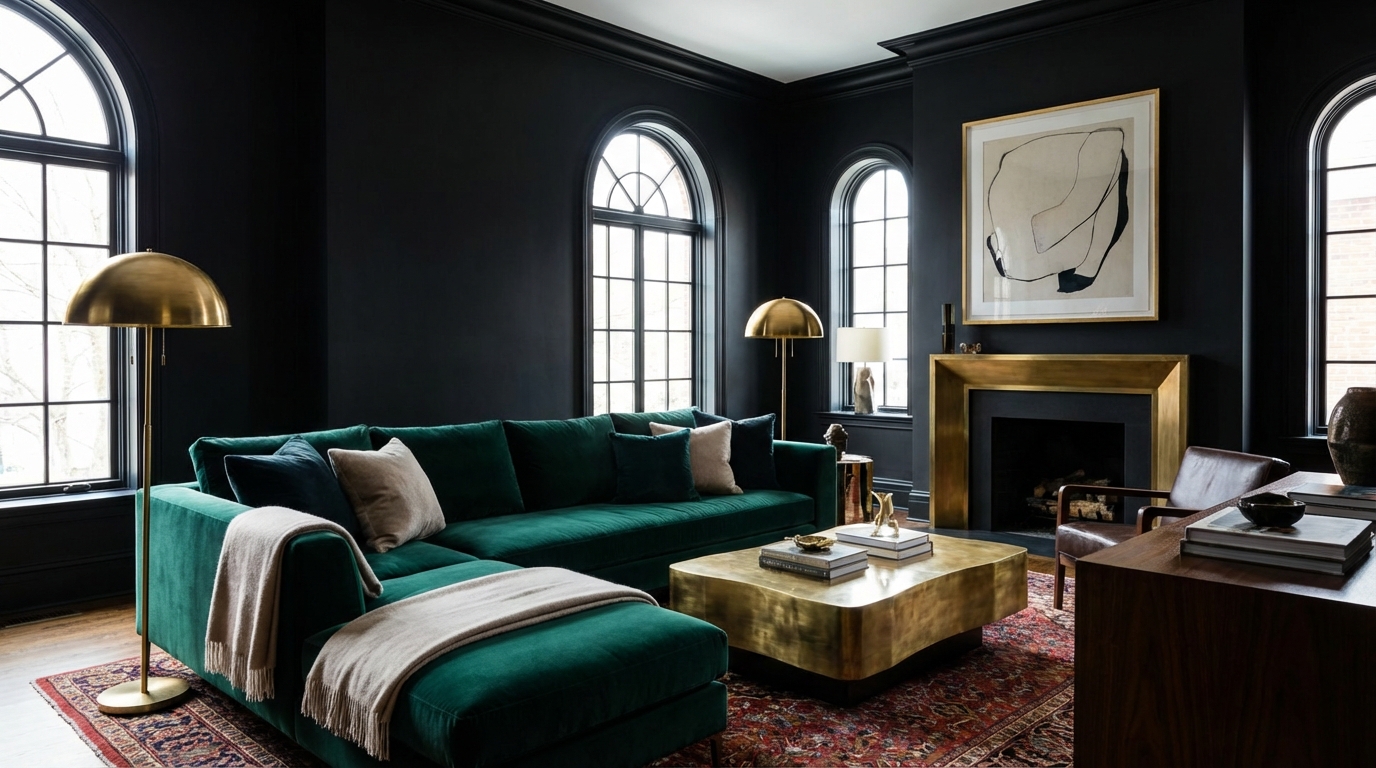
Black walls absorb light and create depth that makes builder-grade drywall look intentional. Expensive, even. It’s one of those interior design moves that feels risky but works surprisingly well in generic rooms that need more personality. Velvety black walls offer a sophisticated solution that transforms any basic space into something with serious home decor appeal.
The velvety part matters. We’re not talking about glossy black paint that shows every fingerprint and looks like a chalkboard. The right matte finish swallows light the way heavy curtains do, creating that soft, tactile quality that makes people want to reach out and touch the wall.
Here are six approaches that actually work, from simple paint techniques to specialty finishes that feel like fabric:
- Matte Charcoal Envelopes: Ultra-flat finishes that hide wall imperfections while creating a soft, light-absorbing surface
- Textural Limewash Depth: Mineral-based applications with organic movement and cloudy variations across the wall
- Architectural Shadow Paneling: Simple moldings painted black to create the illusion of expensive millwork
- Fabric-Inspired Wallcoverings: Velvet-flocked papers and grasscloth that add literal texture and sound absorption
- Monochromatic Color Drenching: Painting walls, trim, and ceiling the same black to eliminate visual boundaries
- Suede-Effect Specialty Pigments: Modern paints that actually feel soft to the touch, like brushed leather
1. How Does Matte Charcoal Paint Create A "Velvet" Visual Effect?
Getting rid of that annoying reflection is the key here. When you use an ultra-matte black, there’s no bounce-back of light hitting the wall. No specular highlight, if you want to get technical about it. Your eye is going to read this as “softness” instead of a hard surface.
Standard builder paint in eggshell or satin creates this icky institutional feel because light hits it and reflects back. Matte black just absorbs everything. It’s forgiving too, which matters in generic rooms where the drywall might have those little dings and texture inconsistencies that shinier paint would highlight.
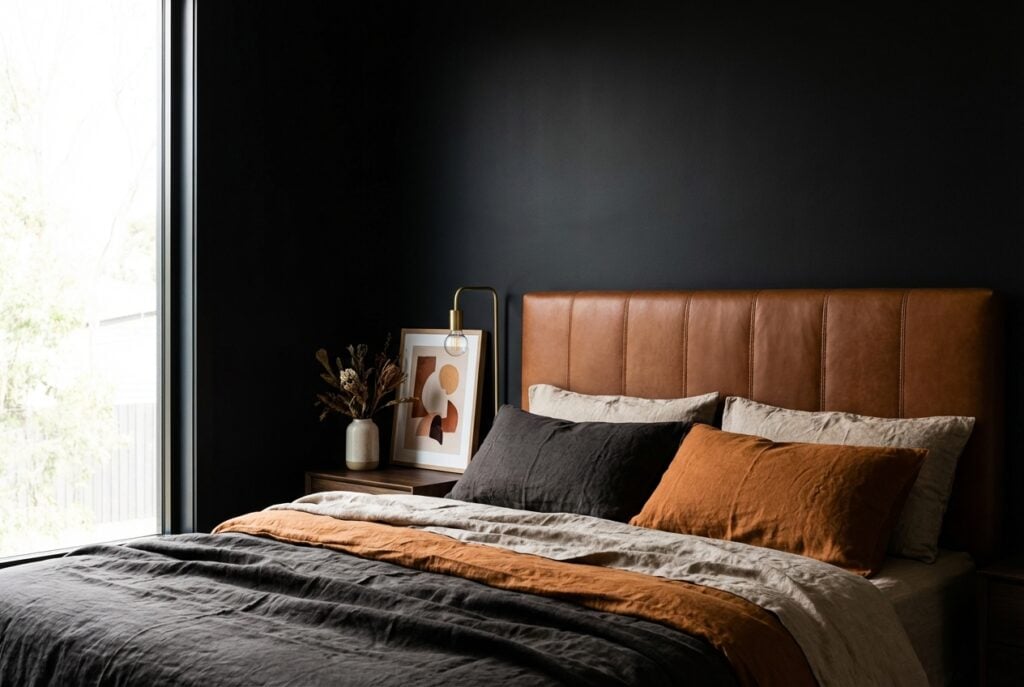
Benjamin Moore’s Black Beauty (affiliate link) or Sherwin Williams’ Tricorn Black both work well, though you want to pay attention to undertones. A black with navy undertones feels cooler and more modern. One with chocolate undertones feels warmer, more historic. For a room that gets decent natural light, I’d lean toward the cooler blacks.
The way it contrasts with natural materials is where this really shines. A raw oak coffee table or walnut floating shelves look incredibly vibrant against that light-swallowing backdrop. The wood grain becomes that much more pronounced and intentional-looking.
Lighting becomes crucial here. You’ll want warm-toned LEDs, around 2700K, and layered sources. Table lamps with fabric shades, maybe a brass floor lamp from West Elm. The light pools softly instead of creating harsh shadows, which emphasizes that velvety quality.
This is a great way to handle bedrooms or home offices where you want that cocooning effect. It turns a basic 12×12 room into something that feels designed rather than just painted. The sophisticated ambiance rivals any boutique hotel design.
2. Can Limewash Finishes Provide An Organic, Velvety Texture?
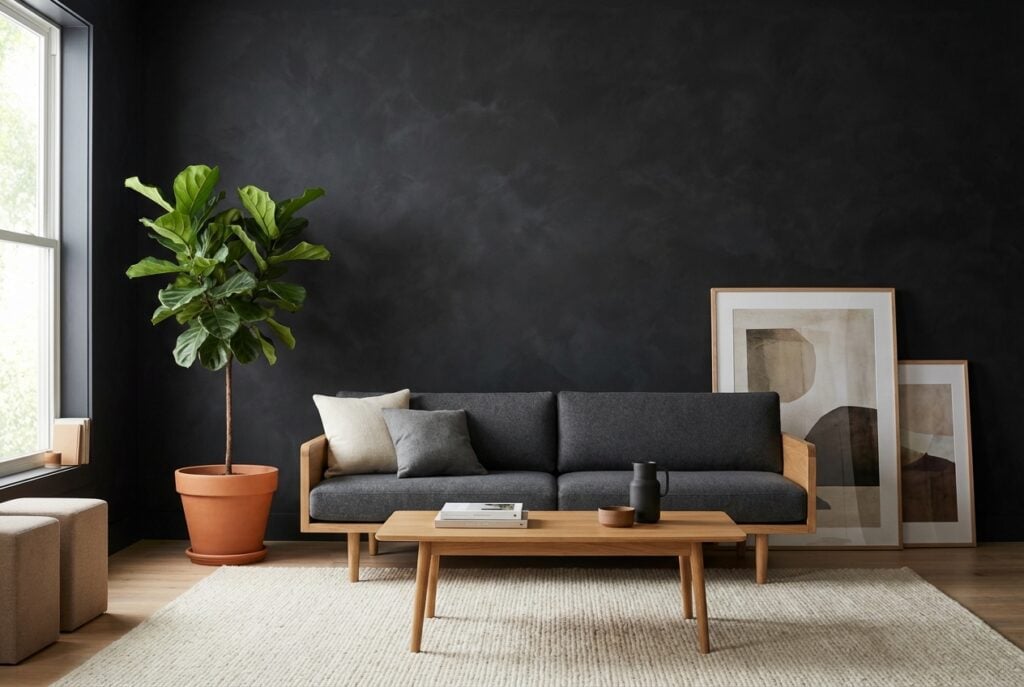
Limewash is having a moment, and for good reason. When you apply it in charcoal or deep black, you get this mottled, almost suede-like appearance that regular latex paint can’t replicate. The lime crystals settle and carbonate differently across the surface, creating natural variations in color intensity.
You don’t get flat, uniform color, you get movement. It looks like weathered slate or storm clouds. That organic variation is what makes generic rooms feel like they have history, like someone put real thought into the walls instead of just rolling on whatever was cheapest at Home Depot.
The application technique matters here. You want to use a large masonry brush and work in criss-cross motions, almost like you’re clouding the pigment across the wall. This creates those soft transitions between lighter and darker areas of black.
Portola Paints makes a good limewash that comes in custom colors. You’re looking at maybe $80-100 per gallon, which is more than regular paint but less than wallpaper. Plus it’s breathable and environmentally friendly, which matters if you’re putting this in a bedroom.
It works best in rooms with high ceilings where natural light can play across those subtle tonal shifts throughout the day. The wall becomes the art, basically. You can keep furniture minimal and let the texture do the work. This wall treatment technique creates instant sophistication that traditional wall finishes simply cannot match.
3. Why Does Shadow-Box Paneling In Black Look So Bespoke?
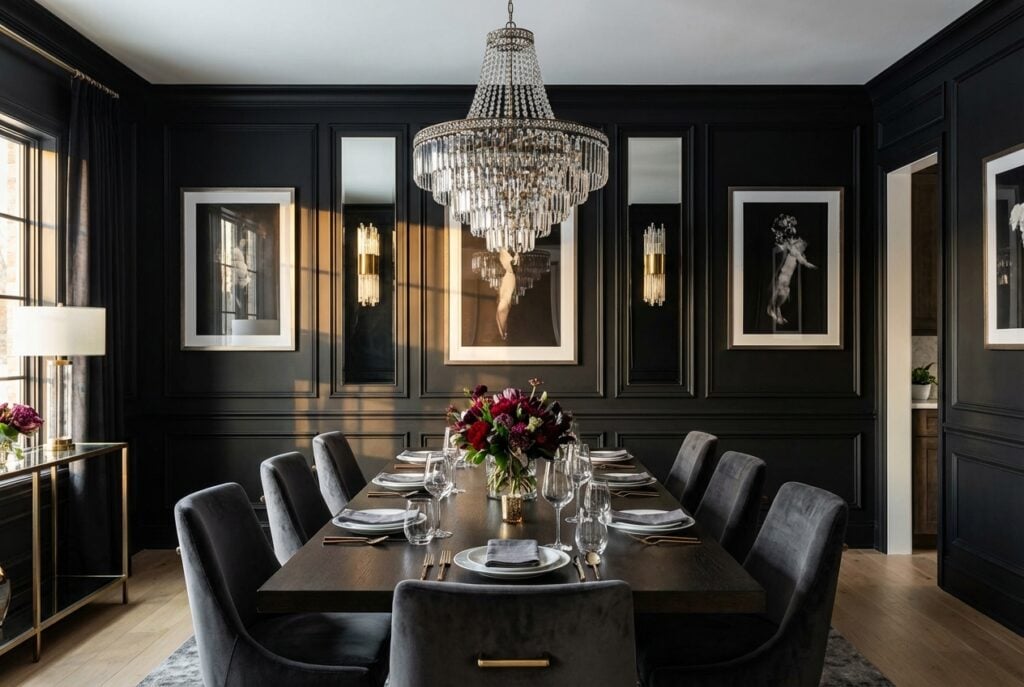
Picture frame molding is a cool trick that makes cheap trim look expensive. When you paint it the same black as the walls, the shadows created by the raised edges become part of the design. The black “drenches” everything, making basic pine or MDF look like custom ebony millwork.
In lighter colors, molding can look like an afterthought. In black, those shadow lines become intentional. The transition between the flat wall and the raised trim creates depth without color changes to distract the eye.
This works particularly well in dining rooms or entryways where you want that formal, established feel. The paneling provides architectural interest that modern builder homes usually lack. It’s like adding bones to the room.
If you want to maximize the effect, paint your outlet covers and light switch plates to match, or swap them for black versions. You want everything to disappear into the paneling so there are no visual interruptions. Lutron makes decent black switch plates for around $8 each.
The material doesn’t have to be expensive. Basic pine molding from Lowe’s works fine if you use a good primer first. You’re looking at maybe $200-300 in materials for an average dining room, but the impact is significant. It transforms the space from generic to intentional.
Add oversized art with white matting against these dark walls and you get that boutique hotel vibe. The contrast is striking without being harsh. This affordable room transformation creates professional-looking results on a budget.
4. How Do Fabric Wallcoverings Add Physical Velvet Textures?
When you want actual texture and not just the illusion of it, try velvet-flocked wallpapers. These give you literal softness you can feel, plus they absorb sound, which makes rooms feel more private and expensive.
Flocked paper has raised, fuzzy patterns that catch light differently than paint. In deep black, you can do subtle tone-on-tone damask or modern geometric patterns. The physical pile creates that light-absorbing quality, but with dimension.
Grasscloth is another option. Black grasscloth has natural fiber variations that create a multi-tonal effect. It’s got slight sheen but the weave breaks it up so it doesn’t look shiny. More organic than reflective.
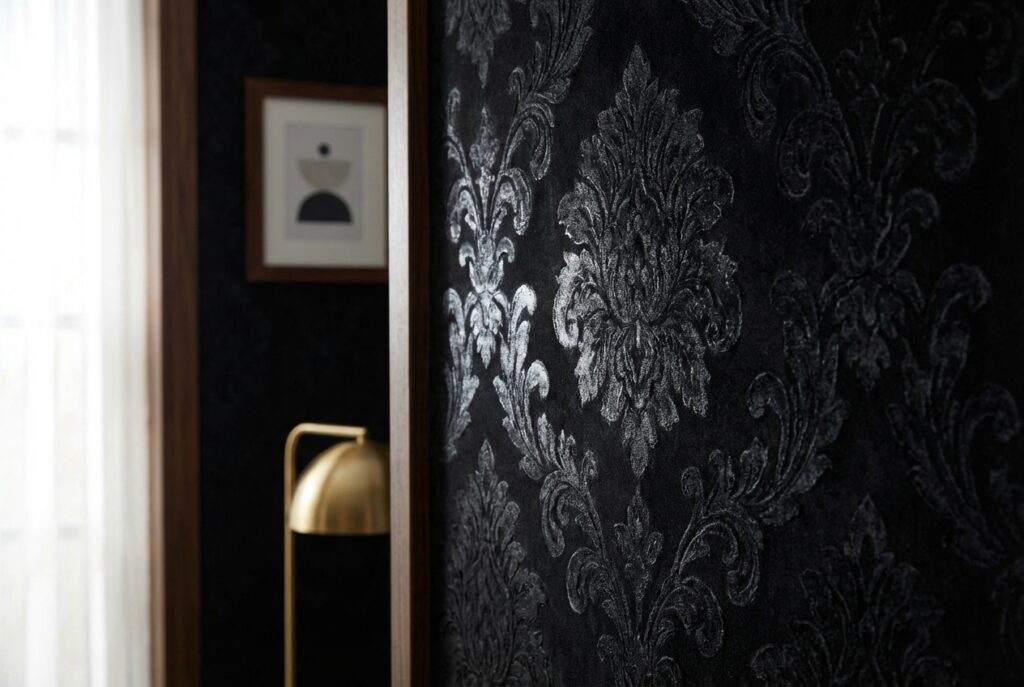
These are best as accent walls insetad of entire rooms. A powder room wrapped in black grasscloth feels like a jewel box. Behind a bed or in a reading nook, flocked paper creates instant intimacy. The room styling becomes effortlessly elevated with these sophisticated accent wall ideas that require minimal effort.
Schumacher and Phillip Jeffries both make high-quality options. You’re looking at $150-300 per roll depending on the pattern, so it’s an investment. But the impact is immediate and sophisticated.
The key is keeping patterns subtle or going completely plain to focus on the material quality. Pair with metallic accents, brushed brass hardware, maybe a chrome mirror to provide sharp contrast against all that softness.
5. What Is The Impact Of Monochromatic "Color Drenching" In Black?
Color drenching means painting everything the same color. Walls, baseboards, window trim, doors, sometimes even the ceiling. In black, this eliminates the “white box” syndrome that makes generic rooms feel institutional.
When you remove all those white trim lines, the boundaries of the room become less defined. Corners recede. The space feels larger because your eye isn’t constantly tracking all those visual breaks.
The velvety effect is heightened because there are no interruptions. The eye glides over surfaces, reading the space as one continuous envelope rather than a collection of separate elements.
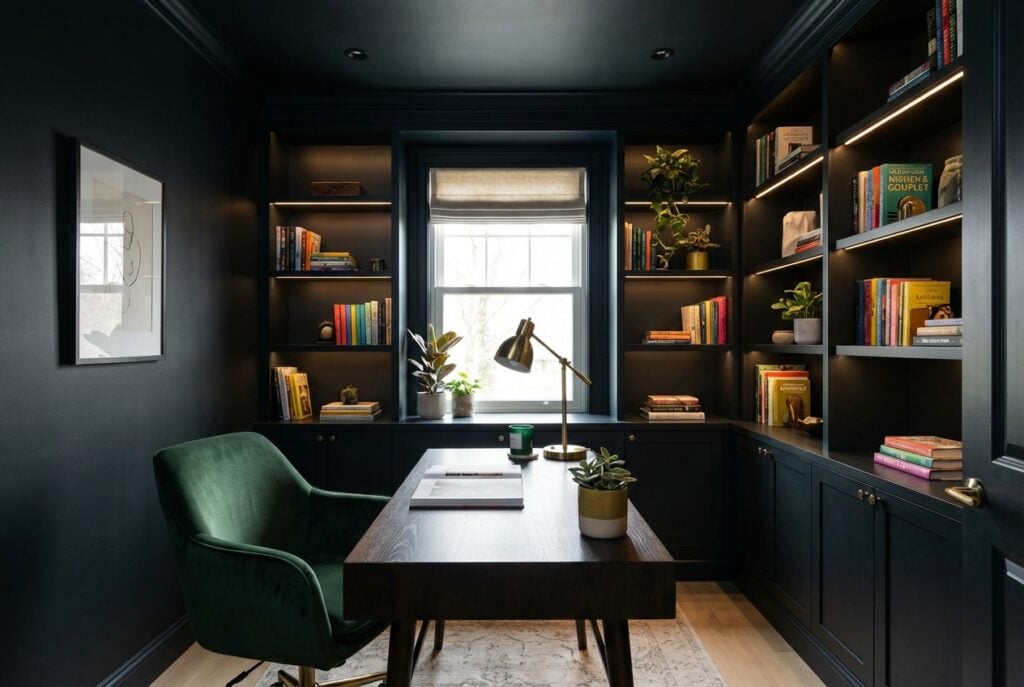
Add complexity by varying the sheen slightly. Keep walls in matte but use satin on doors or trim. The subtle difference in how light hits these surfaces adds professional-level detail that most people won’t consciously notice but will feel.
This approach works super well in small rooms. A tiny powder room or home office feels comforting rather than cramped when everything disappears into the same dark color. Just make sure you have good lighting, maybe a statement pendant or some wall sconces.
Decorate with high-contrast pieces. A white bouclé chair from Article, around $400. A light grey area rug. These become focal points against the dark backdrop, creating islands of brightness that keep the space from feeling oppressive. This dramatic interior design technique proves that creating a cozy home office on a budget is entirely achievable.
6. Can Velvety Black Walls With Specialty "Suede" Paints Deliver A Tactile Bespoke Finish?
Suede-effect paints are formulated with these amazing micro-beads that create a finish you can literally feel. When applied with overlapping X-strokes using a large brush, they dry to a soft, napped surface that mimics brushed leather or fine suede.
In deep black, this is probably the ultimate expression of velvety walls. It looks expensive and feels expensive. The texture catches light in interesting ways, creating subtle shadows and depth that change throughout the day.
Ralph Lauren and Behr both make versions of this. The Ralph Lauren stuff is pricier, around $60 per quart, but the texture is more pronounced. The application technique matters more than the brand, though. You need to work in sections and maintain consistent brush strokes.
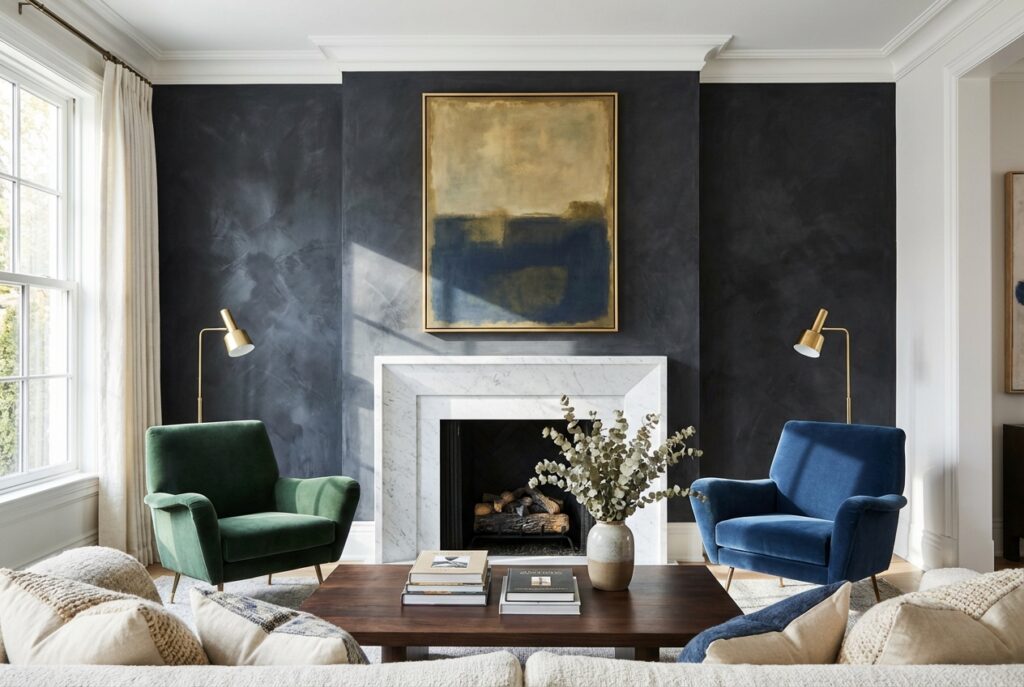
This works best as a feature wall. Try it behind a bed or around a fireplace, maybe one wall in a living room. The texture invites people to touch it, which creates a sensory experience that standard rooms lack.
Pair with hard, polished surfaces for contrast. A marble side table, chrome hardware, maybe a glass coffee table. The juxtaposition between the soft wall and hard furniture is what makes it feel designed rather than accidental.
The finish is entirely unique because of the hand-applied technique. No two walls look exactly the same, which adds that artisan quality you can’t get from a roller. It turns the wall itself into architectural interest, which is particularly valuable in generic modern homes where the bones are minimal. This luxury living room feature wall approach delivers results that rival expensive designer paint treatments.
Frequently Asked Questions
Q: Will velvety black walls make my room feel too small or dark?
A: Actually, matte black can make rooms feel larger. When walls absorb light instead of reflecting it, the edges and corners become less defined. Your eye can’t pinpoint exactly where the room ends, which creates an optical illusion of the walls receding.
The trick is layered lighting. Skip the overhead flush mount and use multiple light sources at different heights. A brass floor lamp from West Elm, maybe $200. Table lamps with warm bulbs. Wall sconces if you’re feeling ambitious. When light hits the matte surface, it glows rather than glares.
Plus, small rooms can benefit from that cocooning effect. A 10×12 bedroom feels intimate rather than cramped when the walls seem to dissolve into the darkness.
Q: How do I choose the right undertone for a black wall?
A: Not all shades of black are the same. Under different lighting conditions, you’ll see blue, purple, brown, or green undertones that can completely change the mood of the room.
For warmer, cozier spaces, look for blacks with brown or charcoal bases. Benjamin Moore’s Wrought Iron has those sooty undertones that work well with wood and brass. For cooler, more modern spaces, try blacks with blue or navy undertones like Sherwin Williams’ Naval.
Always test large samples, like 2×2 foot squares, on different walls. Check them in morning light, afternoon light, and under your artificial lighting at night. The undertones will shift throughout the day, and you want to make sure you like all the variations.
Q: Is it hard to maintain and clean matte black walls?
A: Modern matte paints are much more durable than they used to be. Benjamin Moore’s Advance and Sherwin Williams’ ProClassic both offer scrubbable matte finishes that you can actually wipe down without leaving shiny marks.
For high-traffic areas, consider limewash instead. The naturally mottled texture hides fingerprints and scuffs better than flat paint. Plus it has antimicrobial properties and gets better with age.
Use a damp microfiber cloth for cleaning, never paper towels or rough sponges. Work gently and avoid circular motions that can burnish the surface. Most marks come off easily if you catch them early.
