


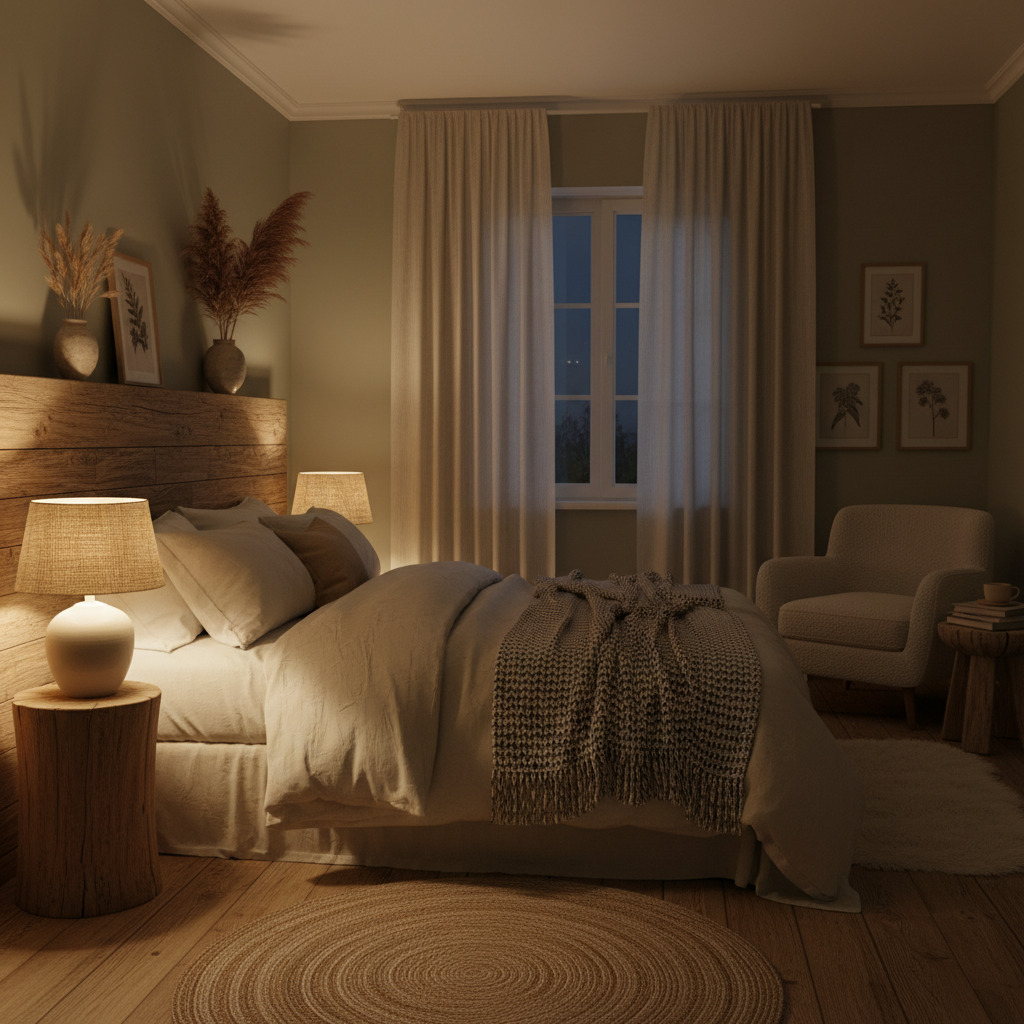
Your bedroom lighting affects your sleep more than you probably realize. Not in some vague wellness way, but measurably. Blue light from overhead fixtures tells your brain it’s daytime. Harsh brightness at 10 PM suppresses melatonin production. And that cool white LED bulb from Home Depot might be keeping you awake. Thoughtful bedroom lighting design addresses these problems by creating an environment that actually supports your sleep cycle.
Most bedrooms get lit like offices by accident. One ceiling fixture, maybe a bedside lamp if you’re lucky. But your bedroom needs to work differently at 7 AM than it does at 10 PM. Different activities need different light. Reading requires focused brightness. Getting dressed needs even illumination. Winding down before sleep works best with warm, dim light that gradually gets your brain ready to shut off.
Here are five lighting approaches that actually improve sleep quality, based on what sleep researchers have figured out about how light affects our circadian rhythms.
1. Layered Lighting: Creating thoughtful bedroom lighting with Dynamic and Relaxing Ambiance
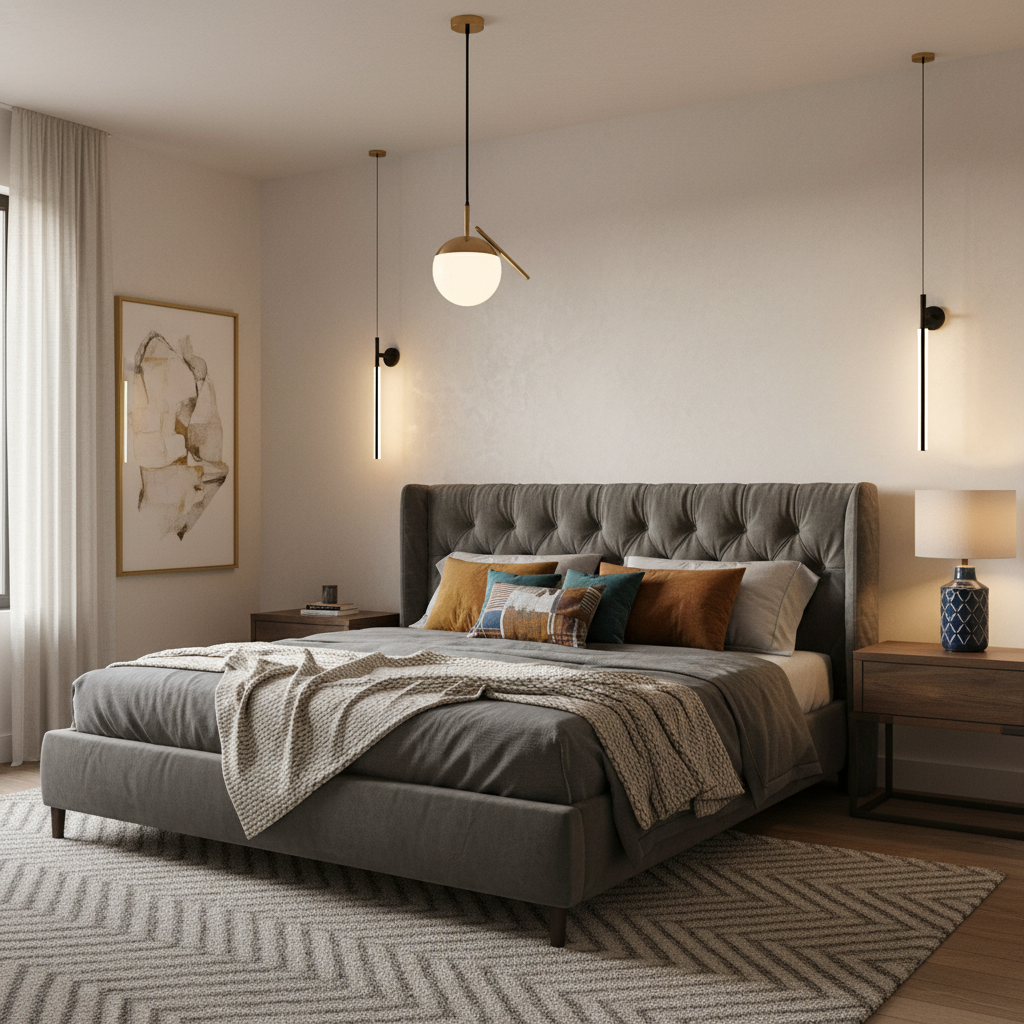
Layered lighting sounds fancy but it just means having different light sources for different purposes. Ambient light for overall room brightness. Task light for specific activities like reading. Accent light for atmosphere.
Most people skip this and rely on one ceiling fixture. Bad move. Overhead lighting is almost always too bright and comes from the wrong angle. It creates harsh shadows and makes everything feel clinical.
Start with ambient lighting that doesn’t come from directly above. A floor lamp in the corner works. Table lamps on dressers. Even string lights around the headboard, though pick warm white LEDs, not the cool blue ones from Target’s holiday section.
For task lighting, you need something adjustable. Those swing-arm wall sconces from West Elm run about $89 and let you direct light exactly where you need it for reading. IKEA’s Forså work lamp is like $25 and clips onto headboards surprisingly well, though it looks more utilitarian.
Accent lighting adds personality without much brightness. Small lamps on bookshelves. LED strips behind the headboard, set to warm colors. Picture lights over artwork, though these work better in larger bedrooms.
The Journal of Clinical Endocrinology & Metabolism published research showing that bright evening light suppresses melatonin for hours. This strategic illumination design lets you dim the ambient sources while keeping just enough task light to function. Your brain gets the signal that bedtime is approaching, but you can still see to brush your teeth.
This setup costs more upfront than one ceiling fixture. But you’ll use your bedroom more and sleep better, which seems worth the extra $200 or so for multiple light sources.
2. Smart Bulbs & Automation: Optimizing Light for Sleep Cycles
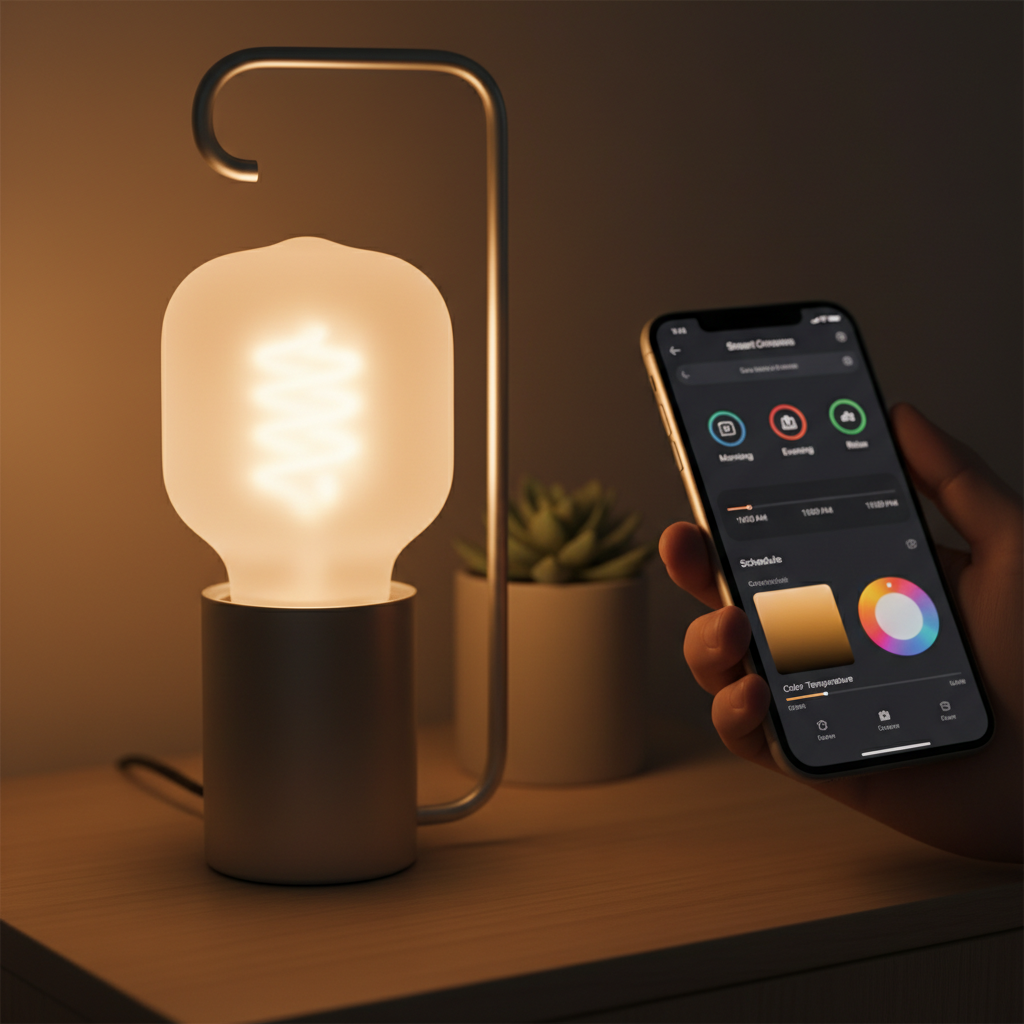
Smart bulbs let you automate the light changes your brain needs for good sleep. Philips Hue bulbs cost around $15 each but work with almost any lamp. Wyze bulbs are cheaper at $8 each, though the app is less polished.
The main benefit is scheduling. You can program lights to gradually dim starting two hours before bedtime. They shift from bright white to warm amber to very dim orange. Your brain starts producing melatonin naturally instead of fighting against bright light.
Morning automation works well too. Lights gradually brighten over 30 minutes, simulating sunrise even in winter. This feels less jarring than an alarm clock and helps regulate your circadian rhythm. Though honestly, if you have blackout curtains, a sunrise alarm clock might be simpler and costs less.
Color temperature adjustment is where smart bulbs really shine. During the day, you want cooler light around 4000K for alertness. Evening light should shift to 2700K or lower. The warmest settings look almost orange, which feels weird at first but genuinely helps you wind down.
Philips has a “circadian rhythm” setting that adjusts automatically throughout the day. It works pretty well, though I found the evening transition started too late for my schedule. Most people need to manually set their preferred dimming times for creating the perfect bedroom ambiance.
Smart switches like Lutron Caseta work if you prefer regular bulbs. They’re around $50 per switch and let you dim existing fixtures from your phone. Installation requires basic electrical work, or about $100 for an electrician if you’re not comfortable with wire nuts.
Harvard Medical School research shows blue light exposure before bed delays sleep onset by an average of 16 minutes. Smart bulbs eliminate this problem automatically once you set them up. Though you still need to put your phone away, since app notifications kind of defeat the purpose.
3. The Power of Dimming: Controlling Light Intensity for Ultimate Relaxation
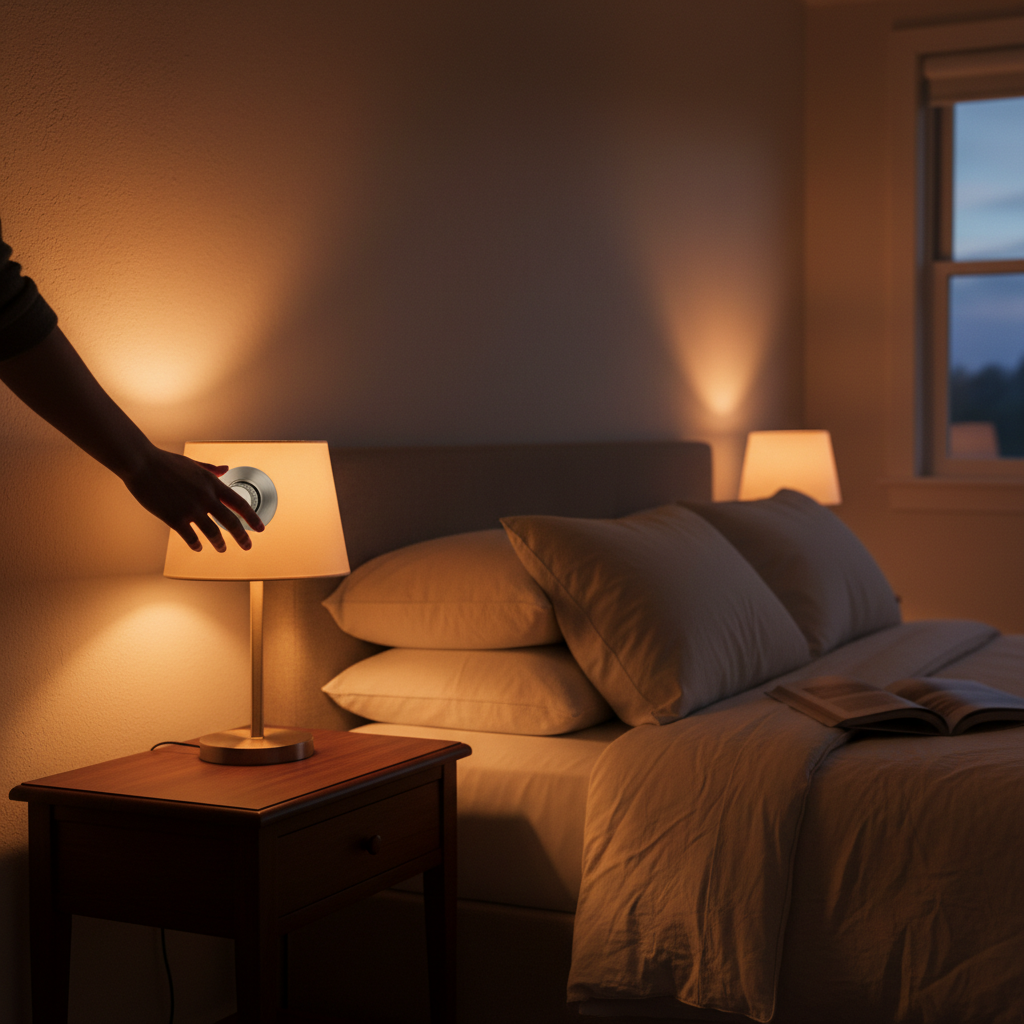
Dimming capability should be non-negotiable in bedrooms. Your lighting needs change drastically between getting dressed at 6 AM and reading at 10 PM. Fixed brightness forces you to choose between too dark or too bright.
Wall dimmer switches cost $20-40 and work with most existing fixtures. Lutron makes reliable ones. Installation takes 15 minutes if you’re comfortable with basic electrical work. The old switch comes out, the new one goes in with the same wire connections.
Make sure your bulbs are dimmable. Most LED bulbs work fine, but check the packaging. Non-dimmable LEDs flicker or hum when dimmed, which is annoying. Incandescent bulbs dim beautifully but use more electricity and generate heat.
Bedside lamp dimming matters more than overhead fixtures. You’re closer to the light source, so brightness changes feel more dramatic. Touch-sensitive dimmer lamps from Target run about $40. They let you adjust brightness by tapping the base, which works well for nighttime when you can’t see switches clearly.
Floor lamps with multiple brightness settings offer similar control. IKEA’s Holmö lamp has three brightness levels for $25. Not as smooth as continuous dimming, but enough range for most situations.
Table lamps are trickier to dim unless they have built-in controls. Plug-in dimmer modules work but add bulk between the outlet and cord. They’re around $15 and let you control any lamp, though the inline controls can be awkward to reach.
The National Sleep Foundation recommends dimming lights 1-2 hours before sleep. Most people need lighting around 30% of daytime levels to feel relaxed. This approach to bedroom light control helps create that perfect pre-sleep environment. Experiment with your preferences, but start dimmer than feels natural. Your eyes adjust quickly and you’ll sleep better.
4. Color Temperature: Selecting Relaxing Hues for Restful Sleep
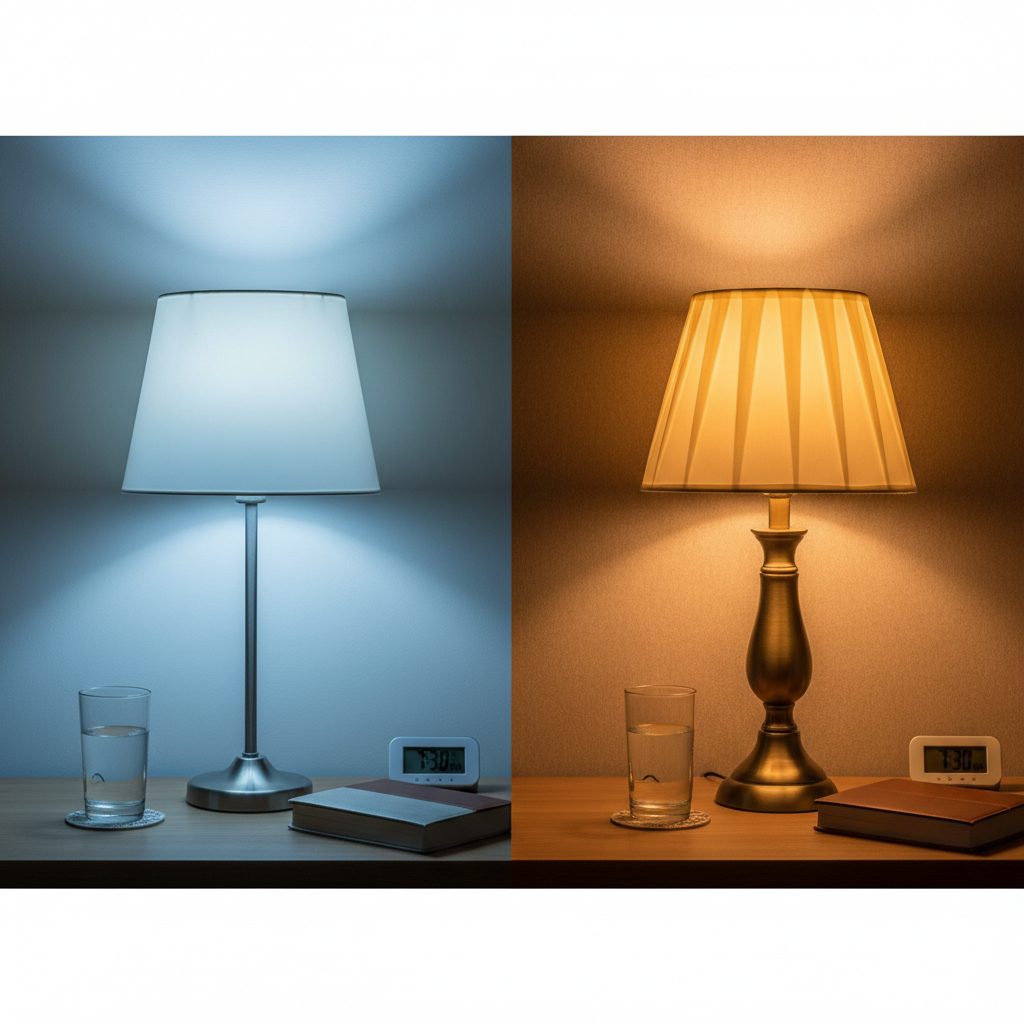
Color temperature gets measured in Kelvin, which is confusing because higher numbers mean cooler light. Daylight is around 5000K and looks bluish-white. Candlelight is 1800K and looks orange. For bedrooms, you want somewhere between candlelight and incandescent bulbs.
Most LED bulbs labeled “soft white” are 2700K, which works well for evening lighting. “Daylight” bulbs are usually 5000K and will keep you awake if used at night. The packaging should list the Kelvin temperature, though some cheap bulbs don’t specify.
For bedside reading, 2700K provides enough contrast for text without being stimulating. Cooler light makes reading easier but signals your brain to stay alert. If you read for hours before bed, this matters more than you’d expect when planning bedroom lighting for better sleep.
Warm dimming bulbs change color temperature as they dim, shifting from 2700K at full brightness to around 2000K when dimmed. This mimics how incandescent bulbs naturally behave and feels more comfortable than LEDs that stay the same color at all brightness levels.
Philips makes warm dimming LEDs that cost about $8 each. The color shift is subtle but noticeable if you pay attention. Regular 2700K LEDs work fine too and cost less.
Avoid “cool white” or “bright white” bulbs in bedroom fixtures. They’re usually 4000K or higher and feel harsh in relaxing spaces. Save them for closets, bathrooms, or task lighting where you need alertness.
The Lighting Research Center found that exposure to warm light in the evening helps maintain natural melatonin production. Cool light suppresses it for several hours, even after you turn off the lights. This isn’t subtle – blood tests show measurable differences in hormone levels.
Restaurant lighting designers figured this out decades ago. Warm, dim light makes people feel relaxed and comfortable. Bright, cool light makes them eat faster and leave sooner. Your bedroom should feel more like a cozy restaurant than a fast-food place, with proper mood lighting that supports relaxation.
5. Natural Light & Blackout: Optimizing Day & Night Conditions
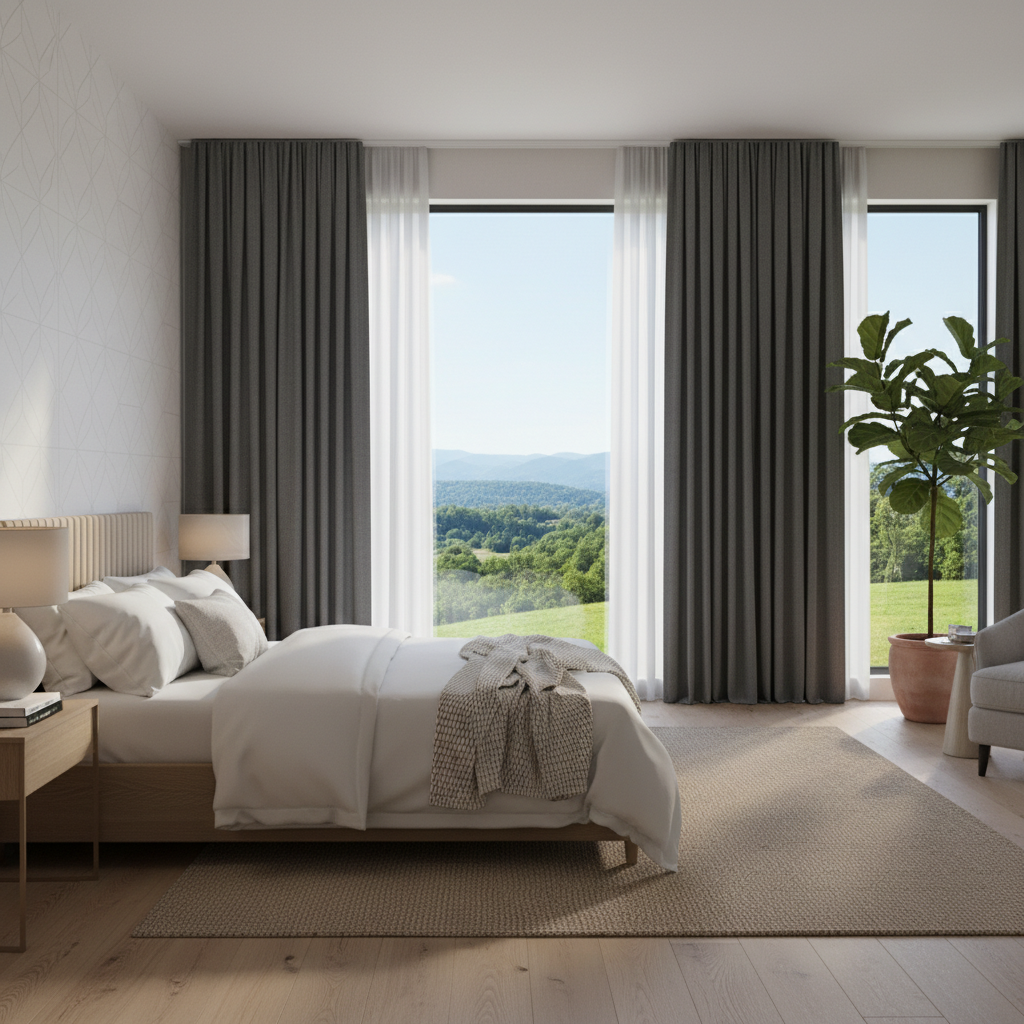
Natural light during the day helps regulate your sleep cycle more than any artificial lighting scheme. But you need complete darkness at night for deep sleep. This requires window treatments that actually block light, not just provide privacy.
Blackout curtains work better than blackout shades for most windows. Curtains extend past the window frame and overlap in the middle, blocking light gaps. IKEA’s Majgull blackout curtains cost about $15 per panel and block nearly all light when properly hung.
Install curtain rods several inches beyond the window frame. This prevents light from leaking around the edges. Ceiling-mounted rods work better than wall-mounted ones for light blocking, though they’re harder to install.
Double-layer window treatments provide maximum darkness. Blackout curtains over light-filtering shades give you privacy during the day and complete darkness at night. This setup costs more but works in bedrooms facing streetlights or security lights.
Room-darkening shades are cheaper than blackout curtains but less effective. They block most light but allow some leakage around the edges. Fine for general dimming, but not sufficient if you’re sensitive to light or work night shifts.
Light pollution affects sleep quality even through closed eyelids. Studies show that people sleep deeper and wake up more refreshed in completely dark rooms. Even small amounts of light can disrupt sleep cycles.
Electronic device lights matter too. Alarm clock displays, power indicators, charging lights. Cover them with electrical tape or move them out of direct sight lines. Your bedroom should be dark enough that you can’t see your hand in front of your face.
Sleep masks work as backup for imperfect blackout situations. The Manta Sleep Mask costs around $35 and blocks light without pressing on your eyes. Cheaper alternatives work fine if they stay in place while you sleep.
Morning light exposure is equally important. Open curtains immediately when you wake up, even if it’s still dark outside. Turn on bright lights if sunrise hasn’t happened yet. This helps reset your circadian rhythm and makes falling asleep easier the next night.
Research from Environmental Health Perspectives shows that people living in areas with more light pollution have higher rates of sleep disorders. Your bedroom lighting setup can’t fix streetlights and neon signs, but blackout curtains and proper evening lighting help minimize their impact.
Frequently Asked Questions
Q: What is the best type of light bulb for bedroom lighting?
A: LED bulbs with 2700K color temperature work best for most bedroom applications. They produce warm, amber-toned light that doesn’t interfere with melatonin production. Look for bulbs labeled “soft white” rather than “daylight” or “cool white.” Dimmable versions cost about $3-8 each depending on brand and features. Philips and GE make reliable options, though IKEA’s bulbs work fine and cost less. Avoid cool-toned LEDs above 3000K for evening use, as they can suppress sleep hormones for several hours.
Q: How can I minimize blue light exposure in my bedroom?
A: Use warm-toned bulbs below 3000K in all bedroom fixtures. Avoid phones, tablets, and laptops for at least an hour before bed, since their screens emit concentrated blue light. If you must use devices, enable night mode or install apps like f.lux that filter blue wavelengths. Blue light blocking glasses work but feel like overkill unless you’re particularly sensitive. The bigger issue is usually overhead lighting and bright white LEDs, which are easier to fix by switching bulbs or adding dimmers.
Q: Are bedside lamps better than overhead lighting for sleep?
A: Yes, bedside lamps provide better light distribution for evening activities and create less sleep disruption. Overhead fixtures shine light directly downward, creating harsh shadows and bright spots. Table lamps and wall sconces spread light more evenly and can be positioned to avoid glare. Plus, you can easily control bedside lamps without getting out of bed. Overhead fixtures work fine during the day but should have dimmers if you plan to use them in the evening. Most people find that switching to primarily lamp-based lighting improves their bedroom’s comfort level significantly.
