


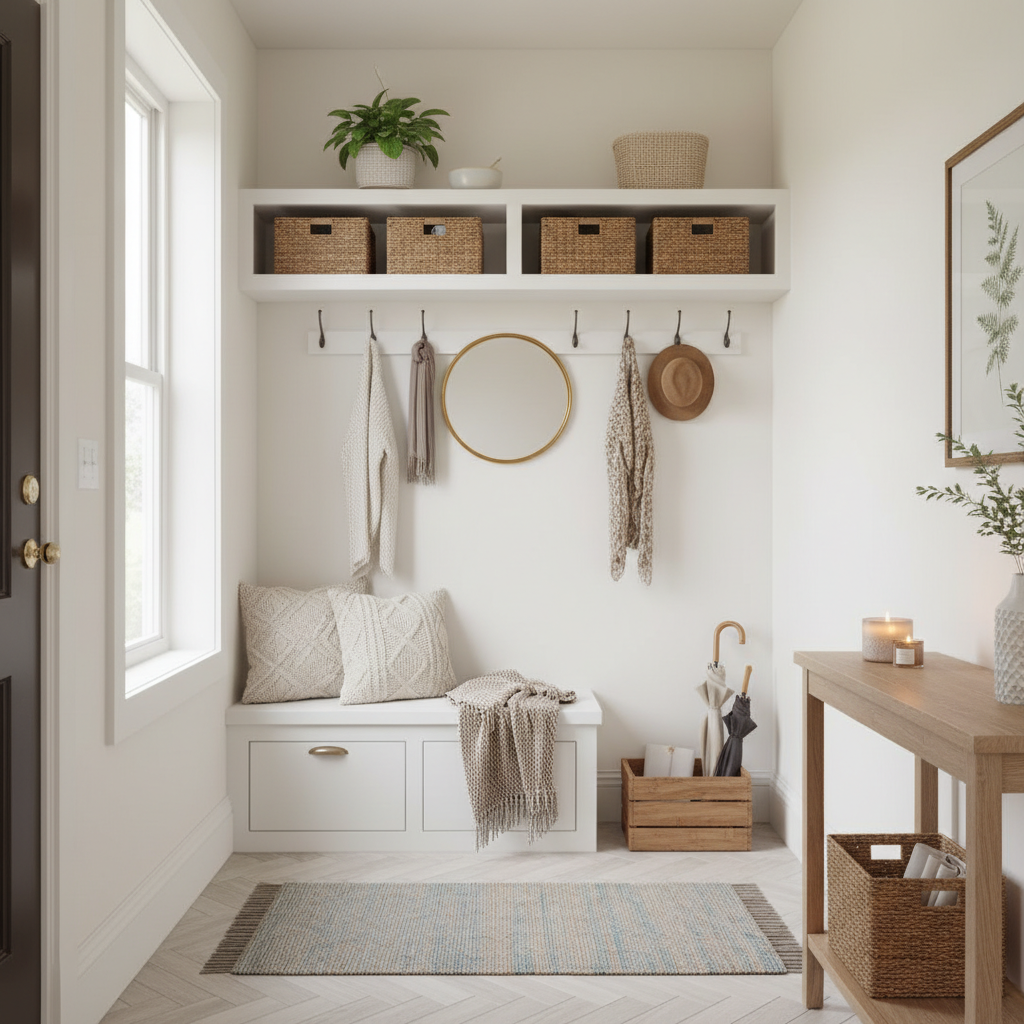
Your entryway is three feet wide. There’s nowhere to put anything. Coats pile up on the floor, shoes multiply by the door, and every morning you’re doing that awkward one-legged hop trying to get boots on while standing because there’s no room for a bench.
I’ve been there. Actually, I’m currently there in my own apartment. Narrow hallway, no closet, coat hooks screwed directly into drywall because what else are you going to do? Small entryways are everywhere in older buildings and apartments, and most of us are stuck with them.
These spaces don’t have to be this frustrating. You’re not getting more square footage, but you can make what you have work harder. These seven ideas helped me stop tripping over shoes and gave guests somewhere to put their stuff when they visit. Some will fit your space, some won’t. Use what makes sense for your particular small entryway setup.
1. Wall-Mounted Storage When Floor Space Doesn't Exist
Walls. You’re probably not using them enough.
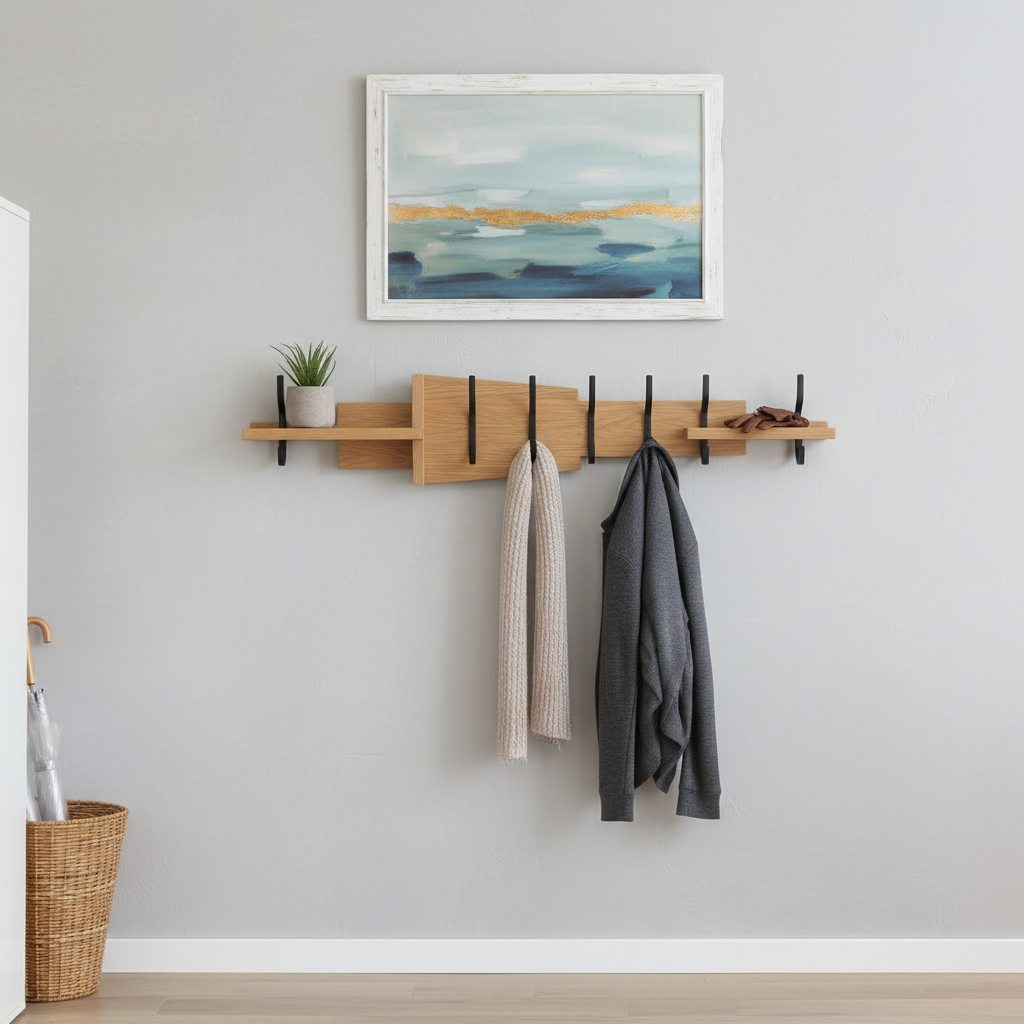
Most people put up one row of coat hooks and call it done, but your walls can hold way more than that. In a small entryway, vertical space is the only space you have. Floating shelves at different heights solve the “where do I put my keys” problem. One shelf near the door catches mail and sunglasses. Another one higher up holds a decorative basket. A third might just be there because the wall looked empty.
The varying heights are important. If all your shelves line up perfectly, it looks like you installed commercial shelving. Stagger them a bit.
Wall-mounted systems that combine hooks, shelves, and maybe a mail slot work well if you need serious organization. I’ve seen pegboard setups where people rearrange hooks and baskets whenever their storage needs change. Those are great if you’re the type who reorganizes every few months. If you’re not, regular shelves work fine.
Locker-style cabinets fit in narrow spaces and give you enclosed storage. This matters if you have kids who leave stuff everywhere, or if you just don’t want to look at piles of winter accessories all the time.
Here’s something I learned the hard way: measure your wall width before you buy anything. That shelf unit looks reasonable in the store. It looks massive when you’re trying to fit it in a 36-inch hallway. Slim, simple designs work better than ornate ones in tight spaces.
One more thing. If your entryway is actually a hallway people walk through, keep wall-mounted stuff within a foot of the wall. Otherwise someone’s getting whacked in the face by a coat hook. Ask me how I know.
2. Furniture That Multitasks
Every piece of furniture in a small entryway needs to earn its spot. If it only does one thing, it’s probably taking up space you need for something else.
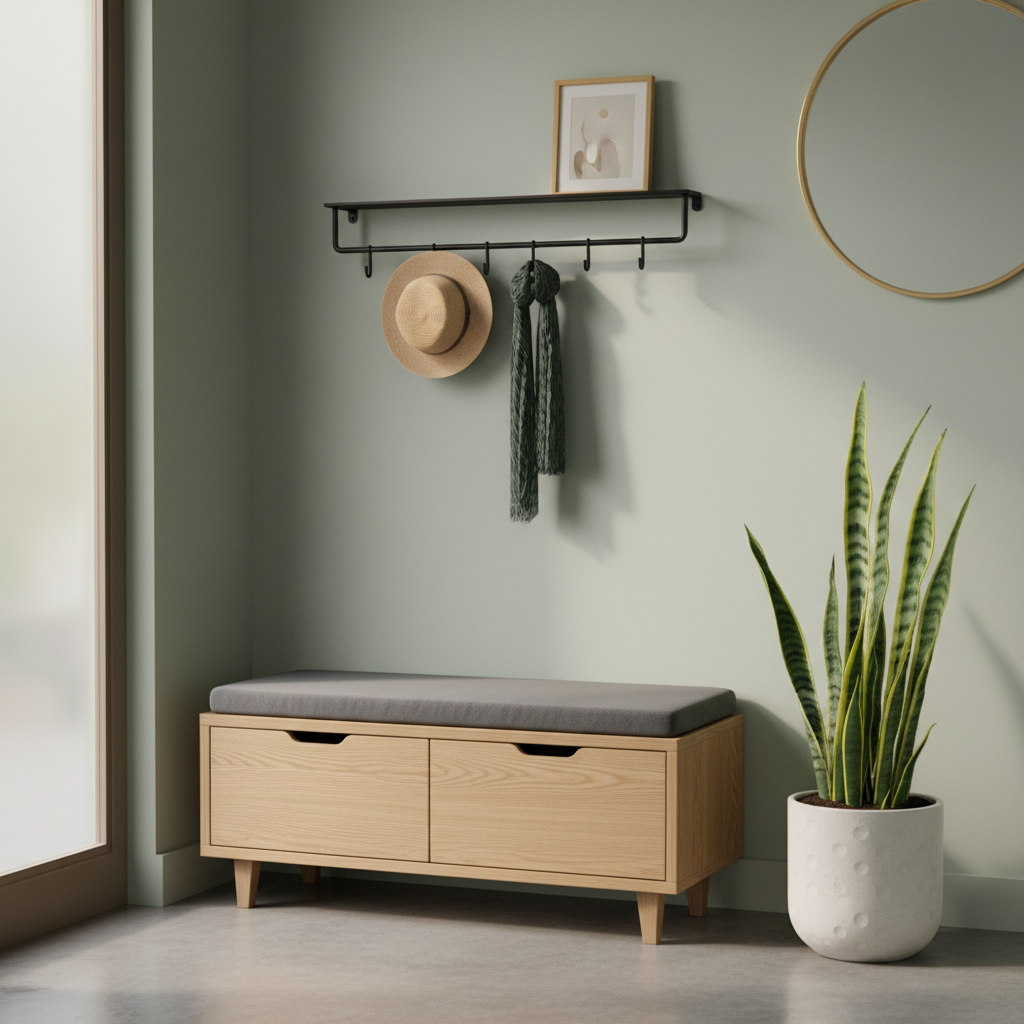
Storage benches are the obvious choice. Sit down, put shoes on, lift the top, stuff your winter gloves inside. I prefer benches with drawers over lift-top ones because you don’t have to move everything off the top every time you want to grab something from inside. My parents have a lift-top bench and there’s always a pile of mail sitting on it, which defeats the purpose.
Console tables work if you have about 10-12 inches of depth to spare. The skinny ones don’t hold much, but they give you a surface for keys and a lamp, plus maybe a drawer for mail and pens. My friend has one in her hallway that’s only 8 inches deep and it somehow holds everything she needs. For small entryways, narrow is better than nothing.
Ottomans with storage inside are hit or miss. Some have lids that are also trays when you flip them over, which is clever. Some are just round ottomans that hold stuff inside and that’s it. They work well if you’re extremely tight on space, less well if you need actual surface area.
Small stools are underrated. A decorative stool sits there looking nice, holding a plant or a basket, then you move it when you need to sit. Nesting stools stack when you don’t need them, spread out when three people are trying to get shoes on at the same time. I’ve seen this exact scenario play out at holiday gatherings.
Furniture with slim legs keeps the space feeling open. Heavy, solid pieces make everything feel more cramped. Open bases let you see through to the floor, which tricks your brain into thinking there’s more space than there is.

3. Mirrors (But Only If Placement Makes Sense)
Mirrors are supposed to make small spaces feel bigger. Sometimes they do. Sometimes they just reflect clutter back at you and make the mess look twice as bad.
Placement matters more than size, though size still matters. The best spot is opposite a window where the mirror catches natural light and bounces it around. Even a small window makes a difference when the light gets reflected. If you don’t have a window in your entryway, position the mirror to catch light from another room or the hallway. Small entryways are often the darkest spots in a home, so this light-bouncing trick helps more than you’d expect.
Go bigger than feels comfortable when you’re shopping. A small mirror doesn’t create any illusion of space. It just sits there being a small mirror. Full-length mirrors on one wall make ceilings feel higher, which helps in spaces with low ceilings. Wide horizontal mirrors make narrow hallways feel less tunnel-like.
Skip the mirror entirely if your entryway is cluttered. Seriously. I tried this once in a cramped entryway and seeing double the amount of shoes piled by the door was depressing. Get the organization sorted first, then add a mirror.
Frames are personal preference. Simple frames blend in, ornate frames become a focal point. Pick based on whether your space needs more visual interest or less.
The practical benefit is obvious. You can check how you look before leaving. Not revolutionary, just convenient.
4. Better Lighting Makes Everything Look Less Depressing
Dark entryways feel cramped even when they’re not. I lived in an apartment once where the entryway had zero natural light and one sad overhead bulb. Walking in after work felt like entering a cave.
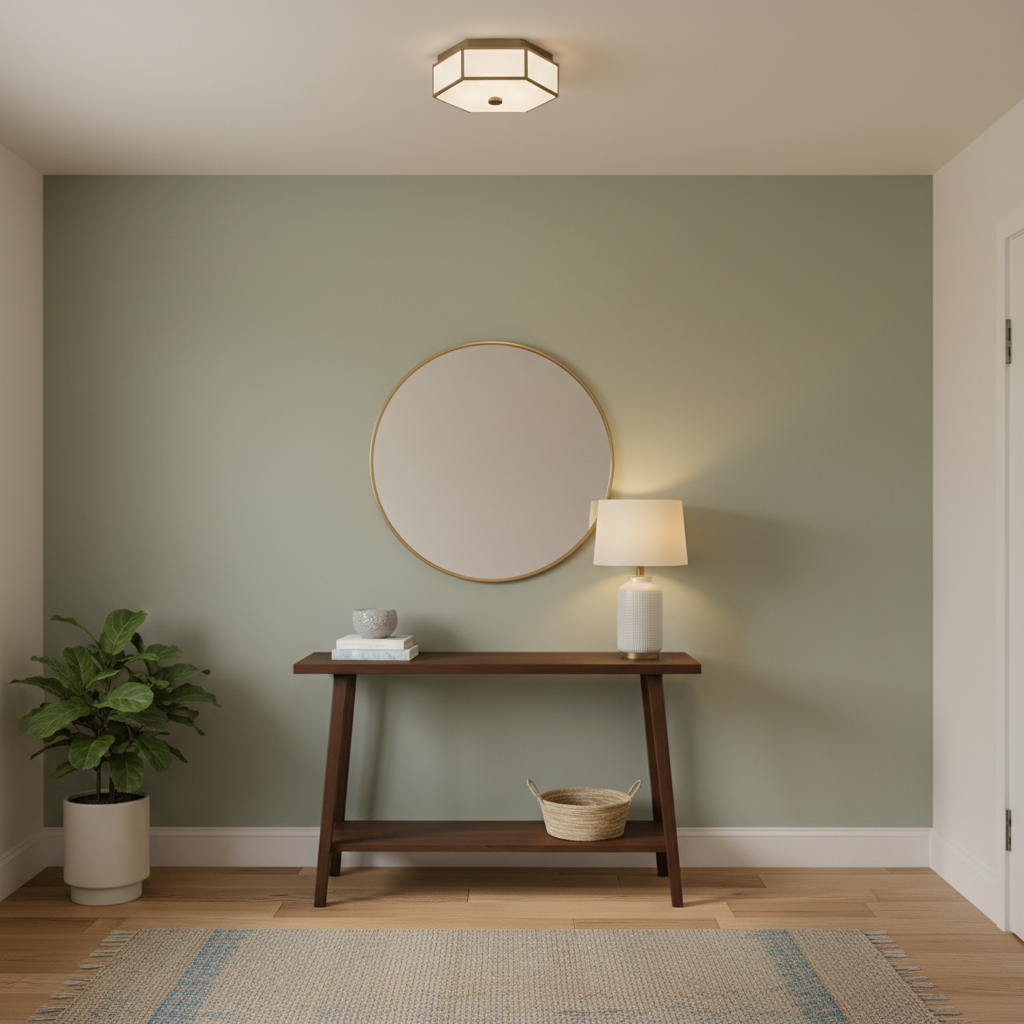
You need multiple light sources at different heights, which sounds like overkill until you try it. One ceiling fixture isn’t enough. If you have low ceilings, use a flush-mount or semi-flush fixture so people don’t hit their heads. Higher ceilings can handle a small pendant or even a chandelier, which makes the space feel taller by drawing your eye up.
Add a table lamp on your console if you have one. This gives you focused light for sorting through mail or finding your keys in the bottom of a bag. Wall sconces work if you don’t have surface space. LED strips under floating shelves create a subtle glow without taking up any room. Most small entryways benefit from at least two or three light sources.
Accent lighting on artwork or mirrors adds depth. Not essential, but it makes the space feel intentional instead of just functional. You’re lighting for ambiance here, not tasks.
Install dimmers. Bright light in the morning when you’re trying to find everything, softer light in the evening when you’re coming home and don’t want to be assaulted by overhead lighting. Warm light around 2700K-3000K feels more welcoming than cool white.
The difference between one ceiling light and multiple sources is dramatic. Shadows disappear. The space feels open. People comment on how nice your entryway is even though you didn’t change anything except the lighting.
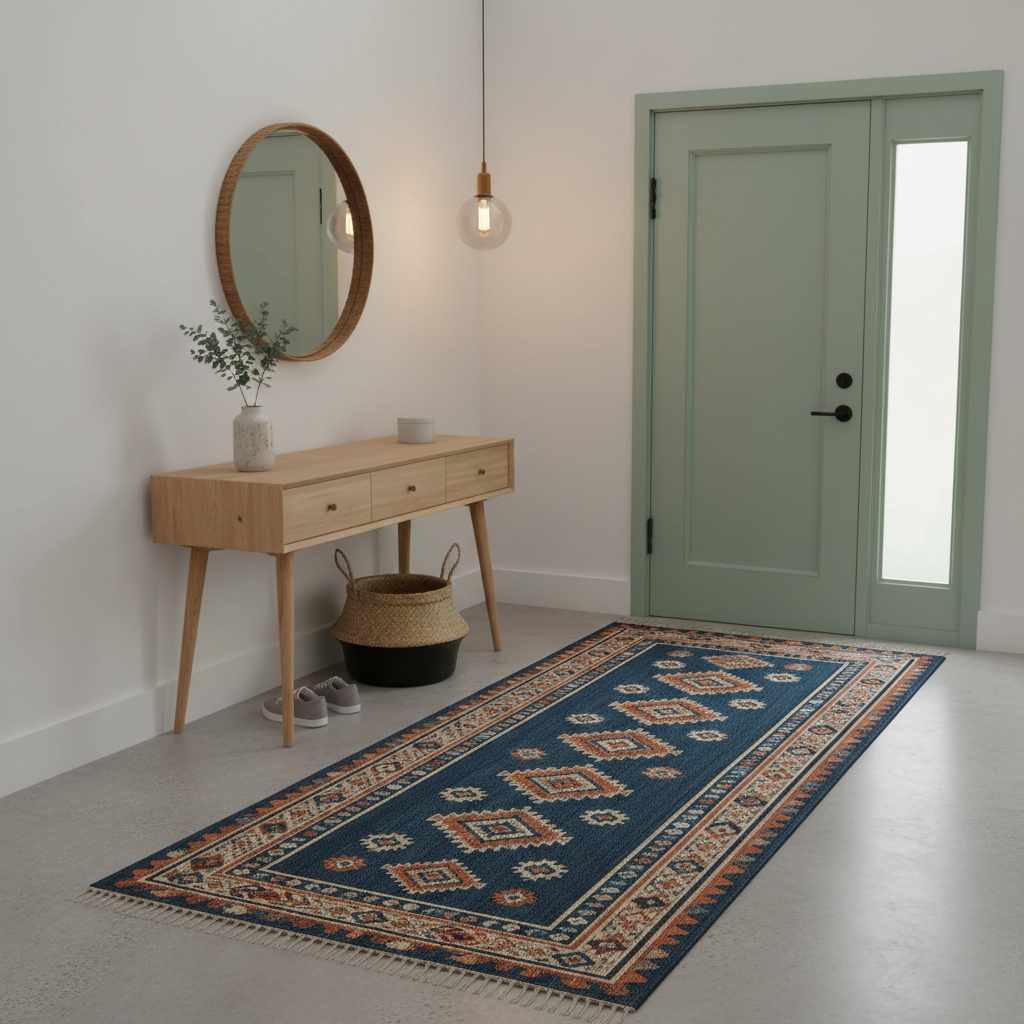
5. Rugs Define Space When Walls Don't
A rug tells people “this is the entryway” without needing actual walls to mark it off.
This works particularly well in open layouts where your entryway just bleeds into the living room with no clear boundary. The rug creates a visual separation. It also works in hallways where you need to establish where the drop zone begins and ends.
Runner rugs fit narrow entryways better than standard rectangular rugs. They guide traffic without overwhelming the width. For square or wider foyers, a regular area rug works fine. Leave a few inches of floor showing on all sides instead of going wall-to-wall. This makes the space feel bigger, weirdly enough.
Rugs add color, texture, pattern. All the things that make a space feel intentional instead of just functional. They also protect your floor from the dirt, salt, and water that gets tracked in constantly. Materials matter. Jute and sisal hold up well to traffic. Synthetic blends handle moisture. Delicate wool rugs belong in other parts of your house. Go with darker colors or busy patterns if you don’t want to see every speck of dirt.
Proportion is tricky with small entryways. Too small and the rug looks like an accident. Too big and it crowds the space. Measure your entryway before you shop, write those dimensions down, bring them with you. I cannot count how many times I’ve eyeballed rug sizes and gotten it wrong.
If a rug doesn’t work in your space, different flooring material creates the same boundary effect. Tile or vinyl in the entryway area, wood or carpet in the main living space. This handles moisture even better than a rug.

6. Get Rid of Half Your Stuff
The fastest way to make a small entryway feel bigger is to remove things from it. Not organize them. Remove them.
Clutter makes spaces feel chaotic and smaller. You know this already. But actually doing something about it is harder than reading advice about it. Start by looking at what’s physically in your entryway right now. Coats, shoes, bags, mail, keys, that random screwdriver that’s been sitting there for three weeks. Ask yourself which items genuinely need to be in the entryway.
Current-season coats only. Everything else goes in a closet somewhere else. Shoes you wore this week stay. Everything else goes. One bag out at a time, not the collection of six tote bags hanging on hooks because you might need them someday.
The “one in, one out” rule sounds simple but it works. New pair of shoes comes home, old pair gets moved to the bedroom closet or donated. This prevents the gradual accumulation that happens when you’re not paying attention. And you’re not paying attention most of the time because it’s the entryway, not a space you spend time thinking about.
Use closed storage for what stays. Cabinets or storage ottomans hide shoes and accessories so you’re not looking at piles of stuff. Open shelving looks great if you’re extremely disciplined about organization. For normal people, it becomes a mess within a week. Baskets and boxes contain smaller items like mail, dog leashes, gloves, charging cables, whatever tends to accumulate.
The goal is clean surfaces with only essentials visible. When you can see the floor and the surfaces aren’t covered in stuff, the space feels calm. You can find what you need without digging. Guests can put their coats somewhere that isn’t the floor.
Your small entryway should have breathing room. When there’s too much crammed in, walking through the door feels suffocating instead of welcoming.
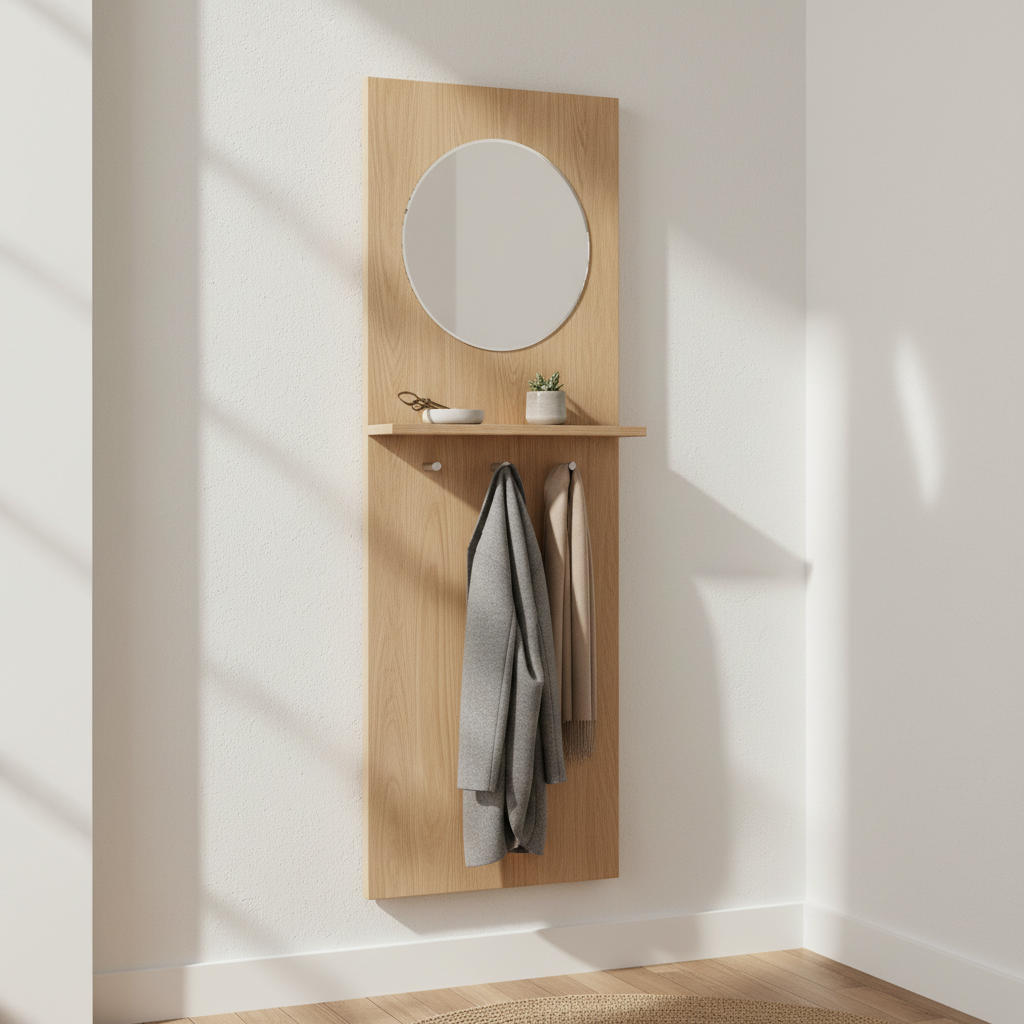
7. Wall-Mounted Elements for the Finishing Touches
Walls hold more than storage. They’re also where you put the stuff that makes your entryway look intentional.
Floating shelves give you surface area without the bulk of furniture. Keys, a small plant, a decorative bowl for loose change. These come in different sizes and mounting styles. Some have hidden hardware so they look like they’re floating with nothing supporting them, which is a nice look if you’re going for minimal.
Wall-mounted key holders combined with a small shelf or mail slot keep essentials organized and easy to grab. Slim shoe racks mounted to the wall free up floor space. Over-the-door organizers work if your entryway connects to a closet, though these are hit or miss depending on your door setup.
Decorative elements belong on walls too. A gallery wall arranged vertically makes ceilings look higher. This works better than one large horizontal piece in narrow spaces. I’ve seen people try to hang one massive canvas in a small entryway and it just overwhelms everything. Three or four smaller prints look better.
Wall-mounted clocks, decorative signs, small art prints. These add personality without taking up floor space.
Scale matters. Oversized pieces crowd small spaces. Choose items proportionate to your wall area. If you’re standing in your entryway and a piece of art feels too big, it probably is.
The combination of functional and decorative wall elements makes an entryway feel finished. You’re using vertical space for storage and style without making the floor feel crowded.
What Actually Works in Small Entryways
Small entryways need strategy more than they need stuff. I keep saying this to people and they keep buying more organizers without removing anything, which defeats the purpose.
Start with your biggest problem. No coat storage? Wall hooks solve that immediately. Dark hallway making everything feel depressing? Better lighting changes the whole vibe. Too much clutter? Declutter first before buying storage solutions to organize the clutter. This seems obvious but most people skip this step.
You’re working with limited square footage in any small entryway. Be selective about what you bring in. One good storage bench beats three mediocre solutions that each do one thing. A well-placed mirror does more than five decorative items that just take up space.
The difference between a cramped entryway and a functional one usually comes down to what you’re willing to get rid of and how you use vertical space. Everything else is details. Most small entryway problems get solved by doing less, not more.
Frequently Asked Questions (FAQs)
How do I make a small entryway feel bigger without renovating?
Mirrors opposite windows or light sources make the biggest difference in a small entryway. Paint walls in light colors like soft white or cream. Get stuff off the floor with wall-mounted storage. Add multiple light sources at different heights instead of one overhead fixture. And declutter. You’d be surprised how much bigger a space feels when there’s less stuff crammed into it. These changes are cheap compared to renovation and you can do most of them in a weekend.
What shoe storage works in a tiny entryway?
Wall-mounted shoe racks hold shoes vertically, which saves floor space in small entryways. Storage benches with drawers or lift-tops hide shoes inside, though drawers are easier to access. Slim stackable cubbies work if you have some vertical space. Over-the-door organizers are an option if your entryway connects to a closet. The main thing is keeping shoes off the floor where they create visual clutter and trip hazards. I’ve tried all of these at various apartments and they all work fine if you actually use them consistently.
What colors make a small entryway more welcoming?
Light colors make small entryways feel bigger. Soft whites, creams, light grays. Pale blues and greens if you want some color. These reflect light instead of absorbing it. Add personality through colorful rugs, artwork, or decorative objects instead of painting walls in dark colors. Keep walls and larger furniture in muted tones so the space doesn’t feel busy or chaotic. The goal is making the space feel open and calm, not sterile.
