When you purchase through links on our site, we may earn an affiliate commission.

KEY TAKEAWAY
While white walls define a room, moody paint colors blur the boundaries, creating a cocoon effect that reduces overstimulation.

Most people think a dark room is about hiding things: clutter, bad floors, whatever. But truthfully, I think a moody space is sometimes the only place where you can finally be seen by yourself. While the world continues to praise “light and airy” minimalism, many of us are finding that those sterile, white-box rooms feel a bit like a white flag of surrender. They are loud. They are demanding. They require a level of “perfect” that the human nervous system wasn’t designed to maintain 24/7.

If your home currently feels like a distraction instead of a sanctuary, it might be because your walls lack the depth they need to help you truly power down. Design is a form of emotional restoration. By leaning into saturated, moody pigments, we aren’t just decorating; we are architecture-ing a quiet reset for the soul.

Here are five rich alternatives to black that provide a healing backdrop for a life lived with intention:

1. Midnight Teal: The Weightless Ocean

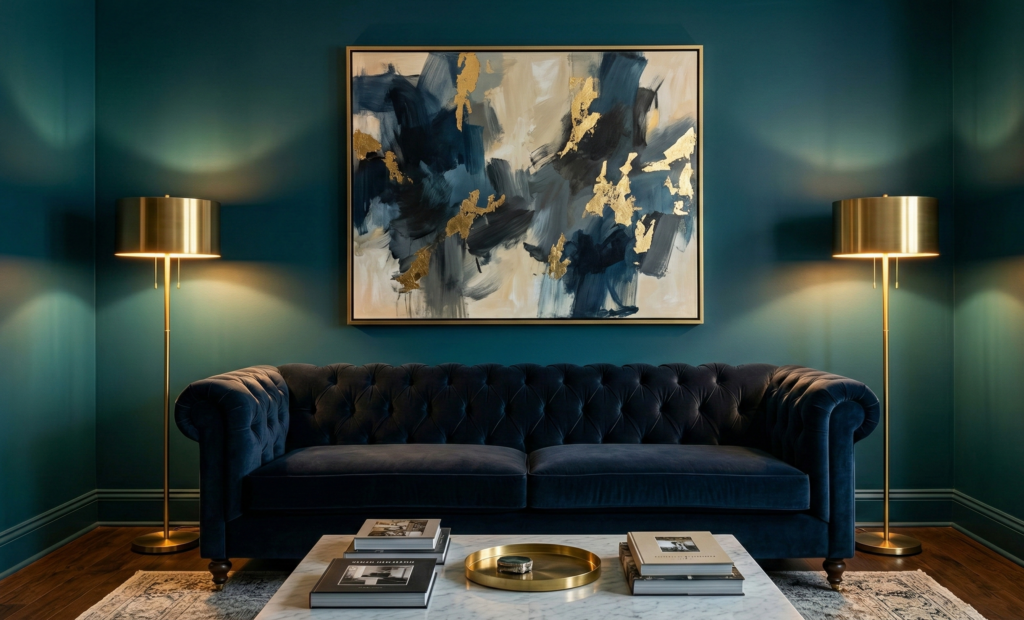
A sophisticated living room featuring deep Midnight Teal walls, a navy blue velvet chesterfield sofa, brass floor lamps, and a large gold leaf abstract painting.
This Midnight Teal retreat is not just a room. It is a visual mute button designed to pull you into a state of weightless immersion at the end of a long day.

There is a specific kind of stillness found at the bottom of the ocean. Midnight Teal captures that sense of “weightless” immersion. According to color therapists as noted by Healthline, deep blues are scientifically linked to lower heart rates and increased feelings of tranquility.

  • The Healing Impact: This hue acts as a visual mute button for the overstimulated mind.
  • Styling Tip: Pair this with warm brass accents. The “glimmer” against the deep teal ensures the room feels like a treasure chest rather than a cave.
  • Steal This Look:

2. Conservatory Green: The Indoor Forest

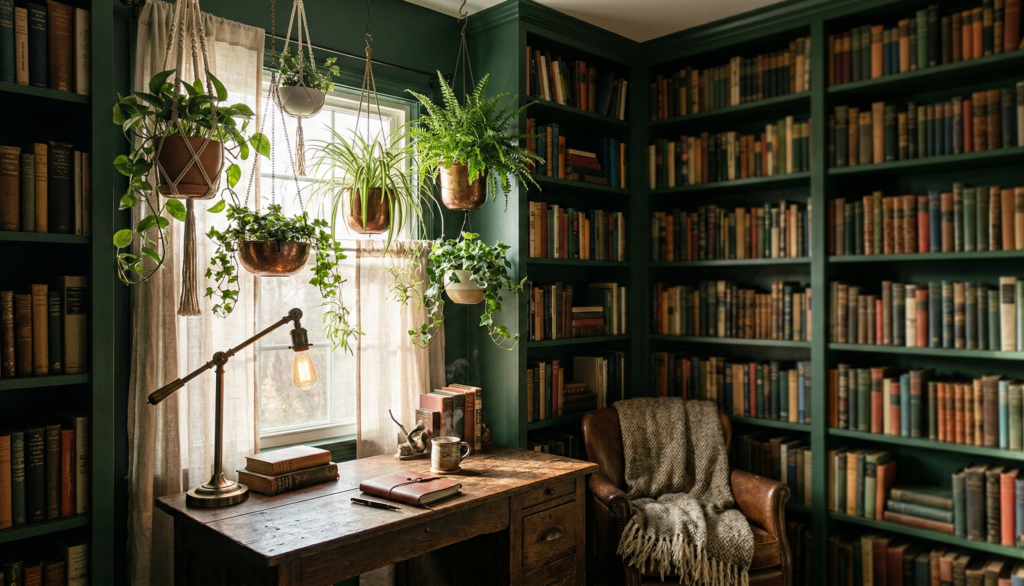
A moody dark green reading room with floor to ceiling bookshelves, a rustic wooden desk, and several hanging ivy plants in front of a sunlit window.
This Conservatory Green library proves that biophilic design is more than a trend. It is a biological necessity for the overstimulated modern mind.

Biophilic design, the practice of bringing nature indoors, is a trendy buzzword I know, but it’s also a biological necessity. Research published in the journal Nature suggests that even visual exposure to green environments can significantly reduce cortisol levels.

  • The Healing Impact: Conservatory Green brings the stillness of an ancient forest into your home, grounding your energy after a day of digital chaos.
  • Styling Tip: Ground this pigment with raw wood elements and oversized linen textures.
  • Steal This Look:

3. Smoked Aubergine: The Sophisticated Cocoon

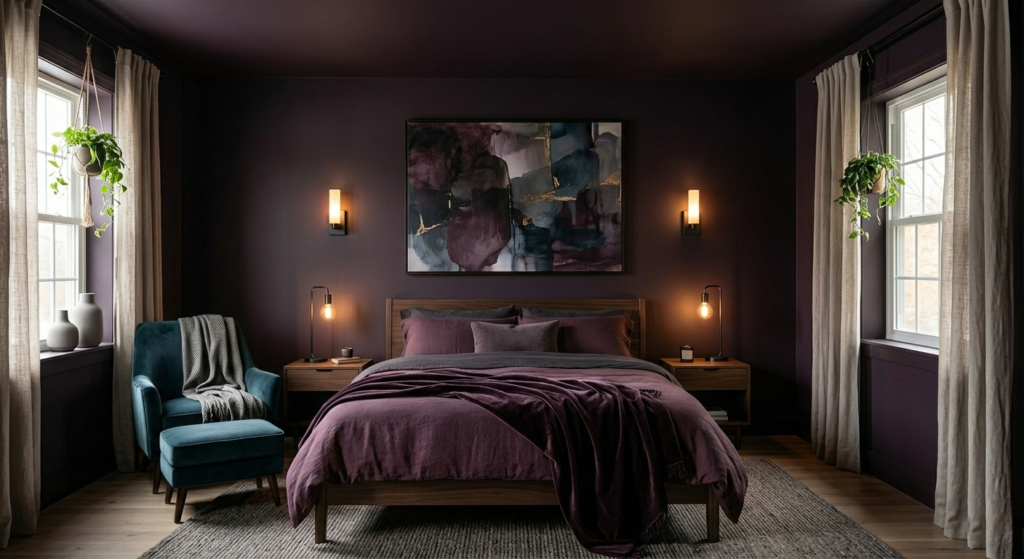
A creative suburban bedroom with Smoked Aubergine walls and ceiling, a dark wood bed with velvet purple bedding, and warm brass wall sconces.
Designing for a quiet reset: the Smoked Aubergine bedroom is the ultimate introspective cocoon for those who need to power down in style

If you want a room that feels like a hug, Smoked Aubergine is the answer. This isn’t the bright purple of a child’s bedroom; it is a dusty, blackened plum that feels incredibly regal.

  • The Healing Impact: This color encourages introspection and creativity. It is the perfect choice for a “cozy study corner“.
  • Styling Tip: Use velvet curtains in a matching shade to create a “cocoon” effect that absorbs outside noise and light.
  • Steal This Look:

4. Iron Ore: The Modern Anchor

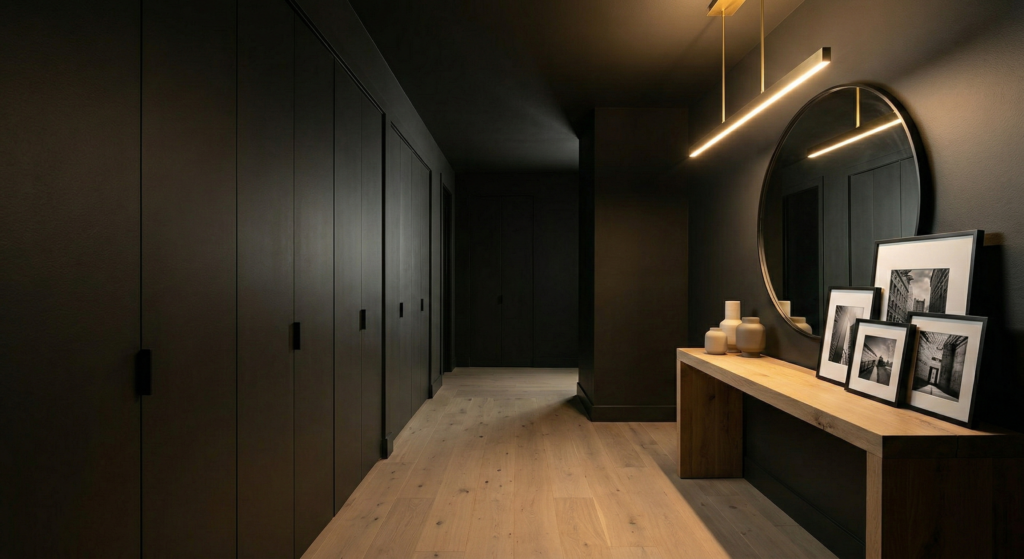
A wide angle low perspective shot of a suburban hallway with dark charcoal Iron Ore walls, built in closet doors, and a sleek linear brass light fixture.
Cohesive design creates intense depth. Even in a suburban home, choosing one bold pigment for the walls and ceiling can create a sophisticated cocoon that feels infinitely expansive.

For those who loved our 6 Velvety Black Walls That Transform Rooms but want something slightly softer, Iron Ore is the ultimate transitional charcoal. It has enough gray to feel architectural and enough warmth to keep it from feeling cold.

  • The Healing Impact: It provides a sense of “stability” and “strength.” It is an excellent choice for an entryway, serving as a decompression chamber as you step inside.
  • Styling Tip: Contrast this with light oak flooring to keep the space feeling modern and balanced.
  • Steal This Look:

5. Burnt Terracotta: The Earthbound Glow

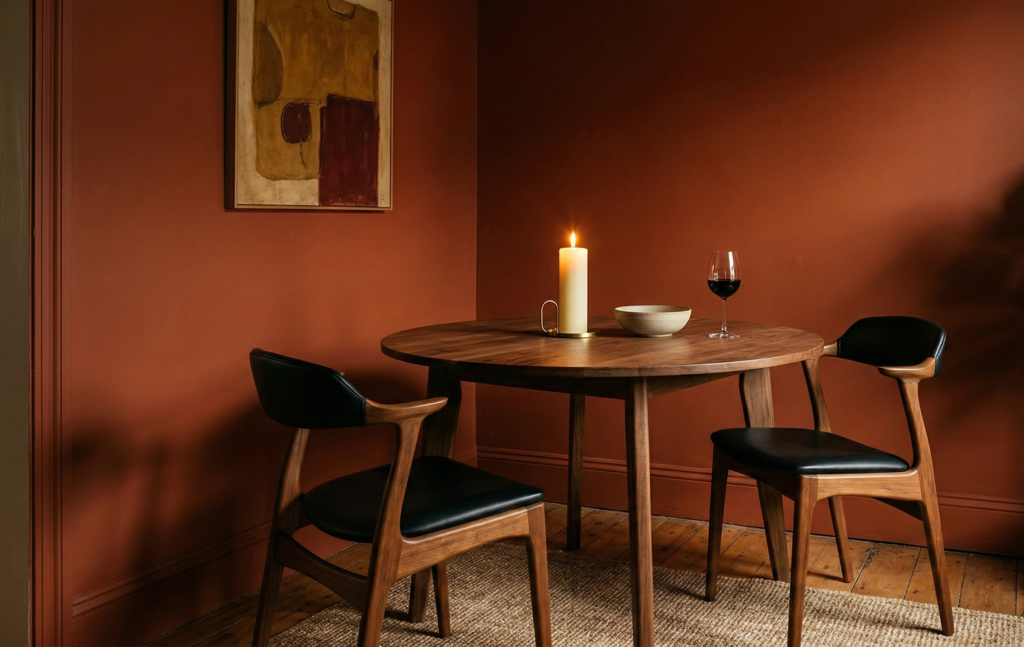
An intimate dining nook with earthy burnt terracotta walls, a round wooden table, and two mid century modern chairs lit by a single candle.
The Earthbound Glow of terracotta turns a tiny dining corner into a grounded space for soul deep connection.

While there are certainly a ton of moody colors that are “cool,” Burnt Terracotta is incredibly “warm.” It mimics the glow of a sunset or a dying fire, signaling to the brain that it is safe to rest.

    • The Healing Impact: This is the color of “belonging.” It is particularly effective in spaces where you gather, like those 10 Tiny Dining Corners our community is currently obsessed with.
    • Styling Tip: Keep the lighting low and warm (around 2700K) to bring out the earthy “glow” of the pigment.
    • Steal This Look:

The Final Reset

A beautiful home isn’t one that looks like a magazine. beautiful home. It’s one that heals you before you even realize you need it. Stop decorating for the “likes” of strangers and start designing for your own soul. Whether you choose the depth of a Midnight Teal or the warmth of a Terracotta, remember that the boldest move you can make is choosing a color that makes you feel at home.

Frequently Asked Questions

Q: Will painting a small room a dark color make it feel smaller?

A: Actually, the opposite is often true. While white walls define the boundaries of a room, moody paint colors like Smoked Aubergine or Midnight Teal tend to blur them. When you paint the walls and the ceiling the same saturated color, you create a “cocoon” effect that makes the corners of the room disappear. This gives the illusion of an infinite, expansive space rather than a cramped one. It turns a “tiny room” into a purposeful sanctuary.

Q: I love the moody aesthetic but I am nervous about it feeling too heavy. How can I find a balance?

A: The balance is found in the “Glimmer and Ground” technique. You must introduce elements that catch the light against the dark backdrop. This is why I suggest brass accents for Midnight Teal or light oak flooring for Iron Ore. These highlights provide visual relief and keep the room feeling sophisticated rather than somber. Additionally, bringing in biophilic elements like hanging plants adds a “healing” energy that breathes life into the shadows.

Q: How do I know which “moody” hue is right for my specific needs?

A: Listen to what your nervous system is asking for. If you feel overstimulated and need to power down, the cool depths of Midnight Teal or Conservatory Green act as a visual reset. If you feel lonely or cold and need a sense of belonging, the “Earthbound Glow” of Burnt Terracotta provides grounded warmth. Choose the color that provides the emotional restoration you are currently missing in your daily life.


Share.

Adeline has a strictly 'no-compromise' attitude toward square footage. Specializing in high-impact transformations for small living, she’s here to prove that your style should be twice as big as your floor plan. From deep teal sanctuaries to the psychology of a perfect accent color, Adeline writes for the renter or homeowner who isn't afraid to spark a conversation.