


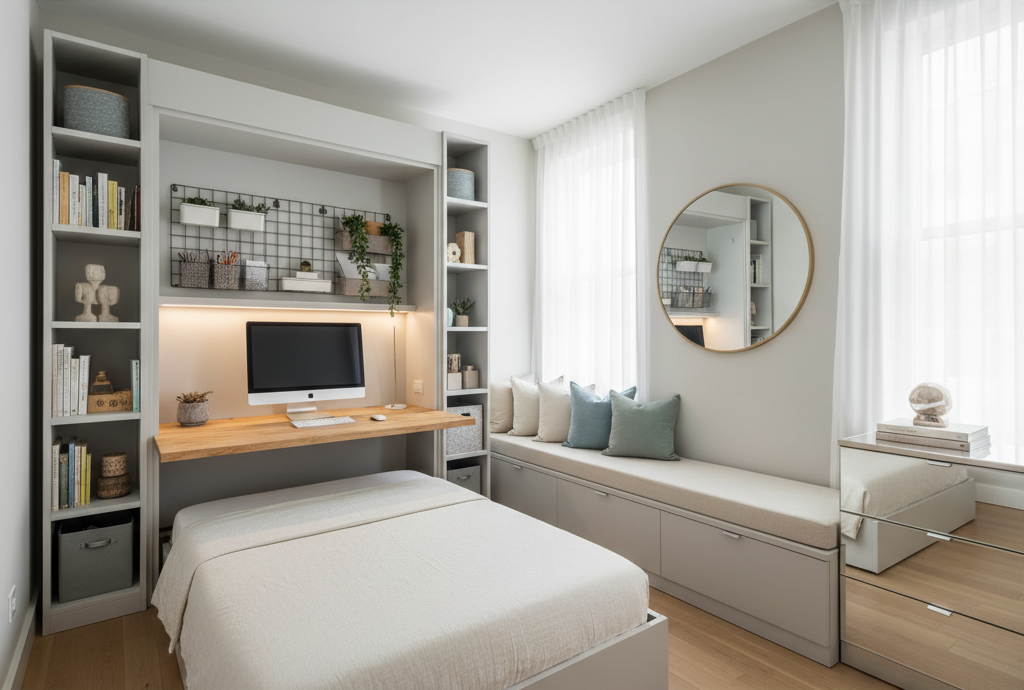
A micro bedroom doesn’t have to feel like sleeping in a closet. These micro bedroom ideas prove that with some actual planning instead of just shoving furniture wherever it fits, even a 60-square-foot space can work pretty well. Your tiny bedroom can become somewhere you actually want to spend time, not just collapse at the end of the day.
Think vertically. Use shelves that go up to the ceiling, wall-mounted everything, and furniture that pulls double duty. A bed frame from West Elm with built-in drawers costs around $800 but replaces both a bed and a dresser. The math works.
Light colors aren’t just trendy. They bounce light around, which makes your brain think the room is bigger than it actually is. Benjamin Moore’s Cloud White (affiliate link) on walls, maybe $60 for a gallon, creates more visual space than any renovation could.
Declutter ruthlessly. That stack of books you haven’t read since college? The exercise bike that became a clothes hanger? They’re stealing precious square footage from your sanity. Keep what you use. Everything else goes.
How Can I Maximize Storage in a Tiny Bedroom?
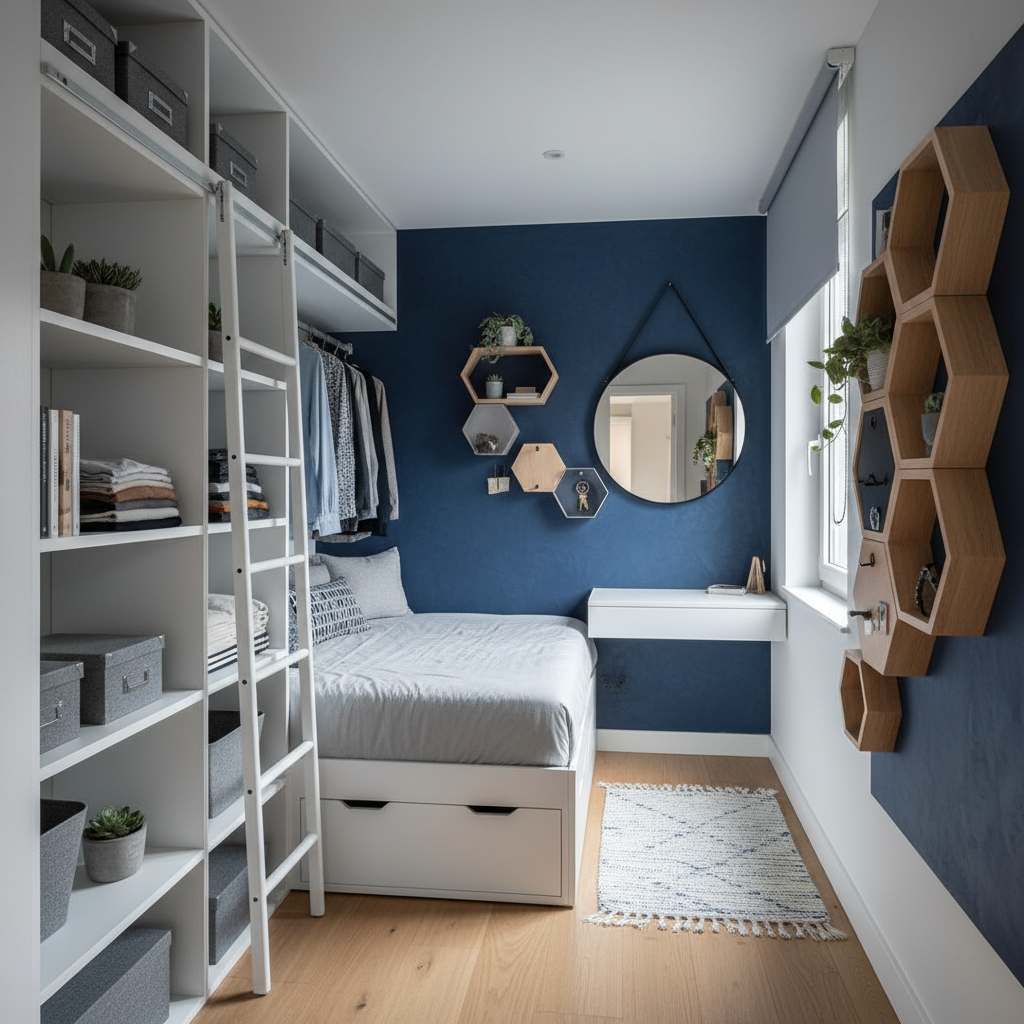
Storage in a micro bedroom is about getting creative with every surface, including ones you probably haven’t considered yet. Under the bed, behind the door, inside an ottoman. Everything becomes fair game when you’re working with 50 square feet.
Start with what you actually own. Pull everything out and really look at it. That UCLA study about clutter and stress hormones isn’t wrong—too much stuff literally makes people feel worse. You’ll probably find clothes that don’t fit, gadgets you forgot about, and random items with no clear purpose.
Under-bed storage transforms dead space into your new best friend. IKEA’s Skubb boxes, around $15 each, slide perfectly under most bed frames. Vacuum bags work great for seasonal bedding, though they’re annoying to get back into later. The Container Store sells rolling drawers that fit under beds for about $40 each.
Vertical shelving means going up to the ceiling, not stopping at eye level like most people do. Target’s wire shelving units reach 72 inches and cost under $100. They look better than you’d expect and hold way more than those decorative floating shelves everyone installs. This type of space planning helps maximize every inch available.
Wall-mounted cabinets free up floor space but require finding studs in the wall. Worth the effort though. IKEA’s Brimnes series includes wall cabinets that look built-in for around $80. Mount them above the bed or desk area where floor furniture would feel cramped.
Behind-the-door organizers are underrated. A simple shoe organizer from Target, maybe $20, holds way more than just shoes. Toiletries, phone chargers, small electronics. The back of your bedroom door probably has 12 square feet of unused storage space.
Ottomans with hidden storage inside serve triple duty. Seating when friends come over, a footrest while reading, and storage for blankets or out-of-season clothes. West Elm’s storage ottomans start around $150 and actually look like real furniture, not storage bins with cushions on top.
The trick is thinking like a boat designer. Every surface should do something useful. That doesn’t mean your bedroom has to look utilitarian, but it does mean being intentional about every piece you bring in.
What Are the Best Multi-Functional Furniture Options for Micro Bedrooms?
Multi-functional furniture isn’t just trendy minimalist stuff from design blogs. It’s actually necessary when your bedroom barely fits a bed. Each piece needs to justify the floor space it takes up by doing at least two jobs well. Smart home organization becomes crucial in these compact living spaces.
Storage beds are probably the biggest game-changer. The Hemnes bed frame from IKEA, around $200, includes four deep drawers underneath. That’s basically a dresser built into your bed. Higher-end options like those from West Elm or CB2 run $600-1200 but use better materials and hardware that won’t break after six months.
Sofa beds get a bad reputation because most of them are terrible to sleep on. But newer designs from companies like Article or Burrow actually work as both seating and sleeping surfaces. They’re pricey, starting around $800, but replace both a bed and living room seating in studio apartments.
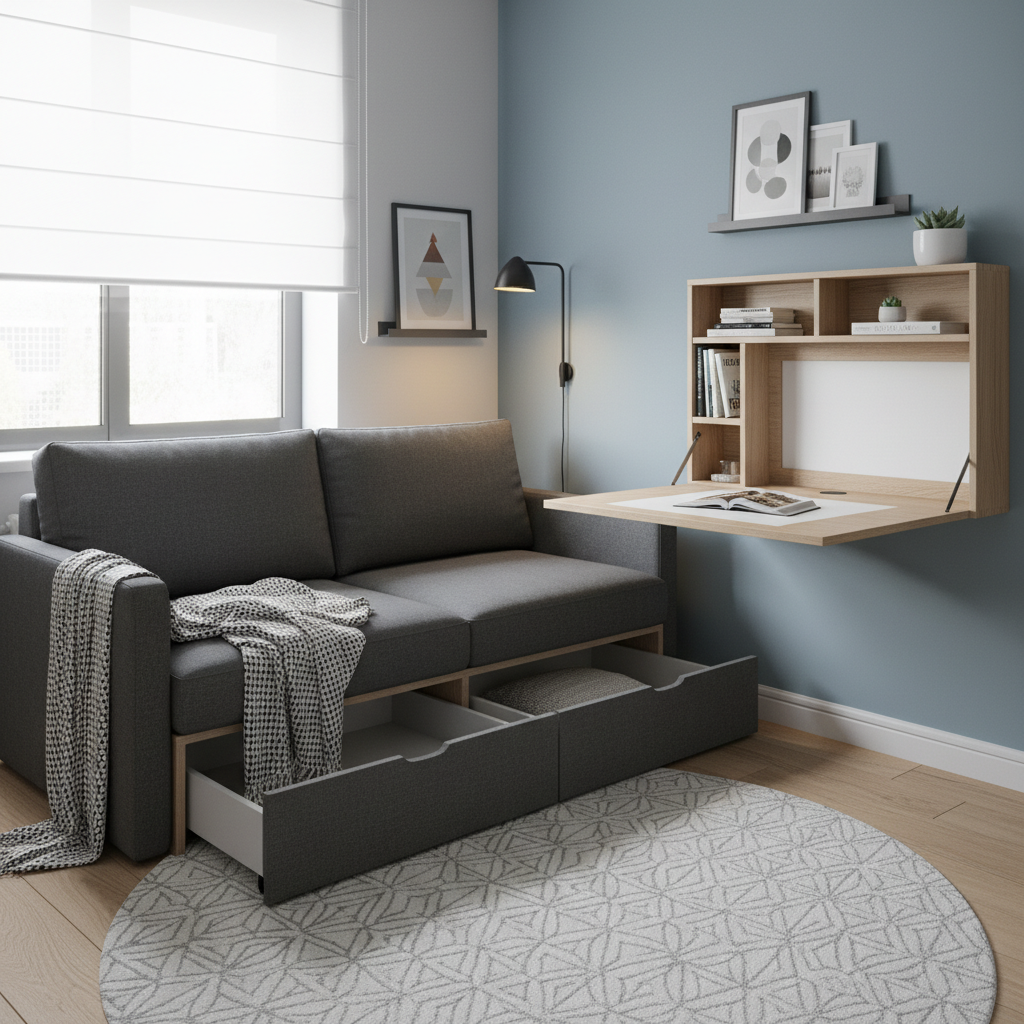
Fold-down desks mount to the wall and disappear when you’re not working. CB2’s version costs around $300 and includes a small shelf for office supplies. More basic DIY options from IKEA run under $100. The key is making sure the mounting hardware can actually support the weight when it’s loaded with your laptop and stuff.
Nesting tables stack together when not in use but expand into multiple surfaces when needed. The Frosta stools from IKEA, about $25 each, work as both stools and side tables. You can stack three of them in the space of one regular side table.
Murphy beds are the ultimate space-saver but require more commitment. A decent DIY kit runs $800-1500, plus installation. They work best in rooms that need to serve multiple purposes during the day—like a home office that becomes a bedroom at night.
The downside is that multi-functional furniture often costs more upfront than single-purpose pieces. But when you factor in space savings and reduced need for additional furniture, the math usually works out. Plus, moving becomes way easier when you own fewer pieces.
How Can Light and Color Impact the Perception of Space in a Small Bedroom?
Light and color actually change how your brain processes spatial information. Not in some vague design theory way, but in measurable ways that affect whether a room feels cramped or comfortable.
Natural light makes the biggest difference. Keep windows unobstructed if possible. Those heavy curtains might provide privacy, but they’re also stealing precious light that could make your room feel larger. Sheer curtains from Target, around $15-25, filter light without blocking it completely.
Light colors reflect rather than absorb light. Benjamin Moore’s Simply White or Sherwin Williams’ Pure White both work well for small spaces. A gallon costs about $60 at most paint stores. The difference between white walls and darker colors in a small room is pretty dramatic. This approach to interior styling makes any compact space feel more open.
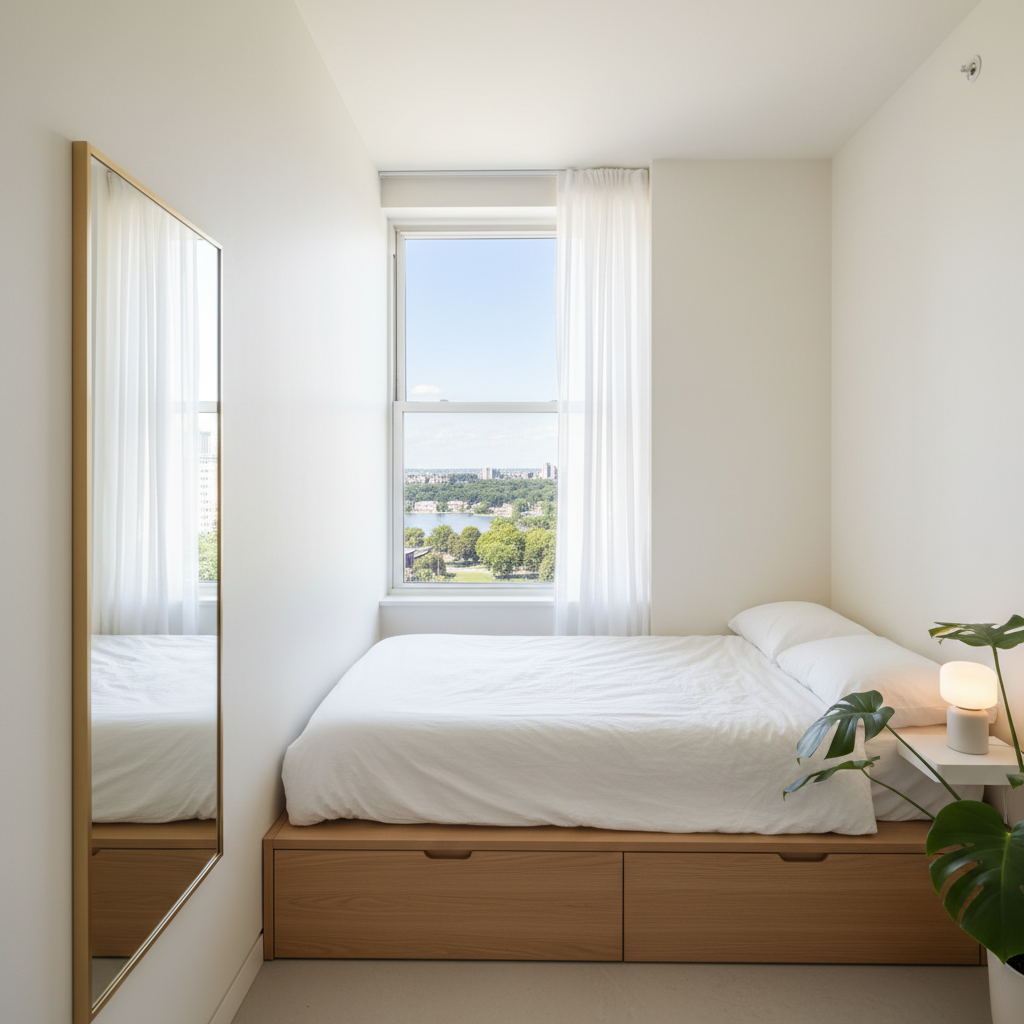
Mirrors are the oldest trick for making spaces feel larger, but placement matters. A large mirror opposite a window reflects natural light back into the room. IKEA’s Hovet mirror, around $50, is 30 inches wide and works well in most bedrooms. Mirrored closet doors serve the same function but cost more to install.
Artificial lighting needs layers. One overhead fixture makes everything look flat and harsh. Table lamps from Target start around $30. String lights, though trendy, actually work well in small spaces because they create ambient lighting without taking up surface space.
Accent colors should be used sparingly. A burnt orange throw pillow or deep blue artwork adds personality without overwhelming the space. The 80/20 rule works well—80% neutral colors, 20% accent colors through accessories and art.
Dark colors aren’t completely off-limits, but they work better as small accents than wall colors. A navy blue headboard or charcoal gray curtains can add sophistication without making the room feel smaller. The key is balance and not going overboard.
Lighting temperature matters too. Warm white LED bulbs, around 2700K, feel more cozy than the harsh cool white ones often found in office buildings. Philips makes decent LED bulbs for under $10 each that last years longer than traditional bulbs. This type of room design consideration affects the overall atmosphere significantly.
Micro Bedroom Ideas for Making Small Spaces Feel Bigger
Decorating a micro bedroom means being selective about what gets visual attention. Too many competing elements make small spaces feel chaotic. Less really is more, though that doesn’t mean boring.
Scale matters more than you’d think. Oversized furniture makes small rooms feel cramped, but furniture that’s too small looks like dollhouse pieces. A queen bed in a 10×10 room might seem like too much, but a twin bed can make the room feel like a kid’s bedroom. Finding the right proportion takes some trial and error.
Patterns add visual interest without taking up physical space. A geometric rug from Rugs USA, maybe $80 for an 5×8, creates a focal point without cluttering. Patterned throw pillows from West Elm, around $30 each, change seasonally without major expense. These compact bedroom decorating tricks help maximize visual appeal.
Art should be proportional to wall space. One larger piece often works better than several small pieces that compete for attention. Minted has prints starting around $40 that look more expensive than they are. Gallery walls can work in small spaces but require careful planning to avoid visual chaos.
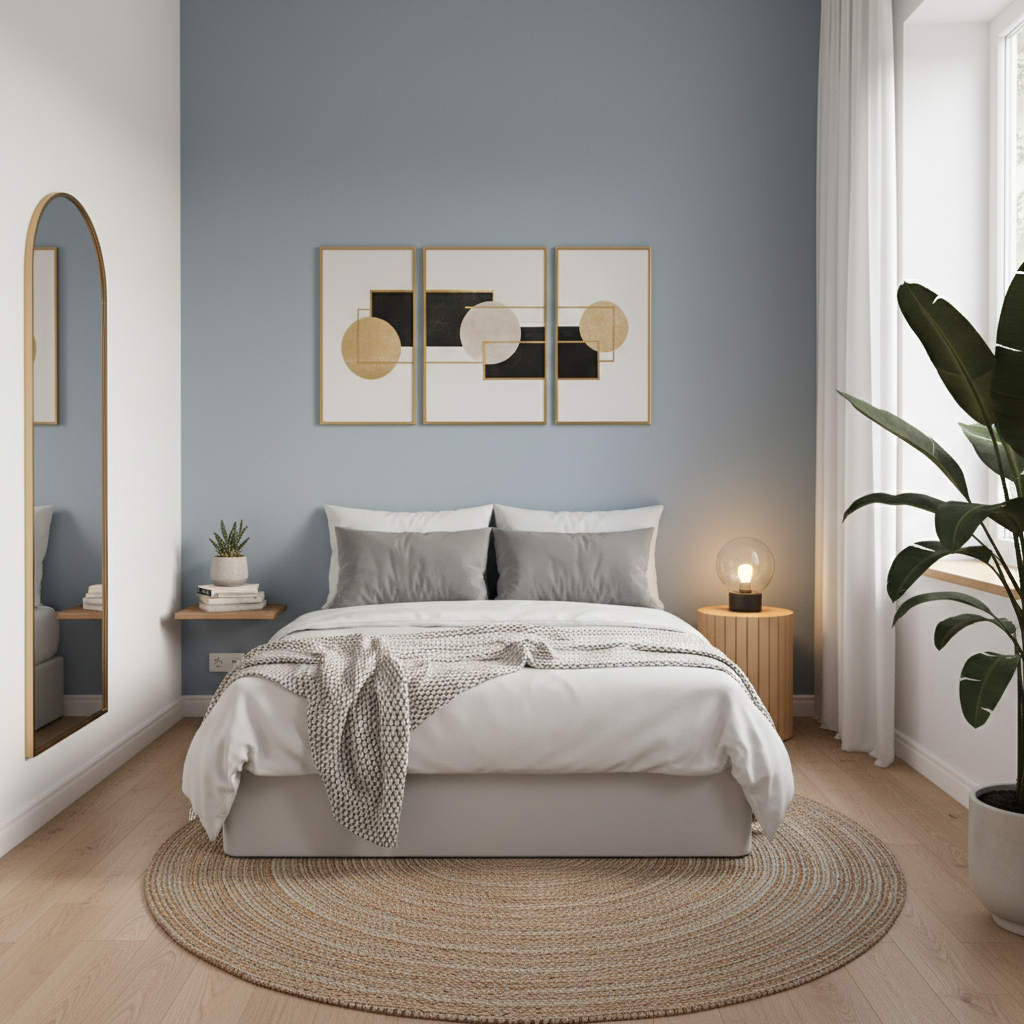
Decluttering isn’t a one-time thing. Stuff accumulates. Every few months, assess what’s actually useful versus what’s just taking up space. That stack of magazines on the nightstand? The pile of clothes on the chair? Small spaces show clutter more obviously than large ones.
Textiles add warmth without permanent commitment. A chunky knit throw from Target, around $25, makes the bed look more inviting. Linen curtains from IKEA, about $15 per panel, soften hard surfaces without overwhelming the space. These furniture arrangement choices create better flow and functionality.
Plants bring life to small spaces, but choose carefully. A large fiddle leaf fig might look great in design photos, but it’ll dominate a micro bedroom. Snake plants or pothos work better in small spaces and actually clean the air. Most houseplants from Home Depot cost under $20.
Personal touches matter, but edit ruthlessly. Display things that actually mean something rather than filling surfaces because they look empty. Three meaningful items look more intentional than seven random decorative objects.
The goal isn’t to make your micro bedroom look like a hotel room, but to create a space where everything has a purpose and nothing feels random or cluttered. These small bedroom storage ideas help maintain organization while preserving your personal style.
Frequently Asked Questions
Q: What is the most important thing to consider when designing a micro bedroom?
A: Function comes first, but that doesn’t mean sacrificing style completely. Plan your layout around how you actually use the space daily. If you work from your bedroom, prioritize desk space over a large dresser. If you read in bed every night, good bedside lighting matters more than overhead fixtures. Every piece should earn its place by serving multiple purposes or being something you genuinely need.
Q: How can I make a small bedroom feel less claustrophobic?
A: Natural light makes the biggest difference. Clean windows, sheer curtains instead of heavy drapes, and mirrors positioned to reflect light help immediately. Decluttering is equally important—visual clutter makes physical spaces feel smaller. Light wall colors bounce light around rather than absorbing it. Even small changes like switching to white bedding instead of dark colors can open up the visual space.
Q: Are there any specific colors I should avoid in a micro bedroom?
A: Dark colors aren’t completely forbidden, but they’re trickier to use well in small spaces. Navy blue walls might look sophisticated in a large master bedroom but can feel oppressive in a 50-square-foot room. If you want darker colors, use them as accents through pillows, artwork, or a single accent wall rather than covering all surfaces. Light and neutral colors reflect light and make spaces feel larger, which is usually what you want in a micro bedroom.
