


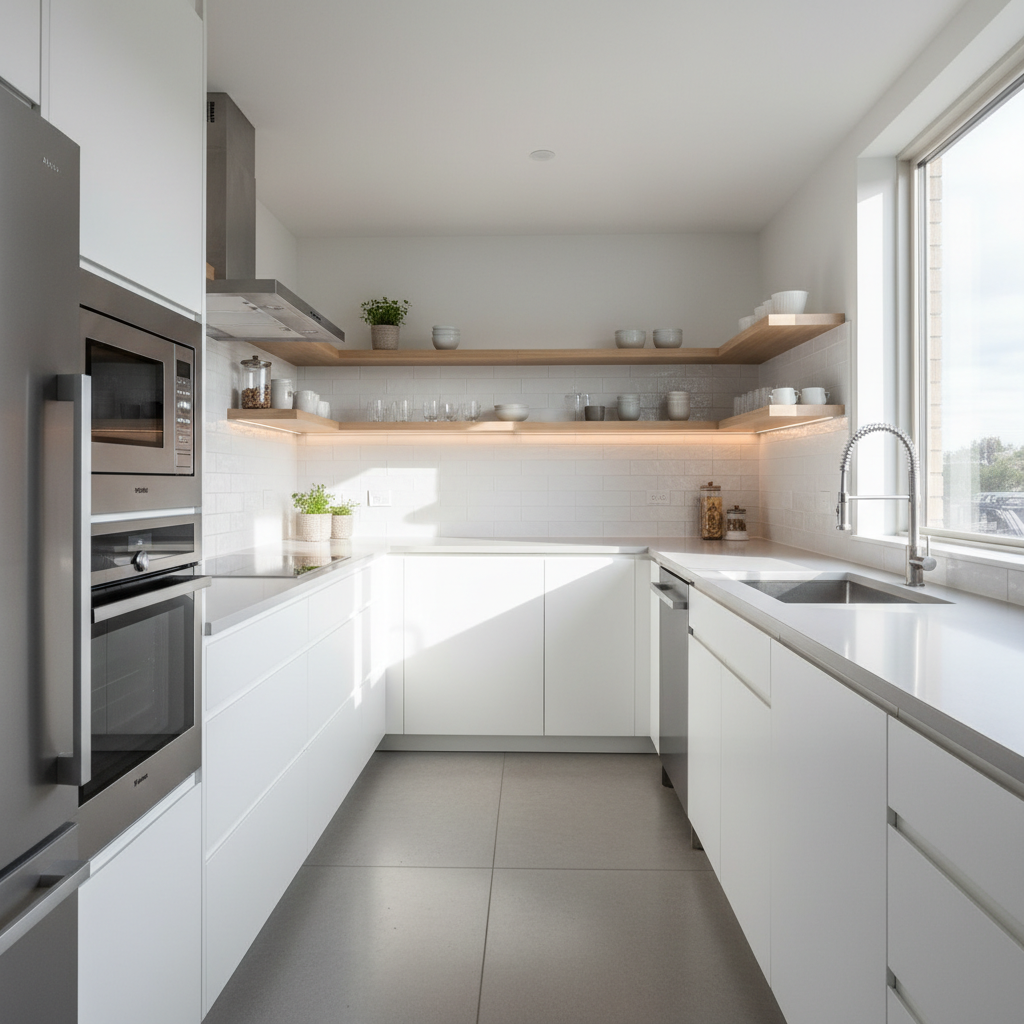
Galley kitchen layouts get a bad reputation. People think narrow equals cramped, functional equals boring. But honestly, some of the best kitchens I’ve seen have been galley layouts. There’s something about having everything within arm’s reach that makes cooking feel effortless.
The problem isn’t the layout itself. It’s that most galley kitchens were designed without much thought beyond fitting appliances along two walls. But when you actually plan the space, consider how you move and cook, and add some personality, a galley kitchen can outperform those sprawling open-concept spaces that look great in magazines but leave you walking miles between the fridge and stove.
Smart storage makes the difference between a galley that works and one that frustrates you daily. Pull-out drawers from brands like Rev-A-Shelf, around $45 each, turn those deep base cabinets into accessible space. Under-cabinet lighting, maybe $80 for LED strips, eliminates the shadows that make narrow kitchens feel cave-like.
The workflow matters more here than in any other kitchen layout. Get it right and you’ll wonder why anyone needs a kitchen island. Get it wrong and you’ll feel like you’re cooking in a hallway.
Light colors help, but they’re not everything. I’ve seen galley kitchens with darker cabinets that felt open because the designer understood how light moves through the space. And adding your own style, whether that’s brass hardware from CB2 or a bold backsplash from Fireclay Tile, transforms a utilitarian space into something that feels like you.
How Can Galley Kitchen Layouts Optimize Workflow?
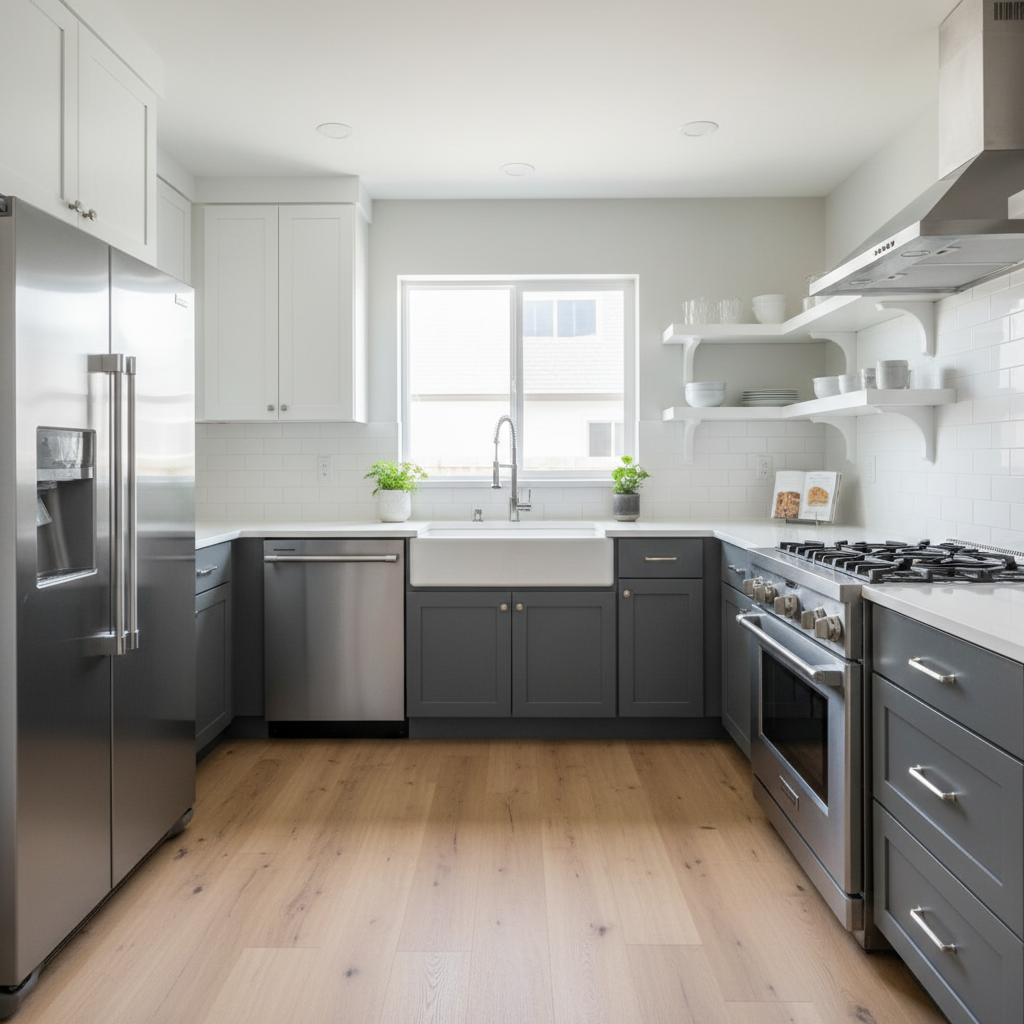
The work triangle actually makes sense in a galley kitchen. Unlike those massive open kitchens where your triangle becomes more of a work marathon, everything stays contained and efficient.
Start with the refrigerator at one end. Not negotiable, really. You want to be able to grab ingredients without blocking the main workspace. Then comes prep space, ideally 36 inches of counter if you can manage it. The sink goes in the middle, which feels natural since you’ll move between prep and cleanup constantly.
Stove at the far end, away from the fridge. Basic food safety, plus it keeps the heat source from interfering with cold storage. This isn’t rocket science, but you’d be surprised how many narrow kitchen designs ignore this flow.
The NKBA found that people with well-planned workflows spend less time cooking. That tracks if you’ve ever bounced between a poorly laid out kitchen trying to make dinner. Your brain just gets tired from the inefficiency.
Think about your dominant hand too. Right-handed cooks benefit from a left-to-right flow, with knife storage and cutting boards positioned accordingly. Lefties, reverse it. Small detail that makes daily cooking noticeably smoother.
Keep pathways clear. Sounds obvious, but galley kitchens can’t handle the clutter that bigger kitchens absorb. A narrow rolling cart, something like the RÅSKOG from IKEA for $50, gives you extra prep space that disappears when you don’t need it.
Under-cabinet lighting changes everything in a galley. The space between upper and lower cabinets creates natural shadows, making food prep harder and the whole kitchen feel dimmer. LED strips from Hafele, around $30 per linear foot, eliminate this problem completely.
Clever Storage Ideas for Maximizing Space in Small Galley Kitchens
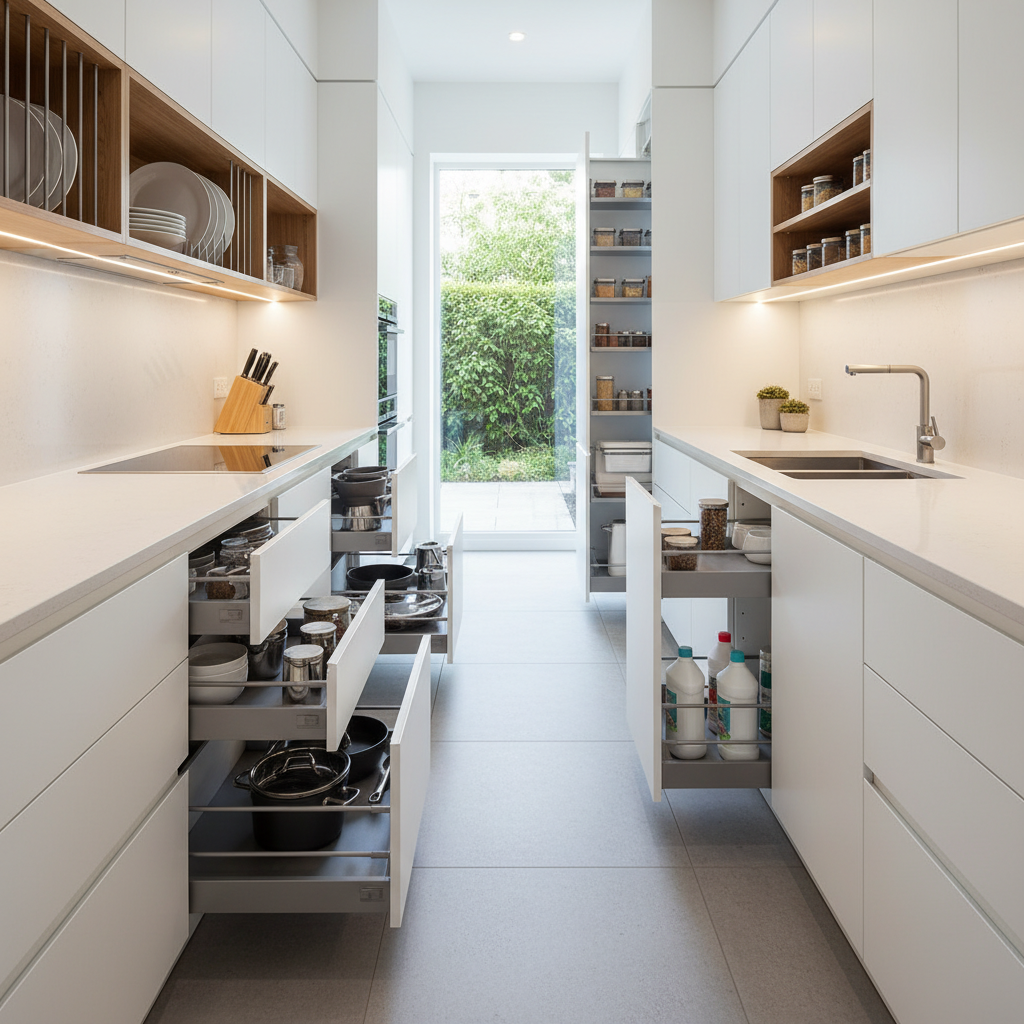
Storage in a galley kitchen isn’t about cramming more stuff in. It’s about accessing what you have without excavating through cabinets.
Pull-out shelves change the game completely. Those 24-inch deep base cabinets become usable to the very back. Brands like Blum make soft-close versions that feel substantial, around $60 per shelf. Worth it for pots and pans that you actually use instead of just own.
Vertical dividers work better than you’d expect. Slot them into base cabinets for baking sheets and cutting boards. The Container Store sells adjustable ones for about $25. Suddenly those thin items have a home instead of sliding around loose.
Space planning becomes crucial when working with compact kitchens. Spice storage gets tricky in galley kitchens. Counter space is too valuable for spice racks, but digging through cabinets kills your cooking flow. Narrow pull-out spice racks, maybe 6 inches wide, fit between studs in the wall. Rev-A-Shelf makes several versions around $85.
Don’t forget the space under cabinets. Beyond lighting, you can mount knife strips, small shelves for oils and vinegars, even cookbook holders. Magnetic knife strips from Messermeister, around $35, keep knives accessible but off precious counter space.
Houzz has shown that tons of people renovating kitchens add pull-out storage. Makes sense when you consider how much more accessible it makes everything. The same study showed storage improvements can increase usable space by 50% without changing the footprint.
Wall-mounted pot racks free up cabinet space for things that actually need to be enclosed. The Cuisinart Octagonal Pot Rack, around $60, holds a surprising amount without looking cluttered. Just make sure your ceiling height can handle it.
Open shelving works in galley kitchens if you’re disciplined about what goes on display. IKEA’s IVAR shelves, around $80 for a basic setup, let you show off nice dishes while keeping everyday items hidden in closed cabinets.
The ceiling area above cabinets often gets wasted. Baskets for seasonal items or rarely used appliances make sense here. Just avoid the decorative pottery approach. it collects dust and makes the space feel busy.
What Design Elements Make a Galley Kitchen Feel More Open and Spacious?
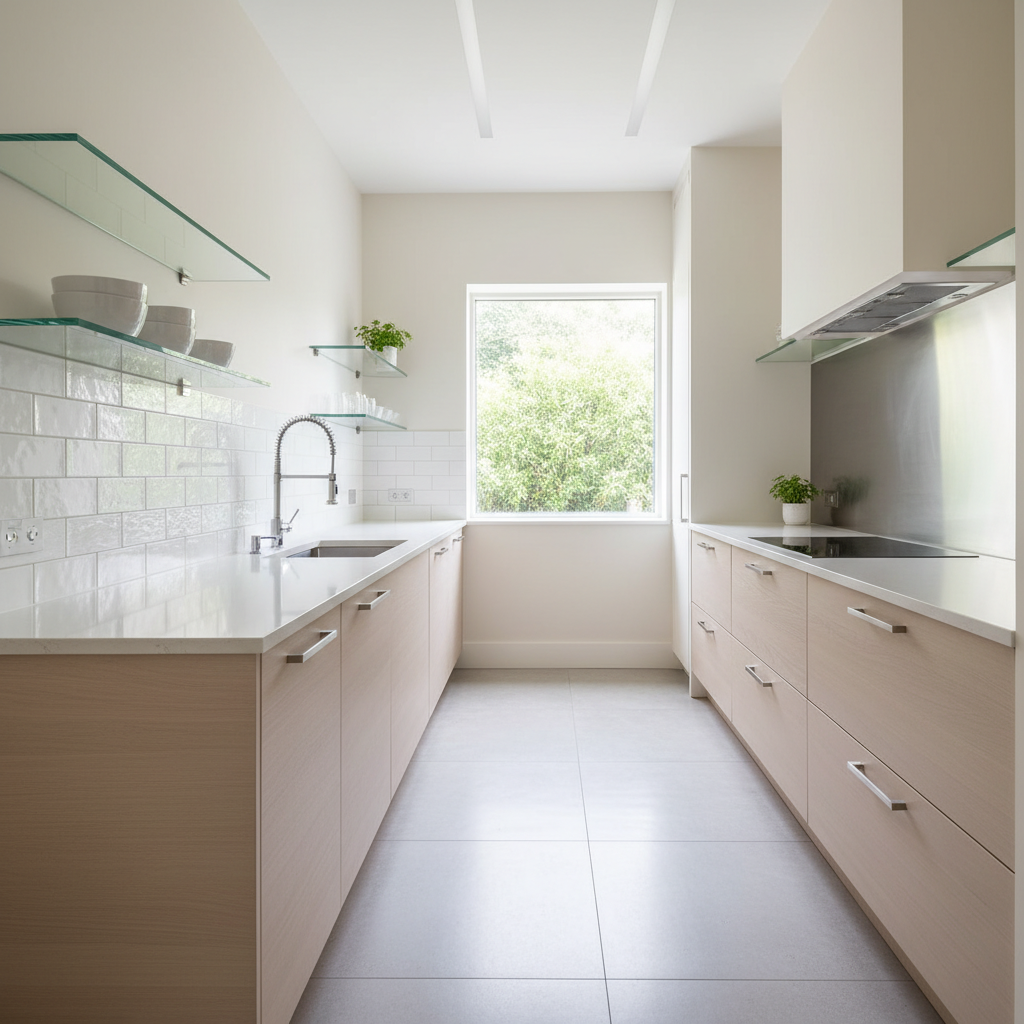
Light colors help, but they’re not the magic solution everyone claims. I’ve seen beige galley kitchens that felt like subway tunnels and darker ones that somehow felt spacious. It’s more about how you handle light and visual flow.
White cabinets work because they reflect available light back into the space. Benjamin Moore’s Simply White or Sherwin-Williams Pure White are safe choices that don’t go yellow over time. But cream colors like Benjamin Moore’s White Dove can feel warmer without sacrificing that light-reflective quality.
Kitchen renovation projects often focus on cabinet finishes. Glossy cabinet finishes reflect more light than matte, but they also show fingerprints and scratches more easily. Semi-gloss strikes a better balance for most people. Still reflects light, easier to maintain.
Upper cabinets make or break the open feeling in a galley. Full uppers to the ceiling can feel oppressive, but eliminating them entirely loses valuable storage. Try stopping uppers about 18 inches from the ceiling, or replace some with open shelving.
Glass-front cabinets create depth without losing storage. Even just a few glass doors mixed with solid ones makes the space feel less enclosed. IKEA’s BODBYN glass doors, around $25 each, work with their cabinet systems and don’t look cheap.
Stainless steel appliances reflect light, but they can also make a small space feel clinical. Black stainless or matte finishes warm up the space while still bouncing some light around. Samsung and GE both offer these finishes now in standard appliance sizes.
The backsplash affects how open the kitchen feels more than people realize. Large-format tiles or continuous materials like quartz eliminate grout lines that can make walls look busy. Subway tile works if you use larger sizes, like 4×12 instead of the standard 3×6.
Natural light matters most. If you have a window, don’t block it with plants or decorative items. Simple roller shades from brands like Levolor, around $40, provide privacy without eliminating light during the day.
There’s definitely been a trend of homeowners prioritizing bright, airy kitchens. But achieving that in a narrow galley design takes more strategy than just painting everything white.
How Can You Personalize Your Galley Kitchen and Add Style?

Frequently Asked Questions
Q: What is the ideal width for a galley kitchen?
A: Seven to twelve feet works for most people. Narrower than seven feet and you’re bumping into cabinets. Wider than twelve and you lose that efficient galley workflow, plus it starts eating into your home’s other spaces. Ten feet feels about right if you’re planning from scratch. Gives you room to work without wasted steps.
Q: How do you make a galley kitchen look bigger?
A: Light helps, but sightlines matter more. Keep upper cabinets from extending all the way to the ceiling. Use larger format tiles to reduce visual breaks. Mirror backsplashes behind the sink reflect light and create depth, though they’re harder to keep clean. Most importantly, keep countertops clear. Clutter makes any space feel smaller, but galley kitchens can’t hide it.
Q: Are galley kitchens outdated?
A: Not even close. They’re actually more relevant now as homes get smaller and people want efficient spaces. Open concept kitchens look great for entertaining, but designing a functional galley kitchen works better for actual cooking. Plus they cost less to renovate since you’re not moving walls or reconfiguring major systems. Good design is good design, regardless of trends.
