


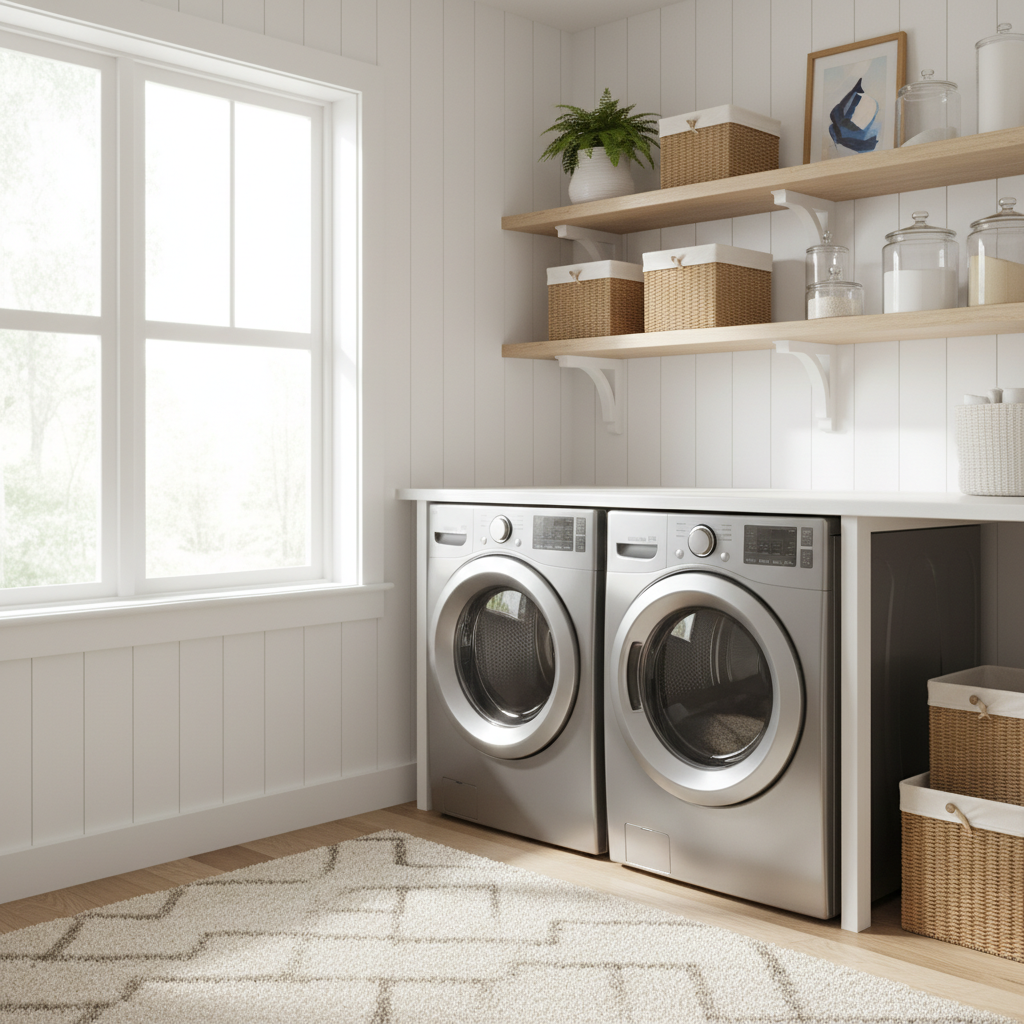
Your laundry area doesn’t have to be that chaotic corner where socks disappear and detergent bottles multiply. Most people just accept the mess because, honestly, who has time to think about laundry room design? But thoughtfully planned functional laundry nooks can actually make the whole routine less terrible.
The difference between a functional space and a cluttered nightmare comes down to a few key decisions. Where you put things. How you store them. Whether you can actually reach what you need without moving three other things first. Small changes that save you frustration every single time you do laundry.
Here’s what actually works in real laundry spaces:
Smart storage that keeps supplies visible and accessible, not shoved in some deep cabinet where you forget what you have. Organization systems that make sense when you’re juggling wet clothes and a screaming kid. Design touches that make the space feel less like a utility closet and more like part of your home. DIY solutions that don’t require a contractor or a massive budget.
How Can You Maximize Space in Small Functional Laundry Nooks?

Small laundry areas are the norm, not the exception. Most people are working with a closet-sized space or awkward corner that wasn’t really designed for anything. The good news is that you can make these compact laundry spaces work surprisingly well with some strategic thinking.
Start by going vertical. Wall-mounted ironing boards from Hafele fold flat against the wall when you’re not using them. Around $180, but they free up four square feet of floor space that you actually need for sorting clothes. The IKEA Algot shelving system works well above washers and dryers because you can configure it exactly how you want. Brackets are about $5 each, shelves run $15-25 depending on size.
Stackable washer-dryer units save roughly four square feet compared to side-by-side models. That’s enough space for a small shelving unit or folding station. LG and Samsung both make decent stackable sets in the $1200-1800 range. Not cheap, but if you’re staying in your place for a while, the extra floor space is worth it.
The back of the laundry room door gets ignored, but it’s prime real estate. An over-the-door organizer from Target costs maybe $25 and holds all those small items that otherwise end up scattered on surfaces. Dryer sheets, stain sticks, that weird lint brush you never remember to use.
Custom shelving sounds expensive, but it doesn’t have to be. Basic plywood shelves cut to fit your exact space run about $8-15 per linear foot at Home Depot. Add some L-brackets and you’ve got storage that actually uses every available inch. For oddball spaces like the gap between your dryer and the wall, custom is often the only solution that works.
Wall-mounted drying racks fold away completely when you’re not using them. The Wallmount from Leifheit costs around $60 and holds up to 20 pounds of clothes. Compare that to a floor drying rack that’s always in the way, taking up space whether you need it or not.
Pull-out drawers under the washer and dryer work if you have front-loading machines. You can buy the hardware for maybe $40 and build simple drawers for storing cleaning supplies or seasonal items. Just measure twice because there’s not much room for error in tight spaces.
What are the Best Storage Solutions for Laundry Supplies?
Random bottles and boxes scattered everywhere make laundry more annoying than it needs to be. The solution isn’t buying more storage containers, though that’s what most people try first. It’s figuring out what you actually use and creating homes for those specific things through smart home organization.
Group similar items together, but don’t overthink it. Detergents and fabric softeners in one area. Stain treatments and specialty products in another. Iron and ironing supplies somewhere accessible but not in the way. This sounds obvious until you look at most people’s laundry rooms, where the fabric softener is on the opposite side from the detergent.
Clear containers with pour spouts work well for liquid detergent if you buy the giant economy sizes. The OXO POP containers come in different sizes starting around $20. They stack nicely and you can actually see when you’re running low. Plus no more detergent drips on the shelf because someone couldn’t get the cap back on properly.

For powdered stuff, those stackable Rubbermaid containers work fine and cost about $12 each. The lids actually seal, which matters if you live somewhere humid. Write on them with a Sharpie because those fancy labels fall off eventually.
Baskets handle the miscellaneous items that don’t fit in containers. The woven ones from World Market look nicer than plastic, around $25-35 for medium sizes. Throw in dryer balls, stain sticks, scissors, whatever. Just don’t let baskets become junk drawers or you’ll be digging through them every time you need something specific.
Rolling carts work in narrow spaces where shelves won’t fit. The IKEA Råskog cart costs $50 and fits between most washers and walls. Three tiers give you room for detergent on top, cleaning supplies in the middle, and random stuff on the bottom. The wheels lock so it stays put when you’re grabbing things.
Floating shelves look clean and modern if that’s your thing. The trick is mounting them properly so they don’t sag under the weight of detergent bottles. Use toggle bolts in drywall or hit the studs if you can find them. Shelves from CB2 run about $40-60 each, or you can make your own from boards and brackets for half that.
What Design Elements Make Laundry Nooks More Appealing?
Most laundry rooms feel like afterthoughts because that’s exactly what they are. Beige walls, fluorescent lighting, zero personality. You don’t have to love doing laundry, but spending time in a space that doesn’t make you feel depressed helps with creating functional utility room layouts.
Color makes a bigger difference than you’d think. White or cream walls reflect light and make small spaces feel bigger. Benjamin Moore’s Cloud White or Sherwin Williams’ Pure White are safe choices that work with most lighting. If you want something with more personality, try a soft blue or gray. SW Misty or BM Healing Aloe are popular for good reason.
Patterned floor tiles add visual interest without being overwhelming. Those black and white geometric patterns from Home Depot cost around $3-5 per square foot and look more expensive than they are. Just don’t go too crazy with the pattern if your space is small. You’ll get tired of looking at it.

Plants work if you have a window or decent artificial light. Snake plants and pothos handle humidity well and don’t need much attention. A medium pothos from the nursery costs maybe $15 and will grow into something substantial over time. Skip the fancy planters and use a simple ceramic pot that won’t clash with everything else.
Lighting matters more than people think. That single bulb in the center of the ceiling creates harsh shadows and makes everything look dingy. Add an LED strip under upper cabinets for task lighting, around $25 for 6 feet. Pendant lights over a folding area look nice but aren’t necessary unless you’re going for a specific aesthetic through thoughtful interior styling.
A small rug makes the floor more comfortable if you spend time folding clothes. Those washable rugs from Ruggable start around $60 for smaller sizes. The 2×3 size works in most laundry areas without getting in the way of the appliances.
Artwork or a small mirror on the wall adds personality without taking up space. Frame some botanical prints from Etsy or hang a mirror to bounce light around. Just avoid anything that can’t handle humidity and temperature changes.
How Can DIY Projects Personalize Functional Laundry Nooks?
DIY projects let you solve specific problems in your space without paying contractor prices. Plus you can customize things exactly how you want them instead of settling for whatever’s available at the store through creative space planning.
Open shelving is probably the easiest place to start. Pine boards from Lowe’s cost around $8-12 per linear foot. Sand them, stain or paint them whatever color you want, and mount them with brackets. Way cheaper than buying pre-made shelving and you can make them exactly the right size for your space.
A countertop over the washer and dryer gives you a surface for folding clothes. Butcher block from IKEA runs about $80 for 6 feet. Support it properly with brackets underneath and you’ve got a folding station for less than $120 total. Add a backsplash with peel-and-stick tiles if you want it to look more finished.
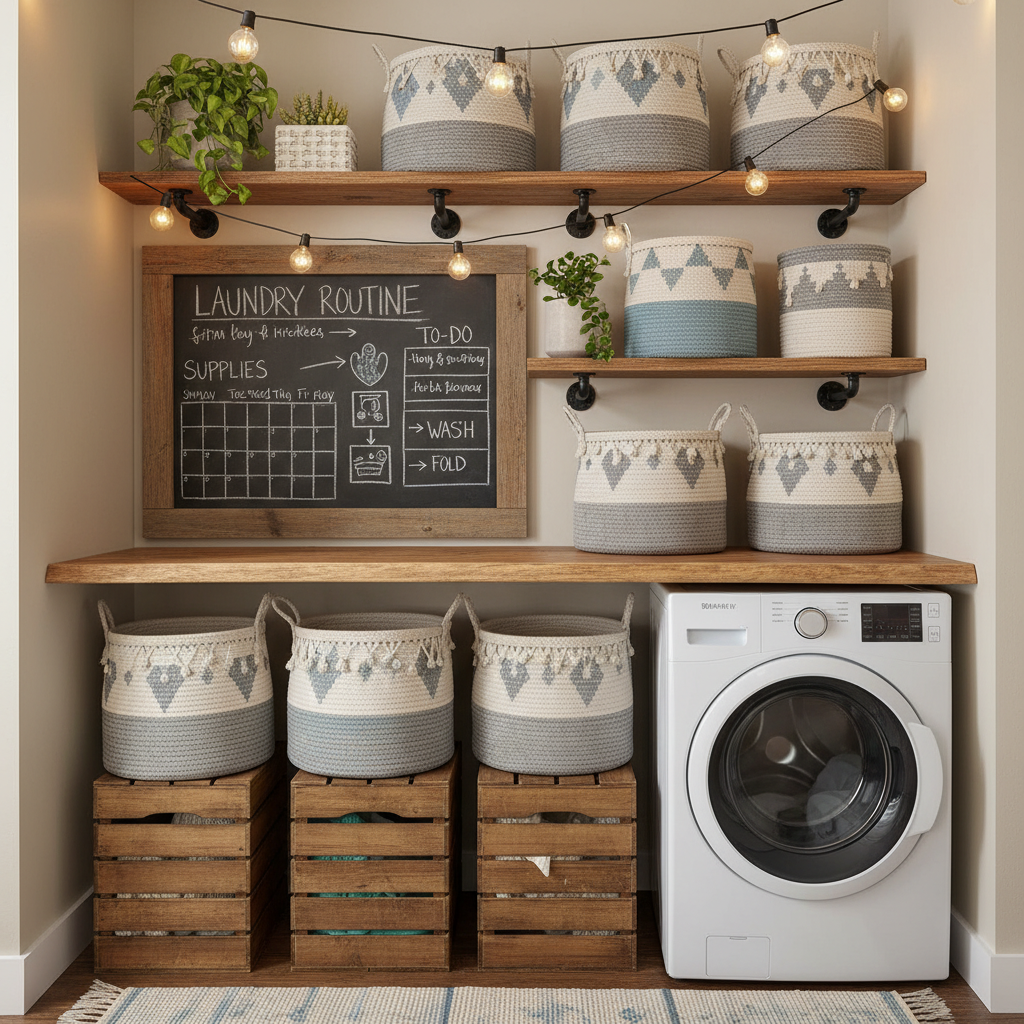
Customize basic storage baskets with fabric liners or paint. Those rope baskets from Target cost about $15-25 each. Line them with fabric that matches your color scheme or paint them with chalk paint for a different look. Takes maybe an hour per basket and makes them feel more intentional.
A drying rack from an old wooden ladder works if you can find one at a thrift store or estate sale. Sand it down, paint or stain it, and mount it to the wall. Clothes hang from the rungs and it looks like actual decor instead of laundry equipment. Much more interesting than those metal accordion racks for organizing small laundry rooms.
Command centers work if you like staying organized but don’t go overboard. A small chalkboard or cork board for notes about stain treatments or wash schedules. Maybe $20 in supplies and keeps important information visible instead of written on random scraps of paper.
Making your own laundry detergent sounds very Pinterest but actually works for some people. Basic recipes use washing soda, borax, and bar soap. Ingredients cost maybe $15 total and make enough detergent for months. Whether it’s worth the time depends on how much you enjoy that kind of project for budget laundry room ideas.
Frequently Asked Questions About Functional Laundry Nooks
Q: What is the ideal size for functional laundry nooks?
A: Five feet by seven feet gives you room for side-by-side appliances plus some storage and folding space. But plenty of functional spaces are smaller than that. The minimum workable size is probably 3 feet by 6 feet if you stack the appliances and use vertical storage. Anything smaller and you’re basically working in a closet, which is challenging but not impossible when planning efficient laundry room designs.
Q: How can I improve ventilation in my laundry nook to prevent mold?
A: Moisture is the enemy in laundry rooms. Run exhaust fans during and after using the dryer. Check that your dryer vent actually exhausts outside and isn’t clogged with lint. A small dehumidifier helps if your space stays humid, around $40-60 for basic models. Opening windows when possible creates airflow but isn’t always practical.
Q: What are some affordable ways to upgrade my laundry nook on a budget?
A: Paint makes the biggest visual impact for the least money. A gallon of good paint costs around $45 and transforms the whole space. Add some basic shelving with brackets and boards for under $100. Replace that harsh overhead bulb with better lighting. Organize what you have before buying new storage. Most laundry room problems come from too much stuff, not too little storage for modern laundry room solutions.
