


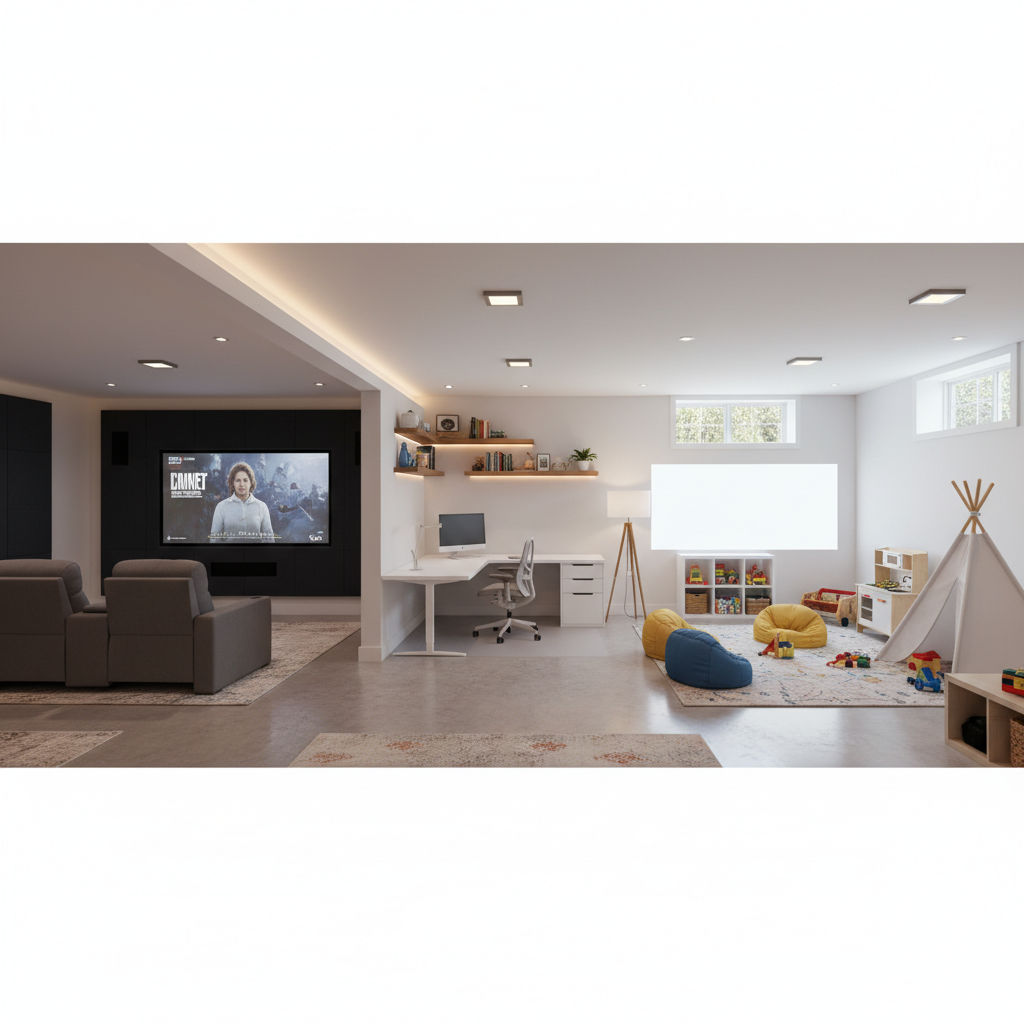
Here’s the thing about basements: most people turn them into either a junk graveyard or one single-purpose room they barely use. But with a little planning, your lower level actually becomes the most hardworking space in your house.
I’m talking about zones that shift with your life, not against it. Whether you’re exploring design ideas or knee-deep in renovation mode, these seven setups maximize every square foot without locking you into anything permanent.
Quick look at the zones:
- Entertainment Area: Movies, games, friends, all in one spot
- Home Office: Work zone that disappears when you need the space for something else
- Guest Suite: Comfortable visitor space that pulls double duty
- Fitness Center: Your gym without the membership fees
- Kids’ Zone: Play space that grows with them
- Workshop: Finally, room for your hobbies
- Smart Storage: Organization that doesn’t look like a storage unit
Think of your downstairs as a Swiss Army knife. Each area serves a purpose, but nothing’s so permanent you’re stuck with it five years from now.
1. Multipurpose Entertainment Area: Movie Nights and Game Days

Start here because this is where everyone wants to hang out anyway. Movie nights, game days, that Sunday football thing your friends insist on – your entertainment room handles it all.
So what’s the trick to making this work?
- Start with seating that moves. A sectional works, or go modular so you’re rearranging for different crowds and needs. Board game night needs table space, but a movie marathon needs everyone facing the screen. Your furniture should be able to cooperate, move around, and match the configuration you need without a ton of hassle.
- Big screen or projector, that’s your call, but don’t cheap out on this part. You could go for a massive TV screen (which are more affordable than they’ve ever been) or go more classic and use a projector with a large movie screen.
- Lighting matters more than you’d think. Dimmers for movies, brighter for games, and please put them on separate switches. You can even consider different color lighting to make things fun.
- Grab some nesting tables or a coffee table that’s actually big enough. According to the National Association of Home Builders, this is one of the most wanted features homeowners ask for. This has to work for food, drinks, snacks, remotes, phones, you name it. The right type of coffee table (or tables) is a must-have to complete the space and make it functional.
The Soundproofing Part Nobody Wants to Hear
For a true movie room and to watch action movies at a reasonable volume, you need soundproofing.
Acoustic panels work and so does thick carpet — ideally you would use both. The upstairs bedroom directly above this room? Those people will thank you, and if you live in a town home, then your neighbors will thank you as well.
Also worth considering: a small bar setup or kitchenette area. Nothing fancy, just a mini fridge, microwave, some counter space. It keeps people downstairs instead of trekking up for every snack run.
2. Adaptable Home Office: Work Hard, Relax Later

Remote work isn’t going anywhere, which means you need a real workspace. Not the kitchen table. Not the couch. An actual office that gives you peace, quiet, and a door you close at 5 PM.
The smartest basement office ideas I’ve seen focus on one thing: furniture that moves or folds.
Get yourself an adjustable desk and a decent ergonomic chair; this is where your budget goes. Your back is going to resent you if you skip this step. These two furniture items are absolutely priceless when it comes to a home office and if you cheap out on them, you won’t be comfortable working in the space.
Solving the lighting in a basement home office is also very important. Natural light helps, but if your basement is dark, go heavy on the artificial lighting to create an inviting and warm space. Don’t skimp on this either or else your basement office space will not be inviting enough to do good work. And remember, eye strain is real. Make sure the light you choose is right.
You’re also going to need decent storage. You’ll need shelves, cabinets, drawers, etc to keep the clutter off your desk and off the floor.
Making It Work for Multiple Uses
Here are a few key elements that make your basement office become adaptable and work for multiple uses:
- Murphy bed
- Fold-down desk
- Modular shelving
I’ve seen offices become guest rooms in 15 minutes flat. The key is keeping colors neutral so the space doesn’t fight you when it changes purposes.
Research backs this up: dedicated workspace equals better productivity and less stress. You don’t need a study to tell you the couch doesn’t count as an office.
3. Convertible Guest Suite: Welcome Visitors with Ease

Your lower level makes an excellent guest suite because it gives visitors actual privacy. Nobody wants to sleep on a couch in the living room while the whole house walks past them.
Queen bed with decent sheets is the baseline. But here’s the smart move: a sofa bed or daybed that works as regular seating. A private bathroom nearby (not shared with the kids) makes a difference. Add a small chair and table so guests have somewhere to sit that isn’t the bed.
There should be storage for their stuff, a closet, dresser, or if the budget is tight a more modular alternative. And when you don’t have visitors? This is your reading nook. Home gym. Whatever you need that week. Airbnb data shows homes with guest suites rent for more, which tells you how much people value this setup.
Take it to the next level with a mini fridge and a coffee maker, which are the pair that makes you everyone’s favorite host. Need more inspiration to build that restful room? Check out our deep dive on the core principles of creating a restful room.
4. Fitness and Wellness Center: Sweat, Stretch, and Relax

Transform your basement space into your personal gym and those membership fees disappear. Early morning workout without leaving the house? That’s the goal. Basements are fantastic when set up properly for your own fitness needs and can keep you on track to meet your fitness goals. Data from the International Health, Racquet & Sportsclub Association shows home gym equipment sales going through the roof. Everyone’s doing this now.
Before getting started, any practical and safe basement gym idea or concept starts with the proper flooring. Rubber mats or foam tiles are important in order to protect your floor and your joints need cushioning.
Which equipment to choose depends on what you actually use. Some useful basic equipment could be a treadmill, bike, or a weight rack, and whatever matches your current routine. Finding equipment that is easy to move and rearrange will also go a long way.
The Wellness Side
Here’s what I’ve learned: people who build gyms forget about the stretch-and-relax part. Make room for yoga, meditation, whatever winds you down. Get a yoga mat, meditation cushion, maybe one of those oil diffusers if that’s your thing. Consider using color psychology to enhance your wellness zone. A sound system helps for either workout playlists or for guided meditation.
The space even works as a home spa situation if you go for a sauna or steam shower setup depending on the size of your space. Home saunas can be amazing for healing and overall well being when combined with exercise.
It is also very important to prioritize good ventilation matters. Sweat + enclosed space = problem. Make sure you have a way to air out the space, purfy the air, and have decent airflow. You do not want mold or a musty home gym!
5. Kids’ Play and Creativity Zone: Where Imagination Takes Flight
Give kids their own space downstairs, and your living room stays clean. Mostly.

Explore endless fun in this vibrant basement kids’ play area, packed with toys and art supplies!
Design this for durability.
Start with soft flooring (carpet tiles or foam mats), which handles falls better than concrete. Storage is your friend here as well: toy bins, shelves, cabinets, whatever contains the chaos.
You’ll want to pack it full of art supplies, building blocks, puzzles, games, the usual suspects. A small table and chairs for projects. The American Academy of Pediatrics has a whole thing about unstructured play being crucial for development. Let them get creative!
Speaking of which, this zone can and should grow with them. Keep the decor flexible because what a 4-year-old needs is nothing like what a 14-year-old wants. Today it’s a playroom. Five years from now? Teen hangout with a TV, gaming console, and furniture they actually sit on.
6. Hobby and Workshop Space: Unleash Your Inner Artisan
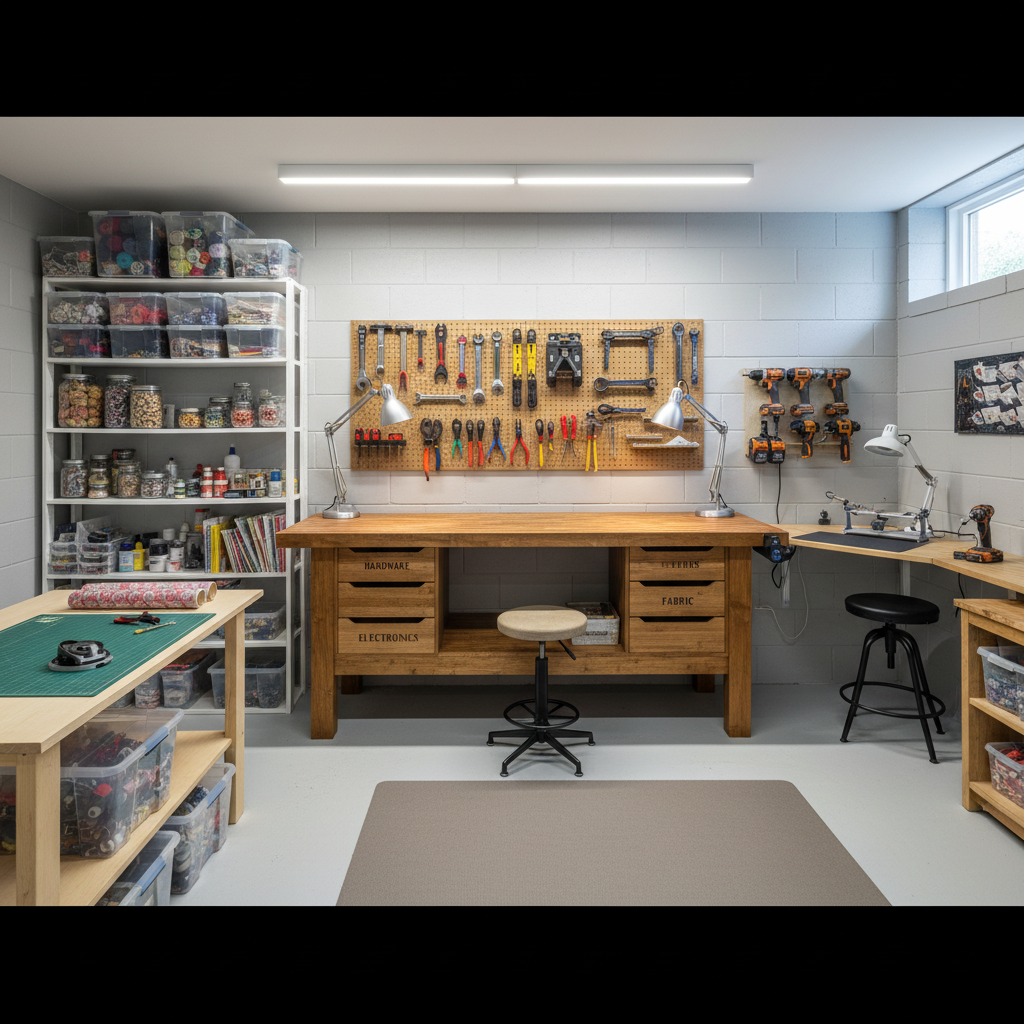
Finally, you need a room for your hobby stuff. Woodworking, painting, crafting, whatever hobby gets shoved aside because there’s nowhere to do it. This space is dedicated to that thing.
Think flooring first: concrete or vinyl that handles spills and doesn’t care what you drop on it. The work surface depends on what you’re building. You’ll also need a workbench for heavy projects, a table for crafts, and a desk for more detailed work.
Lighting and Organization
Lighting matters for precision work. Bright, adjustable task lighting saves your eyesight. Storage keeps tools organized, and there’s literally never enough storage. Overdo it. I’m talking shelves, cabinets, drawers everywhere.
Ventilation is non-negotiable if you’re working with paints or solvents. Your lungs will thank you.
When you’re not using this for hobbies, it doubles as storage or even office space. According to the Hobby Manufacturers Association, over half of U.S. households have at least one hobby. Now you have room for yours.
7. Storage Solutions with Dual Purpose: Stylish and Functional
Nobody wants their basement to look like a storage unit, but you still need storage. The answer? Built-in options that look intentional.
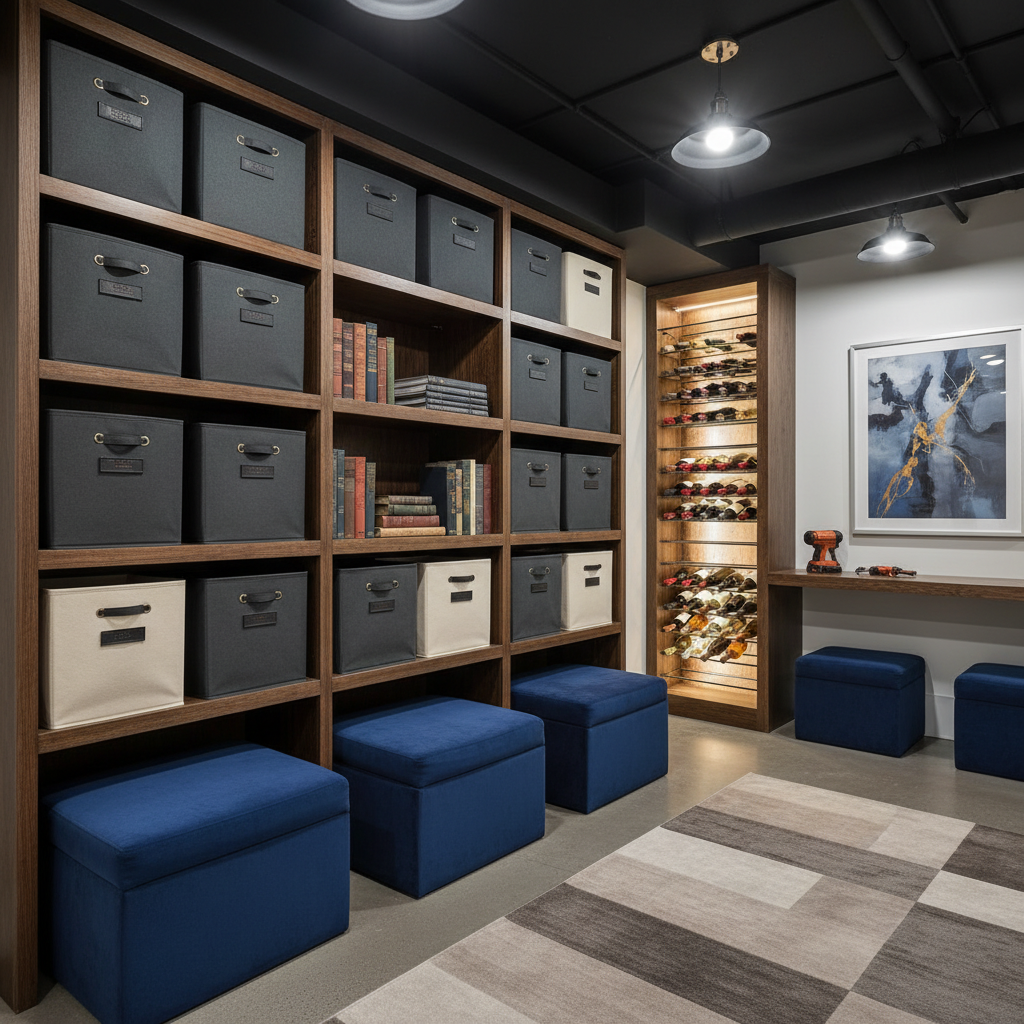
A wall of shelving displays books and collectibles while hiding household stuff behind closed cabinets. Ottomans with built-in storage work as seating and concealment. Vertical solutions like a wall-mounted racks and hooks use space you’re ignoring anyway.
A wine rack or wet bar area adds style points while giving you actual storage for glassware and bottles.
The National Association of Professional Organizers surveyed people and found that organized spaces directly reduce stress. Your basement doesn’t have to be the Chaos Zone. It can be your respite from the storm.
