



Your kitchen probably drives you crazy sometimes. You’re trying to make dinner and suddenly you’re doing this awkward dance around someone else, or you realize the olive oil is three cabinets away from where you’re cooking. Again.
Efficient kitchen layouts aren’t just about looking good in magazines. It’s about whether you can actually get a meal on the table without wanting to order takeout instead. The difference between a kitchen that works and one that fights you comes down to how the space flows and functions.
Good kitchen design reduces the steps between your fridge and your stove. It puts your most-used tools within arm’s reach. And honestly, it makes cooking feel less like a chore you’re enduring and more like something you might actually want to do.
What is the "Working Triangle" and How Can it Help My Kitchen Layout?
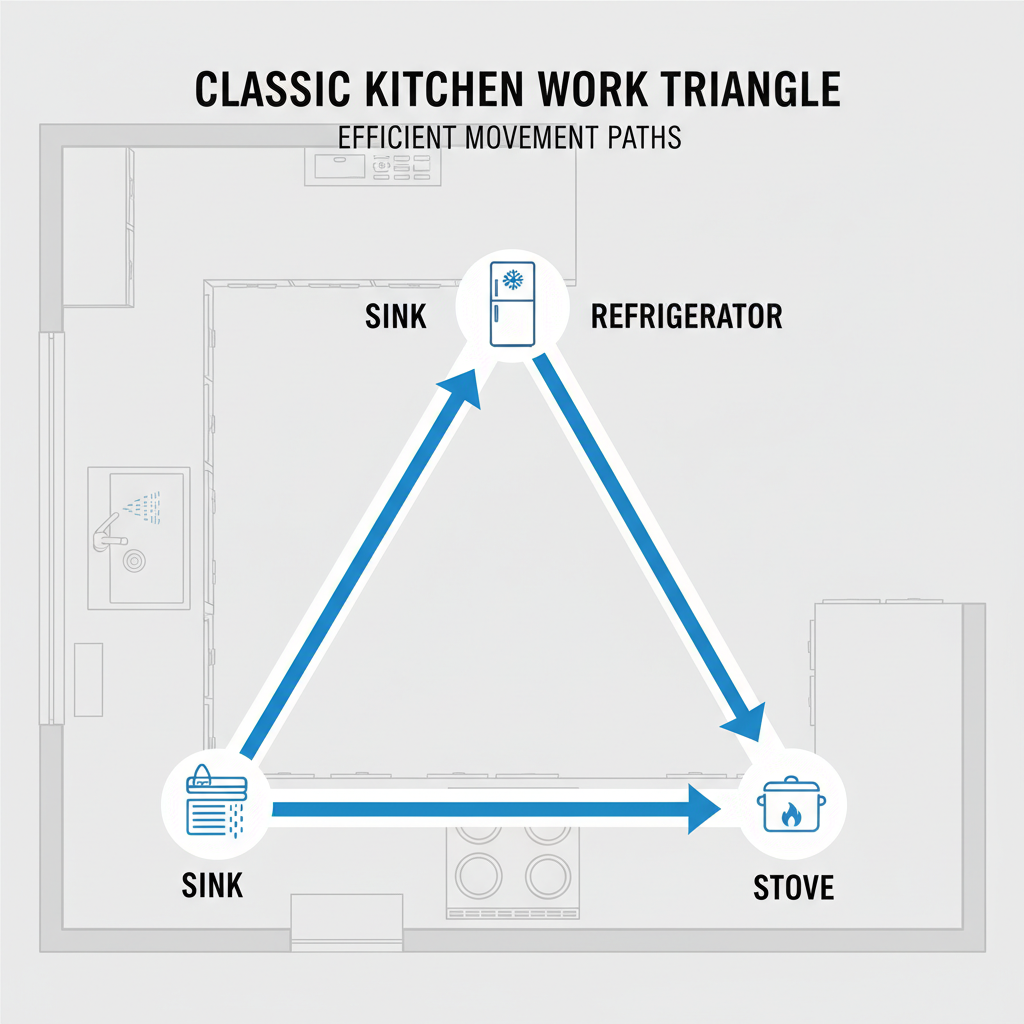
The kitchen work triangle sounds like some fancy design school concept, but it’s actually pretty straightforward. Your sink, fridge, and stove form three points. The idea is to keep them close enough that you’re not hiking across your kitchen every time you need to grab something from the fridge while you’re cooking.
This whole concept started back in the 1940s when kitchens were smaller and usually had one person working in them. The rule was that the three sides of your triangle should add up to somewhere between 13 and 26 feet total. Each leg should be at least 4 feet but no more than 9 feet. Which sounds very precise for something as messy as real life.
Modern kitchens don’t always fit this mold. You might have two people cooking at once. Or you bake a lot and need dedicated counter space for your KitchenAid mixer. The traditional triangle can feel pretty limiting when you’re trying to prep ingredients while someone else is loading the dishwasher.
Instead of obsessing over the perfect triangle, think about work zones and space planning. Your coffee setup probably lives near the sink and away from the main cooking area. Makes sense. If you bake regularly, you want your measuring cups and mixing bowls somewhere with good counter space, probably not right next to the stovetop where someone’s making dinner.
For smaller kitchens, the triangle still works as a starting point. A galley kitchen naturally puts everything in a line, which isn’t a triangle at all but can be incredibly functional. You get the sink on one side, maybe the stove across from it, fridge at one end. Everything’s within a few steps.
The National Kitchen and Bath Association says about 68% of kitchen renovations still use triangle principles in some way. But that’s probably because the basic idea makes sense, even if you adapt it. Keep the things you use together close to each other. Don’t make yourself walk across the entire kitchen to get from the fridge to the cutting board.
Your dishwasher placement matters too, though people forget about this. Put it near the sink, obviously, but think about which side. If you’re right-handed, having it to the right of the sink feels more natural when you’re loading dirty dishes.
How Can I Create Efficient Kitchen Layouts to Maximize Space in My Small Kitchen With Clever Storage Solutions?
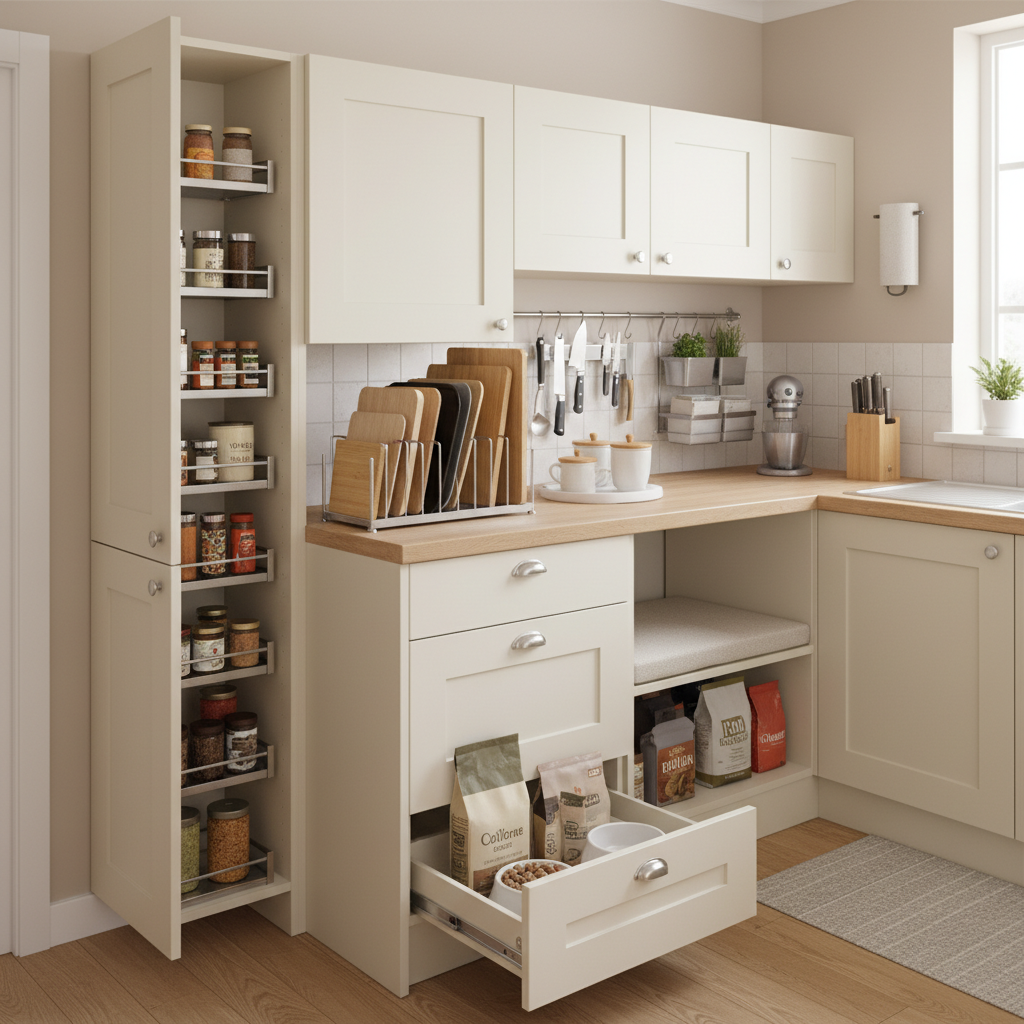
Small kitchens are having a moment, partly because real estate is expensive and partly because people are realizing you don’t need a massive space to cook well. But small kitchens do require you to be smarter about every inch and embrace optimal kitchen organization.
Vertical space is your friend. Most people install upper cabinets that stop about a foot below the ceiling, leaving this weird dead zone that just collects dust. Take your cabinets all the way up. Yes, you’ll need a step stool to reach the top shelves, but that’s where you put the turkey roasting pan you use twice a year.
IKEA’s SEKTION system goes to 80 inches high, which works in most standard kitchens. The top boxes cost around $50 each and you’ll probably need three or four for a typical wall. Store your least-used stuff up there. Holiday dishes, that ice cream maker you swear you’ll use more often.
Wall space is often underused. A simple rail system like IKEA’s KUNGSFORS runs about $25 and lets you hang utensils, cutting boards, even small shelves. Suddenly your countertop isn’t crowded with the stuff you reach for constantly. And that stainless steel look is especially captivating if you’re interested in a more industrial kitchen vibe.
Pull-out drawers in lower cabinets change everything. Instead of crawling on your hands and knees to find that one pot in the back, everything slides out to you. Rev-A-Shelf makes decent ones that fit most standard cabinets, usually around $40-80 depending on size. Your back will thank you.
Think about the weird spaces. That narrow gap between your fridge and the wall probably fits a slim rolling cart. The space under your sink can hold more than just cleaning supplies if you use a tiered organizer that works around the plumbing.
Lazy Susans aren’t just for your grandmother’s kitchen. A good one in a corner cabinet prevents that dead space where things go to die. The plastic ones from Target work fine for about $15. The wooden ones look nicer but cost more and don’t clean as easily.
People renovating small kitchens focus primarily on adding storage. Which makes sense when you’re trying to fit everything into less space. But sometimes the answer isn’t more storage, it’s less stuff. Do you really need three different types of pasta at once? Probably not.
What Kitchen Layout is Right for My Space?
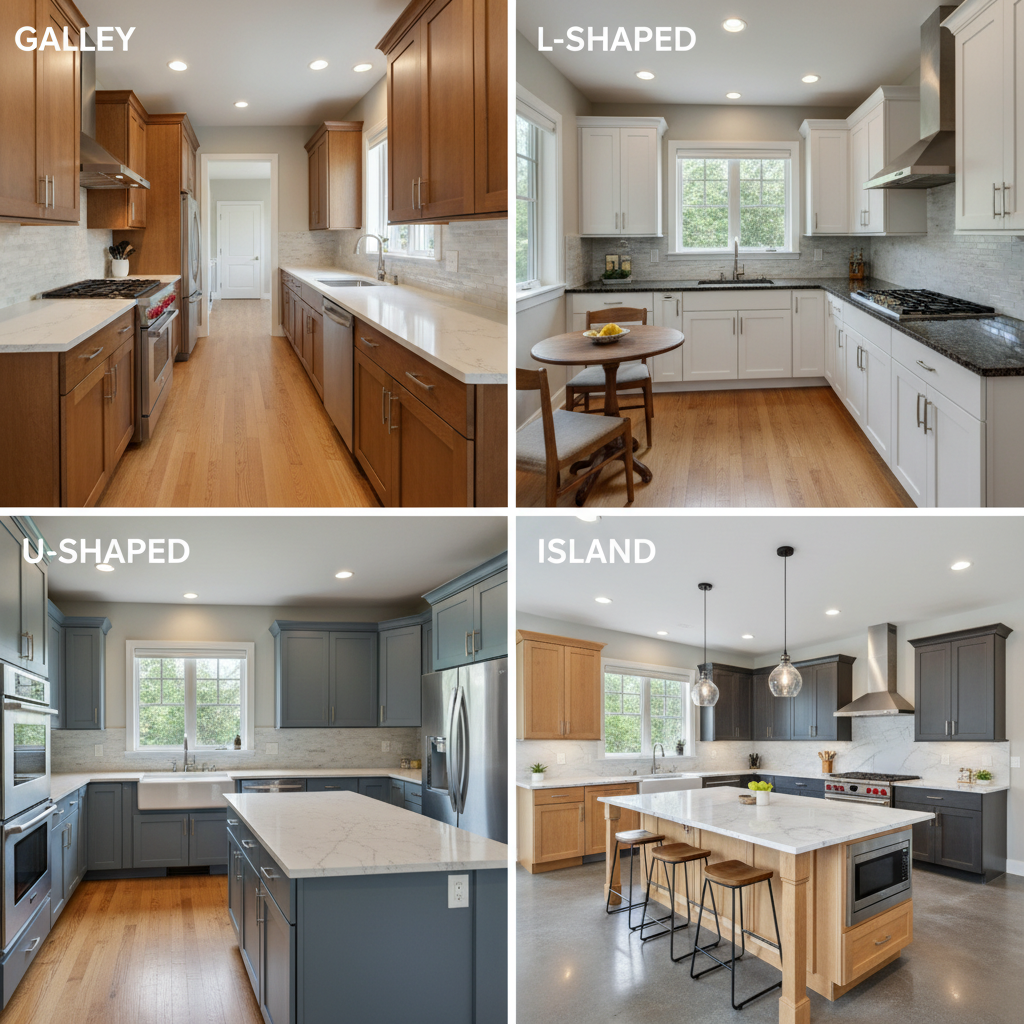
Most kitchens fall into one of four basic layouts, and each has its own personality. Your space probably dictates which one makes sense, but knowing the pros and cons helps you work with what you’ve got.
Galley kitchens get a bad reputation, but they’re actually pretty efficient for streamlined kitchen workflow. Two parallel countertops with a walkway in between. Everything’s within a few steps. The downside is that they can feel narrow, especially if multiple people are trying to use the space. But for one or two people, they work great. Think of it as your cooking cockpit. The key is making sure your walkway is at least 42 inches wide, 48 if you can manage it.
L-shaped layouts are probably the most flexible. You get counter space on two walls that meet at a corner, which creates a natural work zone. The corner can be tricky for storage unless you invest in a lazy Susan or pull-out system. But L-shaped kitchens often have room for a small island or table, which gives you more prep space and a place to eat.
U-shaped kitchens give you the most counter and storage space, but they need room to breathe. In a small space, they can feel closed-in. The benefit is that you can set up distinct zones. Maybe sink and prep on one wall, cooking on another, storage and coffee setup on the third. Multiple people can work without getting in each other’s way.
Island kitchens are what everyone wants, but they don’t work everywhere. You need at least 42 inches of clearance all around the island, 48 inches is better. That’s more space than a lot of kitchens have. But when they work, islands are fantastic. Extra storage underneath, seating for casual meals, sometimes room for a second sink or cooktop.
Kitchen Trends found that L-shaped layouts are most popular with homeowners, followed by islands. That probably reflects the reality that most kitchens aren’t huge, and L-shapes make good use of corner spaces that might otherwise feel awkward.
Your layout should match how you actually live. If you’re always cooking for one, a galley might be perfect. If you’ve got kids who want to help or hang out while you cook, you might need something more open. If you entertain a lot, an island where people can gather makes sense.
Don’t get too attached to one layout if your space is fighting you. Sometimes the best kitchen is the one that works with your walls, windows, and doors instead of trying to force something that looks good in magazines.
Designing for Everyone: How Do Universal Design Principles Promote Efficient Kitchen Layouts?
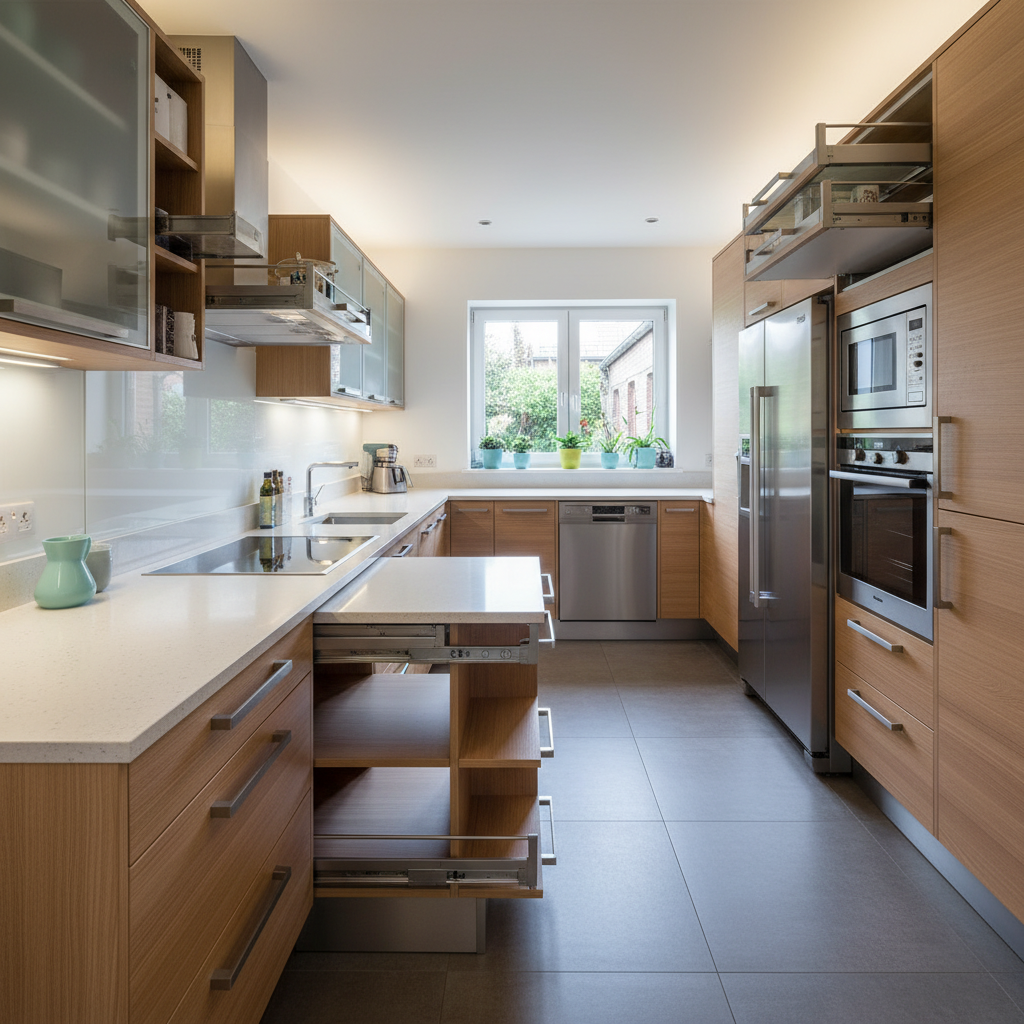
Universal design sounds like corporate speak, but it’s actually about making spaces work for real people with different needs. And the thing is, features that help someone in a wheelchair or an older person with arthritis often make kitchens easier for everyone.
Take countertop height. Standard counters are 36 inches, which is fine for most people most of the time. But if you’re particularly tall or short, or if you use a wheelchair, that height doesn’t work. Adjustable-height counters exist, though they’re pricey. A more practical approach might be varying your counter heights. Maybe your island is 34 inches for seated work, your main counters are standard 36 inches, and you have a small section at 38 inches for people who prefer to work standing taller.
Cabinet hardware matters more than you’d think. Round knobs are hard to grip if you have arthritis or limited hand strength. Lever-style handles or long pulls are easier for everyone to use, and they look more modern anyway. Same logic applies to faucets. Those single-lever styles aren’t just trendy, they’re easier to operate when your hands are full or wet.
Pull-out shelves and drawers help everyone, but they’re especially important for people who have trouble bending or reaching. A base cabinet with shelves you can pull out to you works better than deep cabinets where things disappear in the back. This isn’t just about accessibility, it’s about not losing your good baking sheets behind a pile of old takeout containers.
Lighting is huge. Task lighting under cabinets helps you see what you’re cutting. Good general lighting reduces shadows. If someone has vision issues, contrast helps. Dark counters with light cabinets, or vice versa. The edge of your counter should be visually distinct from your backsplash.
According to the CDC, about 28.7% of adults in the US have some kind of disability. That’s a lot of people who might struggle with a standard kitchen layout. But beyond that, we’re all getting older. Features that help someone with limited mobility today might help you in twenty years.
The cost difference for universal design features is often minimal if you plan for them upfront. Pull-out shelves cost more than fixed shelves, but not dramatically more. Lever handles cost about the same as knobs. Better lighting costs more initially but saves energy long-term.
Plus, these features tend to increase resale value. A kitchen that works for a wide range of people appeals to more potential buyers. It’s just good design that happens to be more inclusive.
Frequently Asked Questions
Q: What’s the first step in planning an efficient kitchen layout?
A: Spend a week paying attention to how you actually use your current kitchen. Where do you prep food? Where do you put groceries when you’re unloading them? What drives you crazy every single day? Those pain points tell you what to fix. Measure your space, but also think about your routines. If you always make coffee first thing in the morning, that setup should be convenient and out of the way of breakfast prep.
Q: How can I make a small kitchen feel bigger?
A: Light colors help, but they’re not magic. White cabinets with white walls can look sterile if you don’t add some personality. Good lighting makes a bigger difference than paint color. Under-cabinet LED strips cost around $30 each and make counters feel more spacious. Mirrors can help if you place them thoughtfully, but a random mirror in a kitchen looks weird. Consider a mirrored backsplash instead, or glass cabinet doors that reflect light. Strategic small kitchen renovation ideas can completely transform how spacious your kitchen feels.
Q: Are kitchen islands always a good idea?
A: Islands need space to work properly. If you can’t walk comfortably around all sides, skip it. A rolling cart might give you the extra counter space without permanently eating up floor space. Islands also need purpose beyond just existing. Storage, seating, or housing appliances like a dishwasher or wine fridge. Otherwise instead of a more efficient kitchen layout, you’ve just made your kitchen harder to navigate for no real benefit.
