



Your kitchen probably needs work. Most do. Whether it’s the builder-grade everything or that unfortunate backsplash from 2003, there’s usually something begging for attention.
But before you start ripping out cabinets, you need to figure out what you actually want. Not what looks good on Pinterest, not what your neighbor just installed. What works for how you actually live.
These five distinct kitchen designs each solve different problems. Modern kitchens work if you value efficiency over coziness. Farmhouse feels warm but requires commitment to the whole rustic thing. Transitional splits the difference, though sometimes it can feel a bit safe. Industrial works if you like the warehouse vibe and don’t mind harder surfaces everywhere. Mediterranean brings warmth but isn’t for everyone.
- Modern Kitchens: Clean lines, smart appliances, and storage that actually makes sense.
- Farmhouse Kitchens: Cozy charm with shiplap, apron sinks, and that lived-in feeling.
- Transitional Kitchens: Modern function meets traditional warmth without going full either direction.
- Industrial Kitchens: Raw materials, exposed everything, and an urban edge.
- Mediterranean Kitchens: Warm colors, natural textures, and that vacation-house feeling.
1. Modern Kitchens: Sleek, Minimalist, and Functional
Modern kitchens are about getting rid of visual clutter. Handleless cabinets from companies like IKEA or Scavolini create clean lines. Everything tucks away. The color palette stays neutral because bold colors date quickly, and modern design aims for longevity.
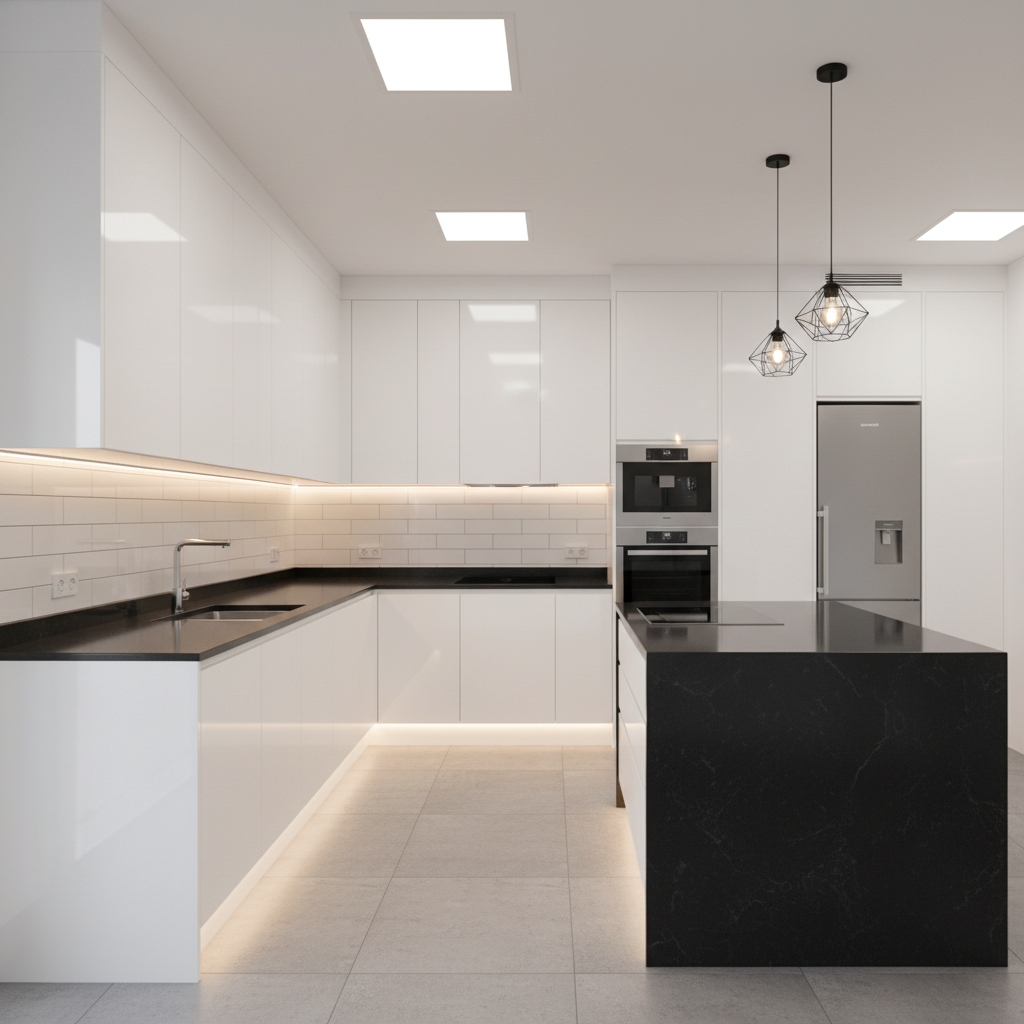
The appliances do the heavy lifting here. Induction cooktops heat faster and more precisely than gas. Smart refrigerators from Samsung or LG can show you what’s inside without opening the door, though honestly that feature feels more gimmicky than useful. Built-in ovens with steam functions or sous vide capabilities actually change how you cook.
Countertops are usually quartz these days. Brands like Caesarstone or Silestone offer consistent patterns without the maintenance headaches of natural stone. Expect to pay $60-80 per square foot installed. Waterfall edges look dramatic but add about $500-800 to your bill.
Lighting makes or breaks a modern kitchen. Recessed LEDs provide general illumination, around $25-40 per fixture. Under-cabinet LED strips, maybe $15-25 per foot, eliminate shadows on work surfaces. Pendant lights over islands should be simple geometric shapes. West Elm has decent options under $200, though CB2’s are more interesting if you can spend $300-500.
Storage gets scientific in modern kitchens. Pull-out shelves cost around $75-150 each but make deep cabinets actually usable. Drawer dividers from companies like Rev-A-Shelf keep utensils organized. Tall pantry units with slide-out shelves maximize vertical space.
For flooring, large-format porcelain tiles create fewer grout lines, which keeps things cleaner visually. Luxury vinyl plank works too and costs less, around $3-7 per square foot versus $8-15 for good porcelain.
The downside? Modern kitchens can feel cold. All those hard surfaces reflect sound, making them noisy during dinner prep. And the minimalist aesthetic requires serious discipline about keeping counters clear.
2. Farmhouse Kitchens: Warm, Inviting, and Rustic
Farmhouse kitchens lean into imperfection. Distressed wood, mismatched chairs, open shelving that shows off your collection of mixing bowls. It’s the opposite of modern’s “everything hidden” approach.
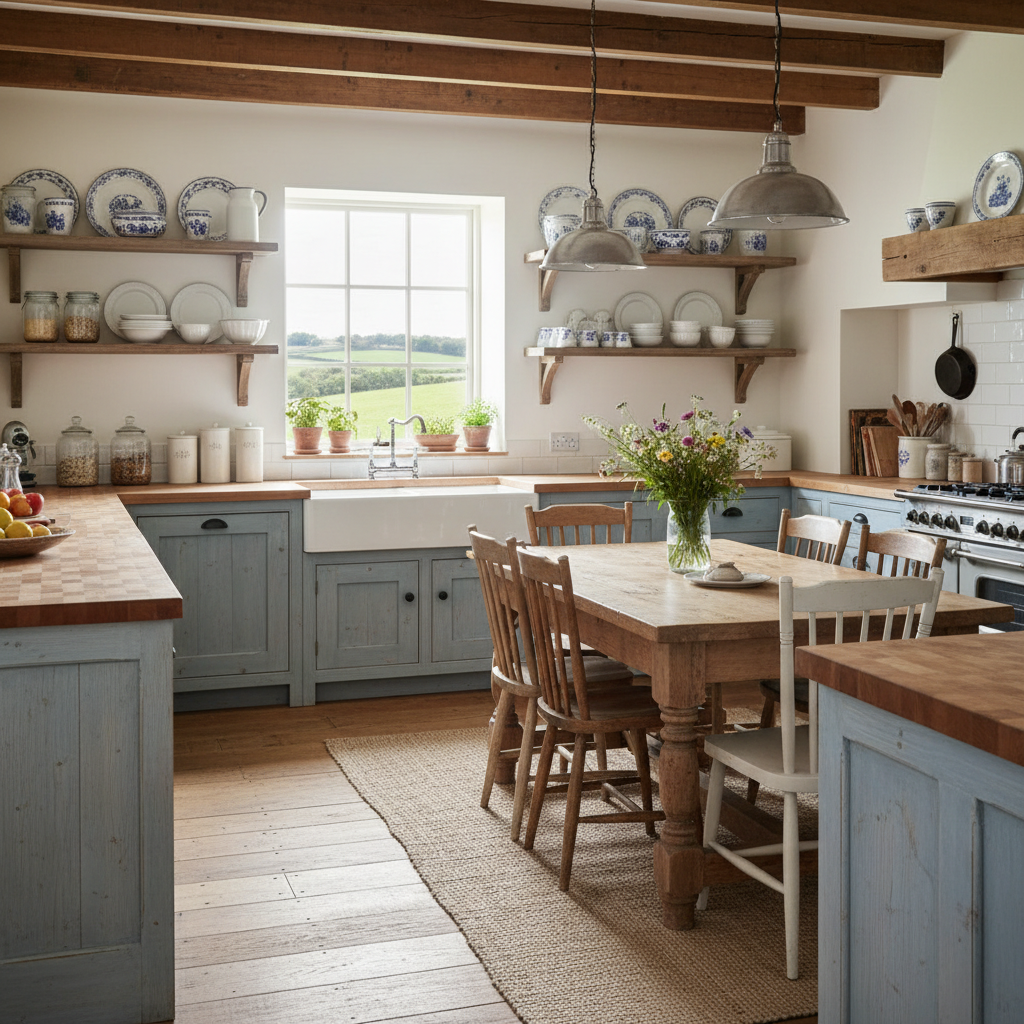
The apron-front sink is non-negotiable here. Kohler’s Whitehaven model runs around $400-600, while Rohl’s handcrafted versions can hit $1,500-2,500. They’re deeper than standard sinks, which actually makes washing large pots easier. Plus they look substantial in a way that undermount sinks don’t.
Shaker cabinets work best, painted in whites or soft grays. Benjamin Moore’s Cloud White or Sherwin Williams’ Alabaster are safe choices. Distressing adds character but can look forced if overdone. Better to buy old cabinets and refinish them, or look for companies that specialize in authentic distressing techniques.
Open shelving saves money on upper cabinets but requires editing your dish collection. Only your nicest stuff should be visible. Reclaimed wood shelves from companies like Vintage Timberworks cost $40-80 per linear foot but add authentic character. DIY versions using scaffolding boards run $15-25 per foot.
Butcher block countertops from places like Lumber Liquidators cost $30-50 per square foot, way less than stone. They need monthly oiling and will show wear, but that’s part of the charm. Avoid them near the sink unless you’re committed to the maintenance.
For the island, consider an actual antique table instead of built-in cabinetry. Estate sales and antique shops have sturdy pieces for $300-800. You might need to reinforce the top, but it adds authenticity that new furniture can’t match.
Lighting should feel vintage without being dark. Pendant lights with Edison bulbs create ambiance, though LED versions that mimic the warm glow work better for task lighting. Barn-style sconces from companies like Barn Light Electric cost $150-400 but last decades.
Wide-plank hardwood flooring, preferably reclaimed or distressed, completes the look. Expect $8-15 per square foot installed. The wider planks feel more authentic than standard 3-inch strips.
Farmhouse kitchens require commitment. You can’t just add a few rustic accessories to a modern space and call it done. But when executed well, farmhouse style feels genuinely welcoming in any setting.
3. Transitional Kitchens: The Best of Both Worlds
Transitional design gets dismissed as boring, but it’s actually harder to pull off than pure styles. You’re balancing modern function with traditional warmth without looking indecisive.
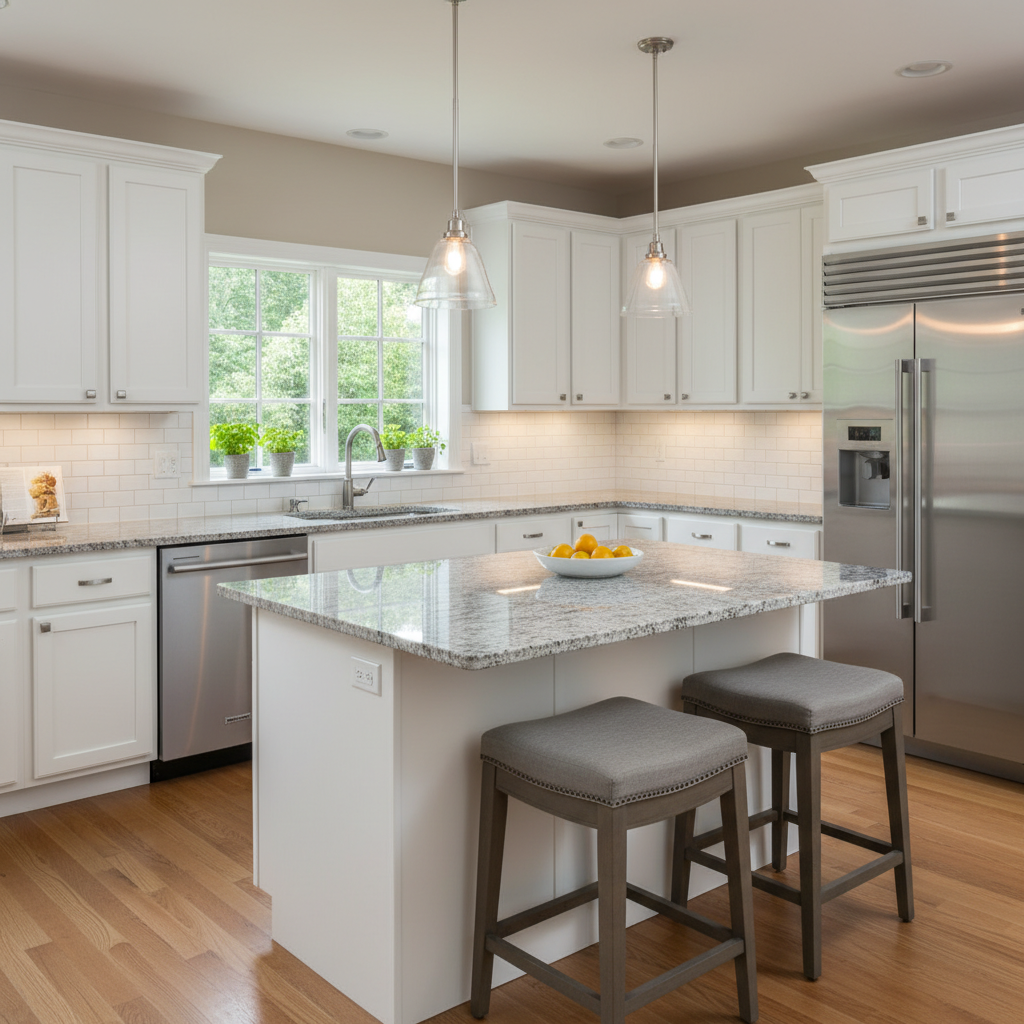
Start with Shaker cabinets in a classic color. They’re traditional enough to feel warm but simple enough to work with modern appliances. White, cream, or soft gray work best. Brands like KraftMaid or Wellborn offer good quality at moderate prices, around $150-300 per linear foot installed.
Countertops can go either direction. Natural granite adds traditional elegance, while quartz feels more contemporary. Calacatta quartz mimics marble but with better durability. Expect $50-80 per square foot for either option.
Subway tile backsplashes are transitional classics, though they risk looking generic. Adding colored grout or arranging tiles in herringbone patterns creates interest. For something different, consider natural stone subway tiles or handmade ceramic versions with slight imperfections.
The key is mixing finishes thoughtfully. Brushed gold hardware feels warmer than polished chrome but not as rustic as oil-rubbed bronze. Pendant lights can lean slightly traditional with fabric shades or metal details, but keep the overall silhouettes clean.
Appliances should be stainless steel but not aggressively modern. Skip the handleless refrigerator or induction cooktop with touch controls. Standard handles and knobs feel more balanced.
For flooring, medium-toned hardwood works better than the dark browns popular in traditional kitchens or the light grays favored in modern spaces. Something in the honey oak family, around $6-12 per square foot installed.
The challenge with transitional design is avoiding blandness. Without strong style cues, everything can feel generic. Success comes from choosing pieces that have subtle character rather than playing it completely safe.
Adding personality through accessories helps. Mix vintage copper pots with contemporary glassware. Display cookbooks alongside modern sculptures. The goal is creating a space that feels collected over time rather than ordered from a catalog.
4. Industrial Kitchens: Raw, Edgy, and Urban
Industrial kitchen styles work best in loft spaces or homes with good bones. Trying to force this style into a suburban colonial usually looks awkward. You need height, preferably some existing architectural character.
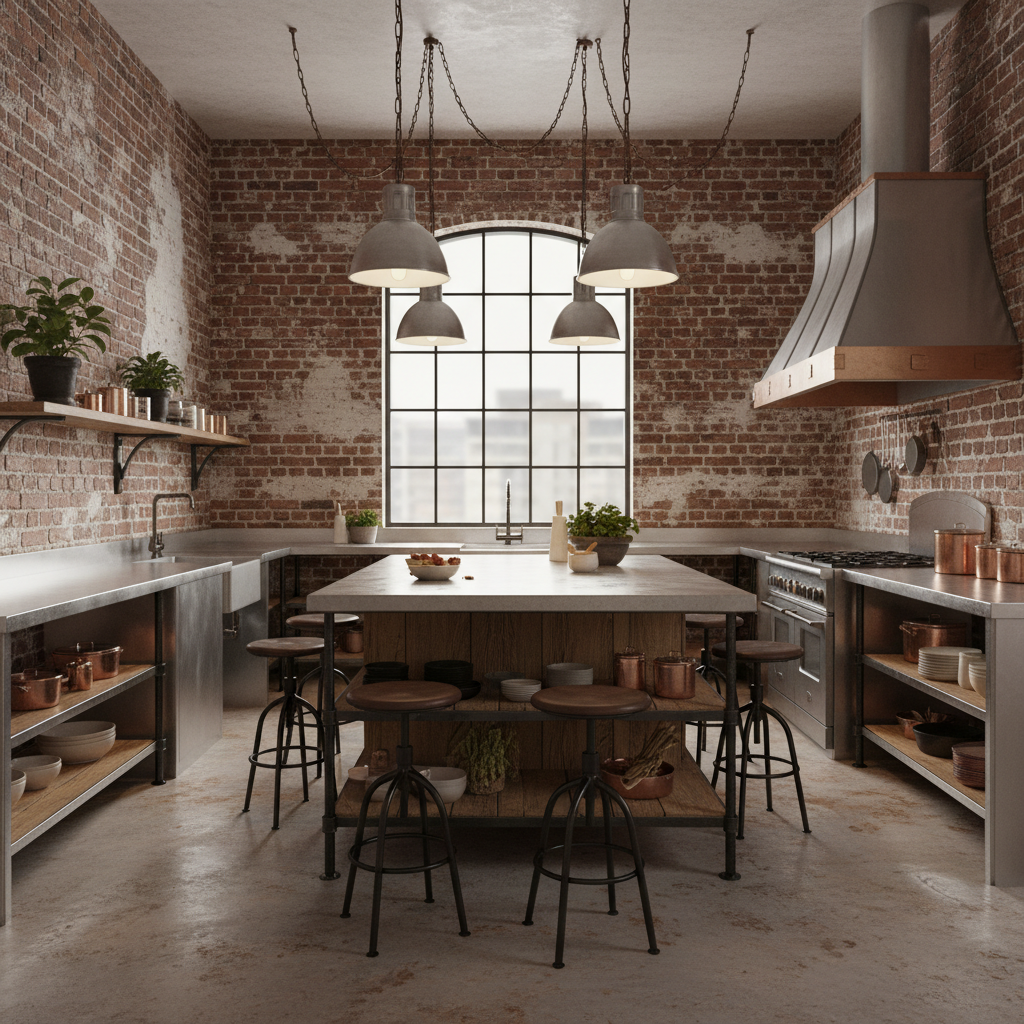
Exposed brick is ideal but not always available. Thin brick veneer from companies like Boral costs $3-6 per square foot and looks convincing. Avoid printed brick wallpaper, which never fools anyone. Concrete walls work too, either polished or left raw depending on your tolerance for texture.
Stainless steel shows up everywhere. Countertops, backsplashes, cabinet fronts, even flooring. It’s practical but cold, literally and figuratively. Restaurant supply stores like Wasserstrom offer commercial-grade pieces at better prices than residential retailers. A stainless steel counter runs $75-150 per square foot installed.
Open shelving makes sense here, preferably metal brackets with thick wood or metal shelves. Industrial pipes work as brackets for around $30-50 per shelf, though make sure they’re properly secured. These shelves will hold heavy cast iron and commercial equipment.
Lighting drives the industrial aesthetic. Metal pendant lights with Edison bulbs or exposed fluorescents work. Track lighting on exposed conduit adds functionality while reinforcing the warehouse feel. Vintage factory lights from restoration companies can cost $200-800 each but provide authentic character.
For appliances, commercial or commercial-style ranges fit the aesthetic. Brands like BlueStar or Capital offer home versions of restaurant equipment, though they require more ventilation and cost significantly more than standard ranges.
Concrete floors are authentic but hard on feet and joints. Polished concrete costs $3-8 per square foot but needs proper preparation. Large-format metal-look tiles provide a similar aesthetic with more comfort, around $8-15 per square foot installed.
The bigger challenge is making industrial kitchens feel livable. All those hard surfaces create echo and feel cold in winter. Adding soft elements through seating cushions, window treatments, or area rugs helps without compromising the aesthetic.
Storage becomes tricky without upper cabinets. You need plenty of open shelving or a separate pantry. Otherwise you’ll have appliances and groceries cluttering the limited counter space.
5. Exploring Mediterranean Kitchen Design: Warm, Inviting, and Sun-Kissed
Mediterranean kitchens transport you somewhere warmer, which is appealing until you remember you still have to cook dinner and help with homework. But when done thoughtfully, they create genuinely welcoming spaces that feel vacation-special every day.
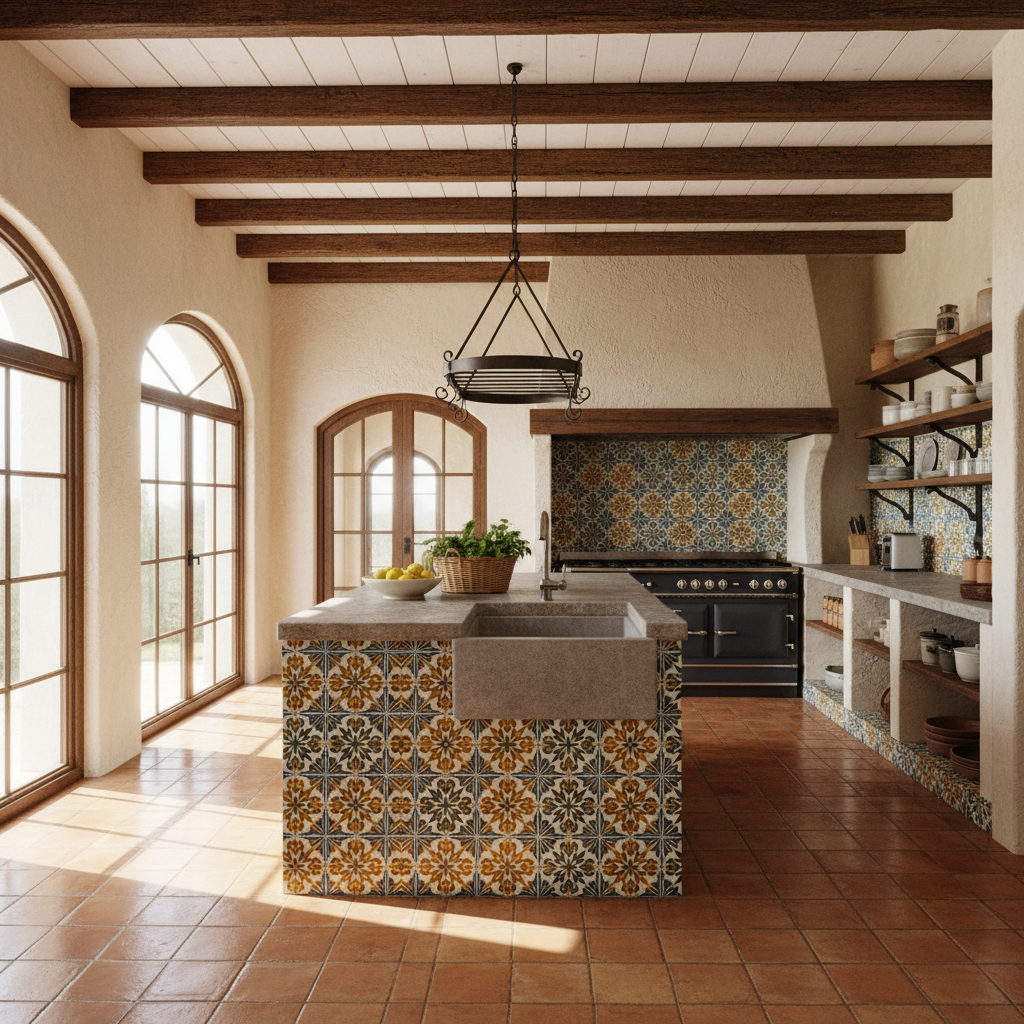
Terracotta floor tiles set the foundation, literally. Saltillo tiles from Mexico cost $2-4 per square foot but need sealing. European versions from companies like Walker Zanger run $8-20 per square foot but offer more consistent quality and color. Either way, expect variation and embrace it.
Wall treatments matter more here than in other styles. Venetian plaster creates authentic texture but requires skilled application, adding $5-15 per square foot to wall costs. Textured paint or limewash provides similar effects for less money and skill required.
Exposed wooden beams add architectural interest but only work with adequate ceiling height. Faux beams from companies like Volterra cost $300-800 each installed and look convincing. Real reclaimed beams cost more but bring authentic character and slight imperfections.
Cabinet colors should reflect the Mediterranean palette. Warm creams, soft blues, or sage greens work better than stark white. Distressing techniques add age and character. Hardware should be wrought iron or antique bronze rather than sleek contemporary finishes.
Natural stone countertops fit the aesthetic. Travertine offers authentic Mediterranean character for $15-30 per square foot but needs sealing. Marble looks beautiful but stains easily. Granite in warm tones provides durability with the right look.
Tile backsplashes offer opportunities for color and pattern. Hand-painted tiles from Spanish or Italian makers cost $20-50 per square foot but create focal points. Mosaic patterns in blues and greens reference the sea without being literal.
For lighting, wrought iron fixtures or ceramic pieces maintain the regional feeling. Pendant lights over islands can be more decorative than in modern kitchens. Sconces provide ambient lighting and architectural interest.
The challenge is avoiding theme park effects. Too many decorative elements or overly bright colors can make the space feel staged rather than authentic. Success comes from choosing pieces with genuine character and restraint in application.
Frequently Asked Questions About Distinct Kitchen Designs
Q: How do I choose the right kitchen design for my home?
A: Start with your actual cooking habits, not aspirational ones. Do you meal prep on Sundays or grab takeout most nights? Entertain frequently or prefer quiet family dinners? Modern kitchens work well for efficient cooks who value clean lines. Farmhouse suits people who enjoy displaying collections and don’t mind visible storage. Your home’s architecture should influence the choice too. Mediterranean style looks odd in a colonial, just like ultra-modern feels wrong in a craftsman bungalow. Look at your budget realistically. Some kitchen renovation styles cost more to execute properly than others.
Q: What are the most important factors to consider when planning a kitchen renovation?
A: Function trumps everything else. Pretty kitchens that don’t work for your cooking style become daily frustrations. Think about workflow between sink, stove, and refrigerator. Storage matters more than most people realize until they’re living with insufficient cabinet space. Budget for the unexpected because there’s always something behind those walls that needs attention. Plan for your actual timeline, not the contractor’s optimistic estimate. Most kitchen renovations take 50% longer than projected. Quality of materials matters for durability, but you don’t need the most expensive option for good results.
Q: How can I make my kitchen more sustainable?
A: Energy Star appliances actually reduce utility bills, not just environmental impact. LED lighting costs more upfront but lasts years longer than incandescent bulbs. Bamboo cabinetry grows faster than traditional hardwoods, though make sure it’s properly manufactured to avoid formaldehyde issues. Recycled glass countertops from companies like Vetrazzo offer unique patterns while reusing materials. Low-flow aerators on faucets reduce water usage without affecting functionality. Composting systems can be built into cabinet designs for easy food scrap disposal. Local materials reduce transportation costs and environmental impact while often providing better quality control through sustainable kitchen remodeling practices.
