


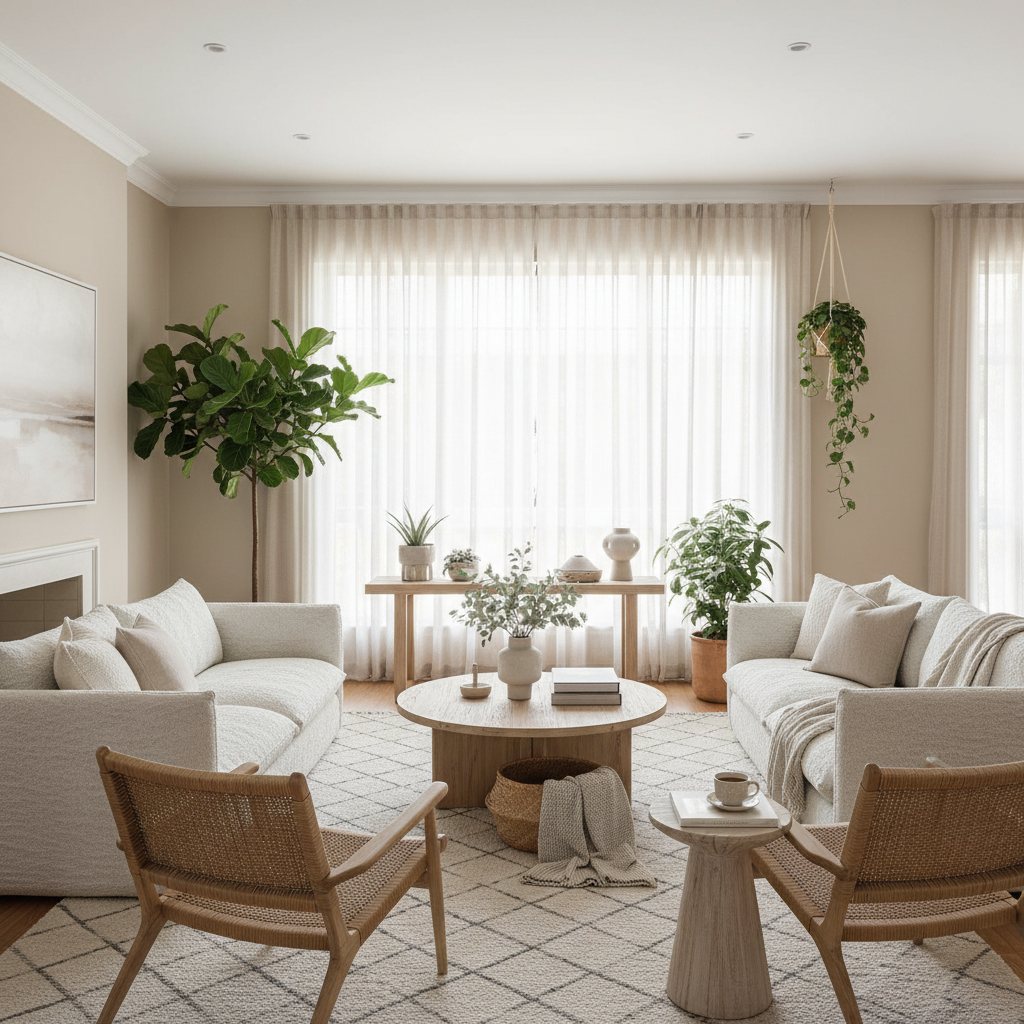
Your living room looks fine in photos but somehow feels off when you’re actually in it. One side feels crowded and the other looks weirdly empty. The furniture arrangement made sense when you moved in, but now it just feels wrong.
I’ve rearranged my living room three times in the past year. Not because I’m indecisive, but because getting the balance right is harder than it looks. A balanced living room layout isn’t about following a formula. It’s about creating a space where nothing feels out of place and you can actually relax.
Most balanced living rooms share a few key traits: even distribution of visual weight, natural elements, and minimal clutter. This is what I’ve learned about making a living room feel calm without turning it into a showroom nobody uses.
Symmetry Works When You Don't Overthink It
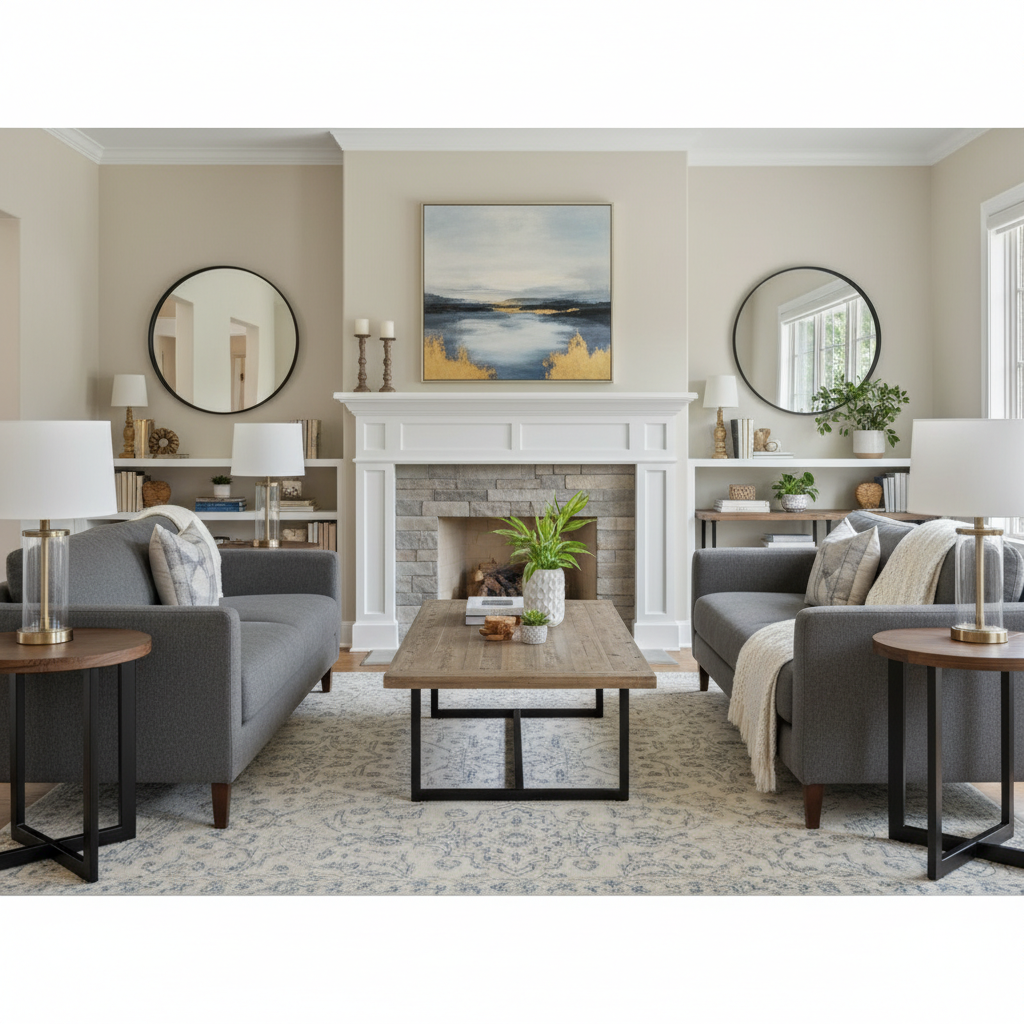
Matching furniture on both sides of a room creates instant visual balance. Two identical sofas facing each other. Matching lamps flanking a fireplace. Identical armchairs around a coffee table.
Symmetry gives the brain something predictable to latch onto. No guesswork about where things belong. Everything has a mirror image, which feels orderly and calm. This works great in smaller living rooms where visual clutter makes spaces feel even more cramped.
But perfect symmetry can come across as staged if you’re not careful. As someone who spends tons of time in showrooms and doing photo shoots, I fight against this all the time. Being too structured and patterned can make your designs come across like a furniture store display that nobody actually lives in. The trick is symmetry with small variations. Same sofas, different throw pillows. Matching chairs, different side tables. The bones are symmetrical, the details aren’t.
I tried a completely symmetrical setup once. Two identical sofas, four identical pillows, matching lamps. It looked great for exactly one day. Then real life happened and the symmetry fell apart because nobody lives that way. Now I do symmetry in the big pieces and let the small stuff be asymmetrical. Much easier to maintain in a balanced living room that people actually use. Check out this guide that touches on furniture placement that was partially inspired by that experiment.
Scale matters with symmetry in a balanced living room. If you put tiny lamps on either side of a massive fireplace, the symmetry doesn’t work because the visual weight is off. The lamps disappear. Use pieces of similar size and proportion so the symmetry reads clearly.
Lighting enhances symmetry more than you’d think. Matching sconces or table lamps create symmetry even when other elements are slightly off. This is helpful if you’re working with furniture you already own and perfect matching isn’t possible.
Asymmetry Requires More Strategy But Feels More Natural
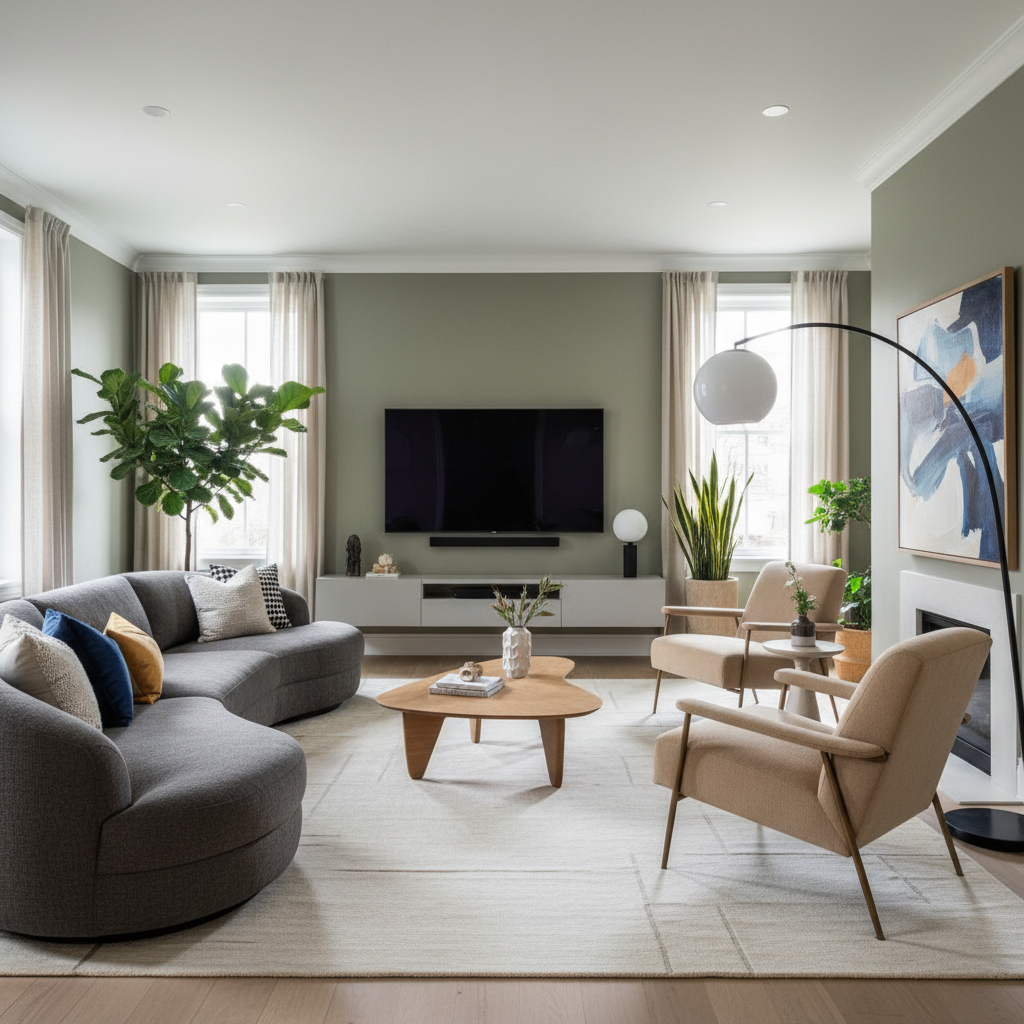
Asymmetrical layouts balance different elements against each other: a large sectional on one side, two smaller chairs and a floor lamp on the other. A tall bookshelf balanced by a large piece of artwork at eye level. The sides aren’t mirror images, but the visual weight feels even.
This is trickier to pull off because there’s no formula. You’re balancing dissimilar things, which means you have to actually look at the space and trust your eye. What I’ve learned: darker colors and heavier textures have more visual weight. A dark velvet sofa needs less to balance it than a light linen loveseat.
The rule of thirds helps with asymmetrical arrangements in a balanced living room. Divide your space into thirds horizontally and vertically. Place key elements along those lines or where they intersect. A tall bookshelf in the left third, a large artwork in the right third at the intersection point. This creates visual interest without chaos.
My personal living room designs trend towards asymmetrical because the architecture forces it. One wall has a window, the opposite wall has a doorway. Perfect symmetry was impossible. I put a large sectional under the window, balanced it with two chairs and a tall plant near the doorway. Different elements, similar visual weight. It feels casual instead of formal, which matches how we actually use the space in a balanced living room.
Asymmetry lets you work with what you have instead of buying matching furniture. You can balance a large bookshelf with a gallery wall. A heavy sofa with lighter chairs and good lighting. Mismatched pieces that create balance through strategic placement in any living room.
The mistake people make with asymmetry is thinking “different” means “unbalanced.” You still need even distribution of visual weight. Otherwise one side of the room feels heavy and the other feels empty, which is exactly what we’re trying to avoid.

Natural Elements Make Spaces Feel Less Sterile
Living rooms with only manufactured materials feel ‘off’. All synthetic fabrics, plastic, metal. You can’t quite figure out why the space feels cold until you realize there’s nothing natural in it.
Natural light is the most important element. Keep windows clear. Use sheer curtains instead of heavy drapes if privacy allows. Mirrors reflect and multiply natural light, which makes the room feel bigger and less closed-in. I have a large mirror opposite my window and the difference in brightness is noticeable.
Plants are non-negotiable for a balanced living room. They add visual interest, purify air, and create a connection to the outdoors that makes spaces feel more alive. I killed three plants before figuring out which ones work in my light conditions. Now I have five that are actually thriving, arranged in a corner to create a focal point.
Research from the University of Surrey shows indoor plants reduce stress and improve concentration. Your brain registers the presence of living things and relaxes. Even one plant makes a difference.
Wood furniture and organic materials add warmth that manufactured materials don’t provide. A wooden coffee table, a jute rug, bamboo blinds, rattan baskets. These textures soften spaces and make them feel less like a waiting room. My coffee table is reclaimed wood and it’s the piece people always comment on. The texture and grain add character that a glass or metal table wouldn’t have.
Fresh air matters for creating a balanced living room. Open windows regularly. Stale air makes spaces feel heavy and closed-in even if they look great. I didn’t realize this until I started opening windows every morning. The room feels lighter and more breathable.
Natural color palettes help create a balanced living room too. Greens, browns, soft blues. Colors that exist in nature instead of synthetic brights. This creates a calm backdrop that doesn’t fight for attention. Our guide on building ease and calm with a relaxed vibe goes extensively into using natural materials.
Less Stuff Equals More Calm
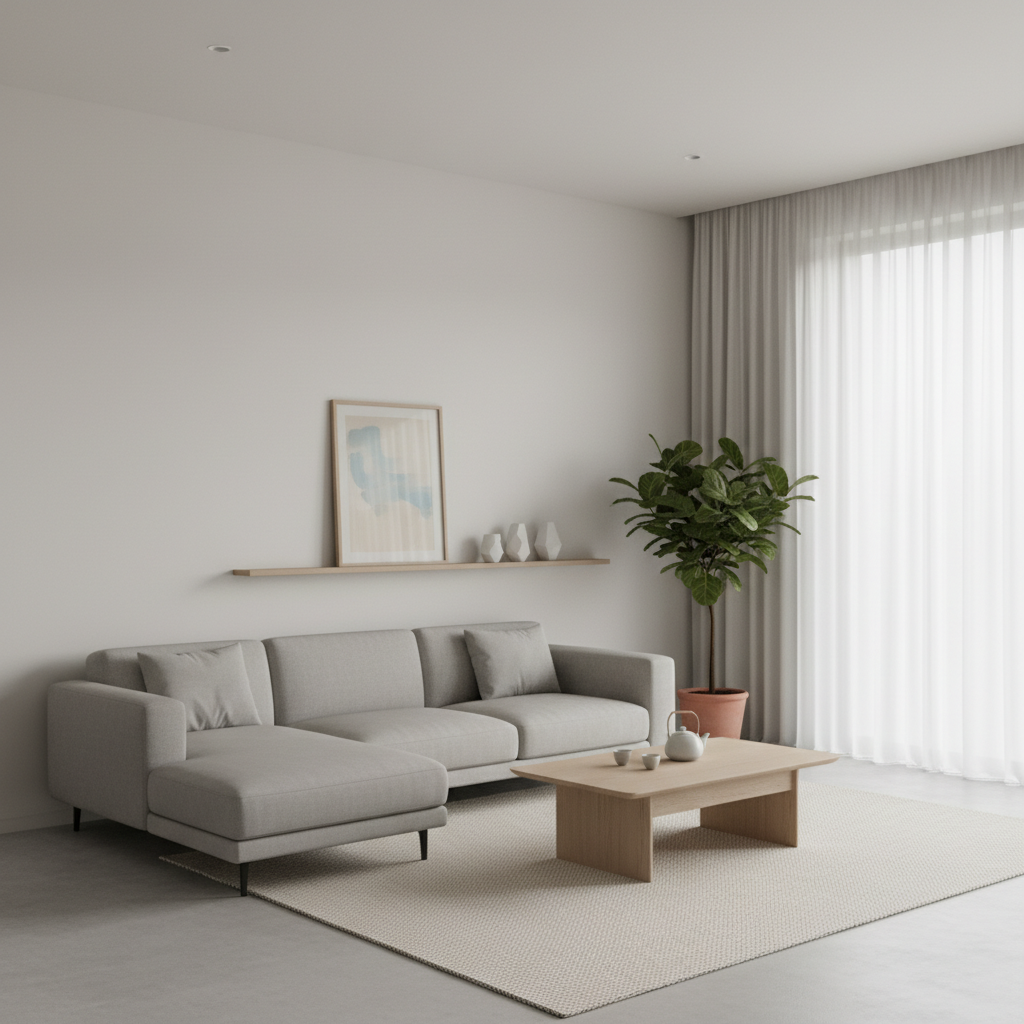
Cluttered living rooms feel chaotic even with perfect furniture arrangement. Too many decorative objects, too many throw pillows, too many things competing for attention. Your eye doesn’t know where to land, so nothing feels restful.
I had seventeen decorative objects on my mantel at one point. Seventeen. Framed photos, candles, small sculptures, a vase, random tchotchkes from travels. It looked busy and cluttered. I removed twelve of them and kept five pieces I actually care about. The difference was immediate. The mantel went from visual noise to intentional display.
Start with removing items you don’t use or love. Donate or discard things that are broken, outdated, or sitting there because you haven’t decided what to do with them. Then organize what remains by category. Use baskets and bins to contain smaller items so they don’t create visual clutter across surfaces.
Research published in the Journal of Environmental Psychology shows clutter increases stress and negatively impacts cognitive function. A cluttered space makes your brain work harder to process visual information, which is exhausting over time. Creating a clean, minimal space with a balanced living room layout reduces this cognitive load.
Storage furniture helps maintain a balanced living room without clutter. Coffee tables with drawers, ottomans with storage, bookshelves with doors. These hide the necessary stuff while keeping surfaces clear. I replaced my open bookshelf with one that has doors on the bottom half. The visual difference is significant.
Limit throw pillows and blankets. I see living rooms with eight pillows on a sofa and it looks overwhelming. Three or four pillows maximum. One or two throw blankets. This is enough for comfort without creating a pile situation.
Decluttering is ongoing, not a one-time project. Make a habit of reviewing your living room monthly and removing items that accumulated. Mail, magazines, random objects that drifted in from other rooms. Keep surfaces mostly clear and the space will maintain its calm feeling. This ongoing maintenance is essential for any balanced living room.
What Actually Makes a Living Room Feel Balanced
A balanced living room comes down to visual weight distributed evenly and minimal distractions. Whether you use symmetry or asymmetry matters less than whether the space feels calm when you’re in it.
The furniture arrangement should make sense for how you use the room. Conversation areas where people can actually talk. Clear pathways that don’t require navigating around furniture. Good lighting at different heights. Enough seating without cramming in extra chairs that block movement.
Natural elements make the biggest difference in whether a space feels alive or sterile. Even one plant and some wood furniture changes the energy of a room. Combined with decluttering, these elements create the calm feeling most people want but can’t quite achieve.
Your balanced living room layout should reflect how you actually live, not how magazines suggest you should live. Symmetry works for some people, asymmetry for others. The goal is creating a space that feels right when you walk into it, not one that looks perfect in photos but feels wrong in person.
Frequently Asked Questions
Q: What’s the difference between symmetrical and asymmetrical balance in a living room?
A: Symmetrical balance uses matching elements on both sides of a central point, like identical sofas facing each other or matching lamps flanking a fireplace. This creates a formal, orderly feeling. Asymmetrical balance uses different elements with similar visual weight on each side. A large sectional balanced by two smaller chairs and a lamp. Asymmetry feels more casual and relaxed. Pick based on your space and how you want it to feel, not which one is “better.”
Q: How do I know if my living room layout is balanced?
A: Stand in the doorway and look at the space. Does one side feel heavier or more crowded than the other? Do your eyes naturally move around the room or get stuck on one cluttered area? A balanced living room distributes visual weight evenly so no single area dominates. If something feels off when you walk in, the balance is probably wrong. Trust your gut more than rules.
Q: What natural elements work best in small living rooms?
A: Small potted plants on windowsills or shelves. A wooden coffee table or side table. Jute or sisal rugs instead of synthetic ones. Natural light maximized with mirrors and sheer curtains. Even in tight spaces, you can incorporate wood furniture, one or two plants, and natural textiles in a balanced living room. These elements don’t require much room but make a significant difference in how the space feels. A small living room with natural elements feels more open and breathable than a larger space filled with only synthetic materials.
