



Want your home to feel like a beach house without the kitschy nautical nonsense? Authentic coastal design isn’t about collecting every seashell you’ve ever found or hanging fishing nets on your walls. It’s about capturing that specific feeling you get when you walk into a well-designed beach cottage – everything just feels lighter.
Most people get coastal design wrong. They think it means navy blue everything and rope details. But spend time in actual coastal homes, the ones that feel effortlessly calm, and you’ll notice something different: they’re not trying so hard.
- Natural light becomes your main design element, not an afterthought.
- Materials feel weathered and lived-in, not shiny and new from HomeGoods.
- Colors come from actual beaches – think bleached driftwood, not sailor stripes.
- Spaces stay uncluttered because clutter kills that breezy feeling instantly.
- Every piece serves a purpose, usually more than one.
What Are the Foundational Elements of Authentic Coastal Style?

Real coastal style starts with light. Not just any light – that specific quality of seaside light that bounces off water and sand. Your windows become crucial. Strip off the heavy drapes. Those plantation shutters everyone loves can work, but honestly, simple linen panels or no window treatments at all often look better.
The color thing trips people up constantly. Walk any beach and you won’t see bright turquoise or coral reef orange. You’ll see weathered wood in about fifteen shades of gray. Sand that ranges from almost-white to deep taupe. Water that’s more often gray-green than Caribbean blue, at least if you live anywhere on the East or West Coast.
Benjamin Moore’s Cloud White works better than pure white for walls. Sherwin Williams has this color called Sea Salt that actually looks like sea glass instead of mint green. For deeper tones, try something like Farrow & Ball’s Elephant’s Breath – sounds terrible, looks like perfectly aged driftwood.
Materials matter more than you’d think. That IKEA particle board dresser painted white isn’t going to cut it. You need things that look like they could survive salt air. Reclaimed wood, actual reclaimed wood, runs about $8-12 per square foot but you don’t need much. A single reclaimed wood floating shelf can change an entire wall.
Rattan furniture from places like Serena & Lily starts around $400 for a side chair, but World Market has decent options for under $200. The CB2 Rattan Daybed looks expensive at $899 but it’s actually well-made. Avoid anything too perfect or matchy-matchy.
Natural fiber rugs ground everything. That massive jute rug from West Elm, the 9×12 one that costs $599, gets softer with age and hides sand tracked in from actual beach trips. Or hypothetical beach trips, if you’re nowhere near water.
How Do You Incorporate Textures and Textiles for a Relaxed Vibe?
Texture does the heavy lifting in coastal spaces. Smooth surfaces feel cold and hotel-like. You want things that invite touching – nubby linen, chunky cotton, rough-hewn wood. This approach to coastal home decorating creates an instantly welcoming environment.
Linen everything, basically. Linen gets better as it wrinkles and fades. Those perfectly pressed linen curtains from Pottery Barn will relax into something much better after a few months. The Belgian linen bedding from Parachute costs $200+ for sheets but lasts forever and gets softer with every wash. If that’s too much, the linen blend from Target’s Casaluna line runs about $40 for a sheet set and honestly, looks pretty similar once it’s been lived in.
Layer different textures without overthinking it. A chunky cable knit throw from Anthropologie ($128) over a smooth linen sofa works. So does a $25 cotton waffle throw from IKEA. The key is mixing weights and weaves, not brands. This layered approach to beach house interior design feels effortlessly curated.
Woven baskets solve storage and add texture simultaneously. Those large seagrass baskets from Cost Plus World Market, around $60 each, hide everything from throw blankets to kids’ toys. They look intentional instead of utilitarian.
Skip the matching pillow sets. Buy individual pillows in different textures – one smooth linen, one nubby cotton, maybe something in soft bouclé. The West Elm linen pillow covers run $29 each, mix them with the $19 cotton ones from H&M Home. This mix-and-match approach to seaside home styling looks more authentic than coordinated sets.
For window treatments, avoid anything structured. No valances, no tiebacks, definitely no swags. Simple linen panels that puddle slightly on the floor feel more relaxed than anything hung at precise measurements.
What Furniture and Decor Best Embody Coastal Charm?

Coastal furniture needs to look like it’s been there forever, even when it’s new. Slipcovered sofas nail this better than anything else. The IKEA Ektorp with a custom linen slipcover from Comfort Works looks like a $3000 sofa for under $800 total. You can wash the covers when they get dirty, which they will. This approach to relaxed beach house furniture feels both practical and stylish.
Wood furniture should look weathered, not shiny. That dining table from Restoration Hardware with the $2400 price tag gets the look right, but you can achieve something similar by lightly sanding any wood piece and applying a white wash stain from Minwax, about $12 per quart.
Skip the obviously nautical decor. No ship wheels, no “Beach House Rules” signs, nothing with anchors unless it’s an actual vintage anchor you found somewhere interesting. Real coastal homes have maybe one or two pieces with obvious ocean references, not entire rooms themed around sailing.
Instead, think about shapes and textures from the shore. Smooth stones in a wooden bowl. Actual driftwood pieces, not the fake stuff from craft stores. Sea glass in clear glass vessels where it can catch light. This subtle approach to coastal decorating ideas feels more sophisticated than theme-heavy rooms.
Plants work better than expected. That massive fiddle leaf fig might not scream “beach house” but it adds the kind of organic, living element that makes spaces feel less designed. Olive trees in large planters remind you of Mediterranean coastlines. Even pothos trailing from baskets feels appropriately casual.
Lighting should feel soft and diffused. Those trendy rattan pendant lights from Serena & Lily ($400+) work great, but similar options from Wayfair start around $80. Table lamps with linen or paper shades cast better light than anything too directional. This approach to ambient lighting design creates the perfect coastal atmosphere.
The Importance of Decluttering and Open Spaces for a Calm Environment
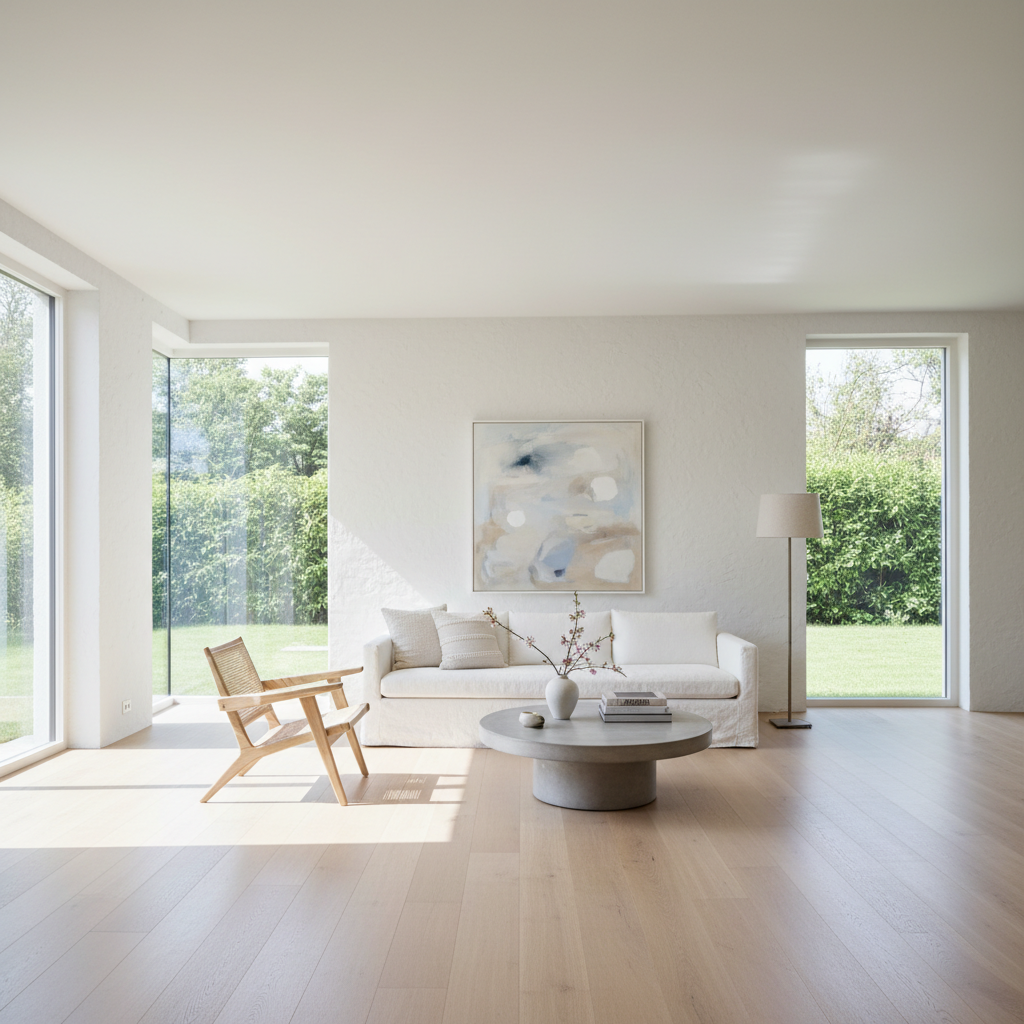
Clutter kills the coastal vibe faster than anything else. Those magazine photos of perfect beach houses? Notice how little stuff is visible. Surfaces stay mostly clear. Books get edited down to a curated few instead of entire libraries on display.
This doesn’t mean your space needs to feel empty or cold. But every object should earn its place. That collection of vacation souvenirs from twelve different trips probably needs editing. Keep the few pieces that actually mean something, store or donate the rest.
Open floor plans help, but you can fake the feeling even in choppy layouts. Remove unnecessary furniture first. Do you actually need that extra chair nobody sits in? The decorative table that just collects mail? Sometimes less furniture makes a space feel twice as large.
Maximize natural light obsessively. Clean windows make a bigger difference than you’d think. Position mirrors to bounce light around – the large round mirror from CB2 ($199) or even the circular one from IKEA ($39) can make a room feel significantly brighter.
Storage becomes crucial when you’re trying to maintain clean surfaces. Built-ins look custom but IKEA hacks can achieve similar results for hundreds instead of thousands. The BILLY bookcase with doors hides clutter while adding vertical storage. Custom doors from Norse Interiors make IKEA pieces look built-in.
Keep pathways clear and wide. Coastal spaces should flow easily from room to room. You shouldn’t have to navigate around furniture or step over piles of anything. This might mean rearranging existing furniture instead of buying new pieces.
Plants add life without clutter, but choose varieties that stay manageable. Snake plants work in low light and need minimal care. A large olive tree makes a statement without requiring daily attention. Avoid anything too fussy or requiring frequent repotting.
Frequently Asked Questions About Authentic Coastal Design
Q: What’s the difference between “coastal” and “nautical” design?
A: Nautical design hits you over the head with boat references. Authentic coastal design makes you feel like you’re near water without announcing it constantly. Nautical means rope details, ship wheels, and navy stripes. Coastal means weathered wood, soft colors, and that relaxed feeling you get in well-designed beach towns. One tries hard, the other just is.
Q: How can I incorporate coastal design elements without living near the coast?
A: Focus on the feeling, not literal beach references. Natural light, relaxed materials, and uncluttered spaces work anywhere. An apartment in Kansas can feel coastal if the light is soft, the colors are calm, and nothing feels uptight or formal. Skip the seashell collections and focus on textures that remind you of shore life – weathered wood, soft linens, organic shapes.
Q: What are some budget-friendly ways to achieve an authentic coastal look?
A: Start by editing what you already have. Remove half your accessories and see how much calmer everything feels. Paint walls in soft whites or pale grays – a gallon of Benjamin Moore’s Cloud White costs $65 but transforms entire rooms. Shop secondhand for wicker furniture and linen textiles. IKEA’s jute rugs start at $49 and look identical to expensive versions once they’ve been walked on a bit. Focus on one or two quality pieces like good linen curtains rather than lots of cheaper accessories.
