Small living spaces don’t mean having to eat cereal standing over the kitchen sink. With the right setup, even the tiniest dining corners can feel like you found the best booth at that bistro you love but can never get a reservation at.
I’ve been studying how restaurants make tight quarters feel so cozy and comfortable. It’s mostly about three things: strategic seating, the right lighting, and creating that sense of enclosure that makes you want to linger over wine and conversation. You can steal all of these tricks.
What Makes a Tiny Dining Corner Actually Work?
The difference between a cramped card table situation and something that feels intentionally cozy comes down to a few key moves:
Built-in seating saves floor space and creates that booth feeling. Banquettes are your friend here. Round tables beat rectangular ones every time in small spaces – no sharp corners to navigate around. Lighting defines the zone. One well-placed pendant does more than an overhead fixture ever will.
Plus the details that make it feel special. A mirror to bounce light around. Textures that absorb sound. Storage that doesn’t look like storage.
1. Why is the Built-in Corner Banquette a Space-Saving Essential?
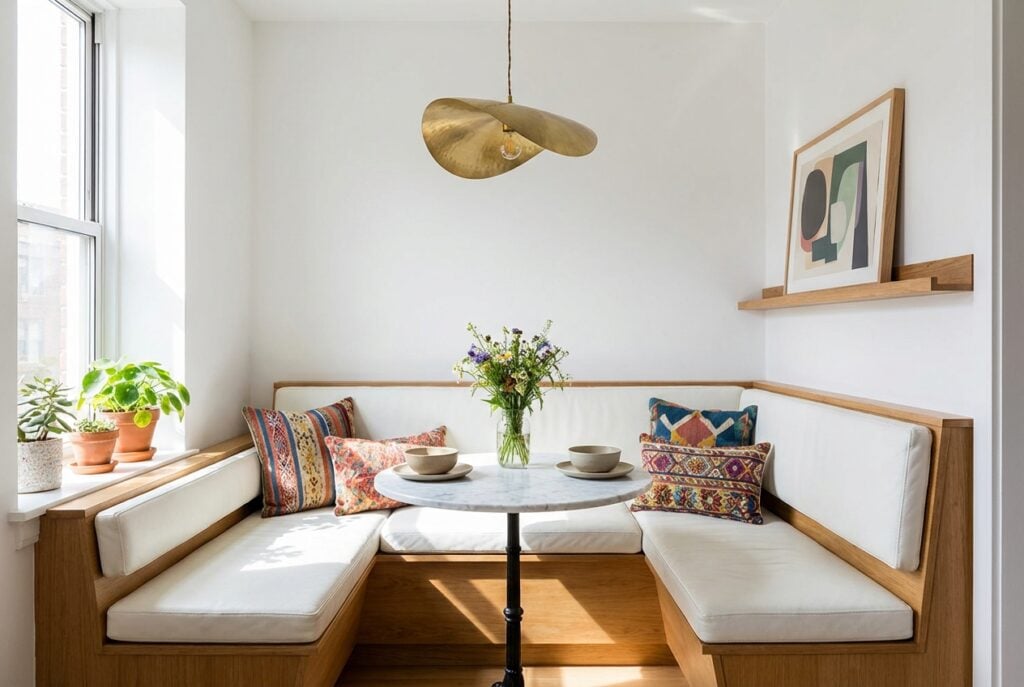
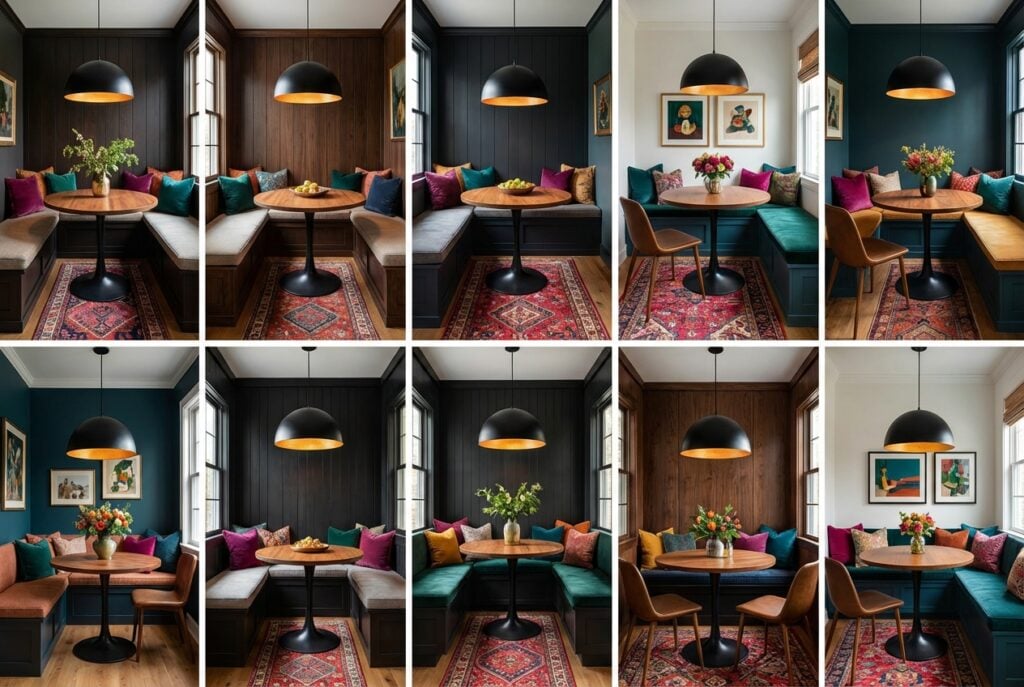
A built-in banquette is basically cheating at small space design. While regular dining chairs need about 24 inches behind them to pull out, a banquette sits flush against the wall. You just slide in and out.
The best part is how it mimics that restaurant booth feeling. Something about having your back against a wall makes a space feel more intimate. Maybe it’s evolutionary – you can see everything in front of you while feeling protected behind.
If you’re handy, you can build one with storage drawers underneath. IKEA kitchen cabinets actually work as a base – top them with a custom cushion from a local upholsterer. Expect to spend around $300-500 total, depending on fabric choice.
For the table, I recommend you go with a pedestal base. No table legs to bang your knees on when you’re sliding in. A 30-inch round works for most corners and seats four people reasonably well. West Elm has a decent marble-look one for around $400.
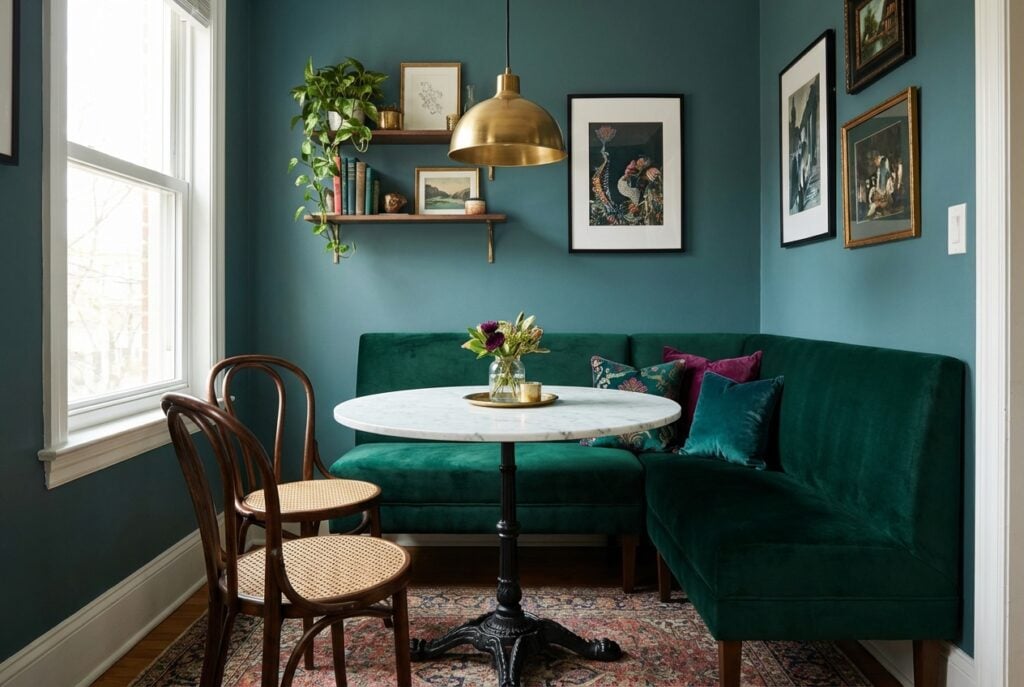
2. Can a Classic Parisian Bistro Set Work in Any Layout?
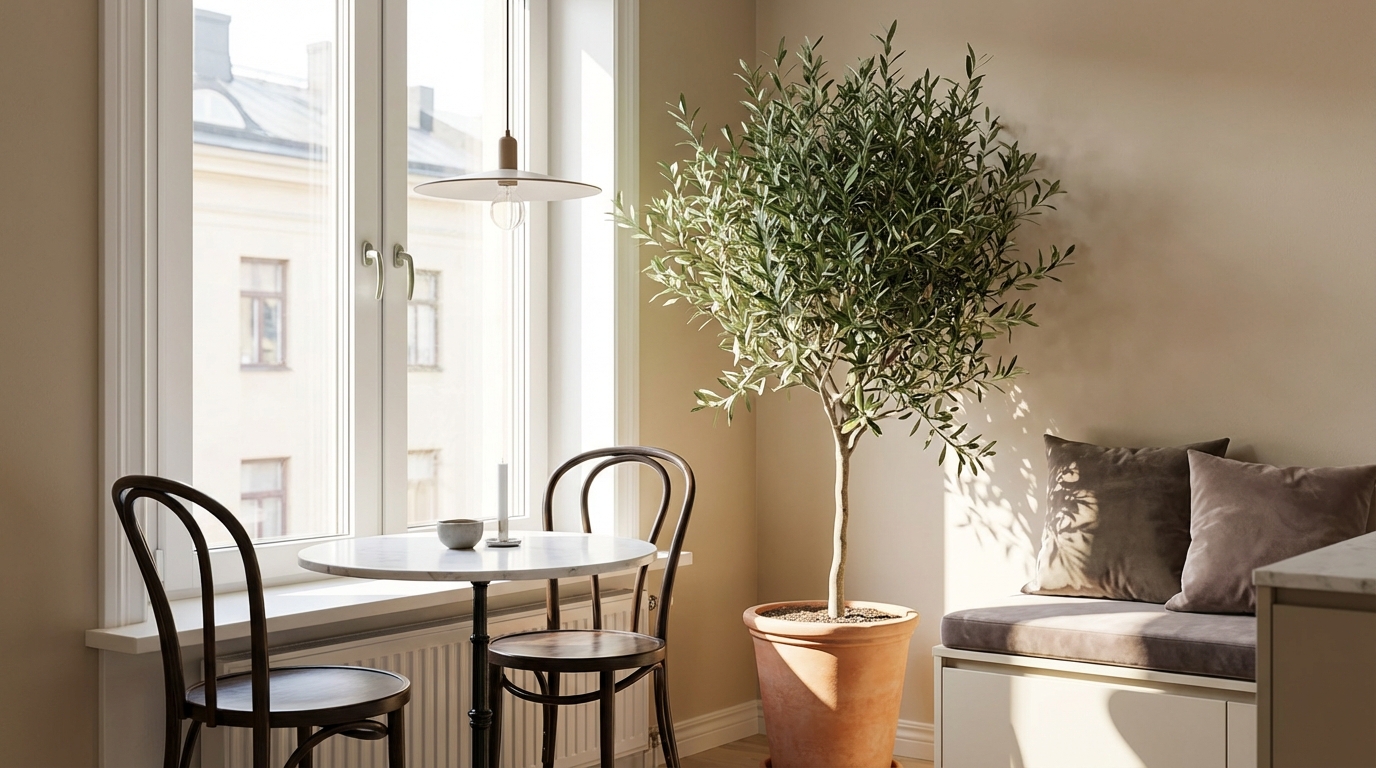
There’s a reason so many sidewalk cafes in Paris uses the same setup concept. Marble-topped pedestal tables with bentwood chairs aren’t just photogenic, they’re engineered for tight spaces.
The round shape lets people move around it easily. No corners to catch your hip on when you’re squeezing past. The cast iron base keeps it stable even when someone leans on it, but the visual footprint stays small since you can see underneath.
Target sells a surprisingly good version of this setup for around $280. The “marble” is actually laminate, but it looks convincing from more than two feet away. For authentic Thonet chairs, you’re looking at $200+ each, but CB2 makes decent knockoffs for about $89.
Place it near a window if you have one. The natural light makes even the smallest corner feel more open. Add a small plant – something tall and narrow like a snake plant works well in the leftover floor space.
3. How Do You Create a Library-Inspired Dining Nook?
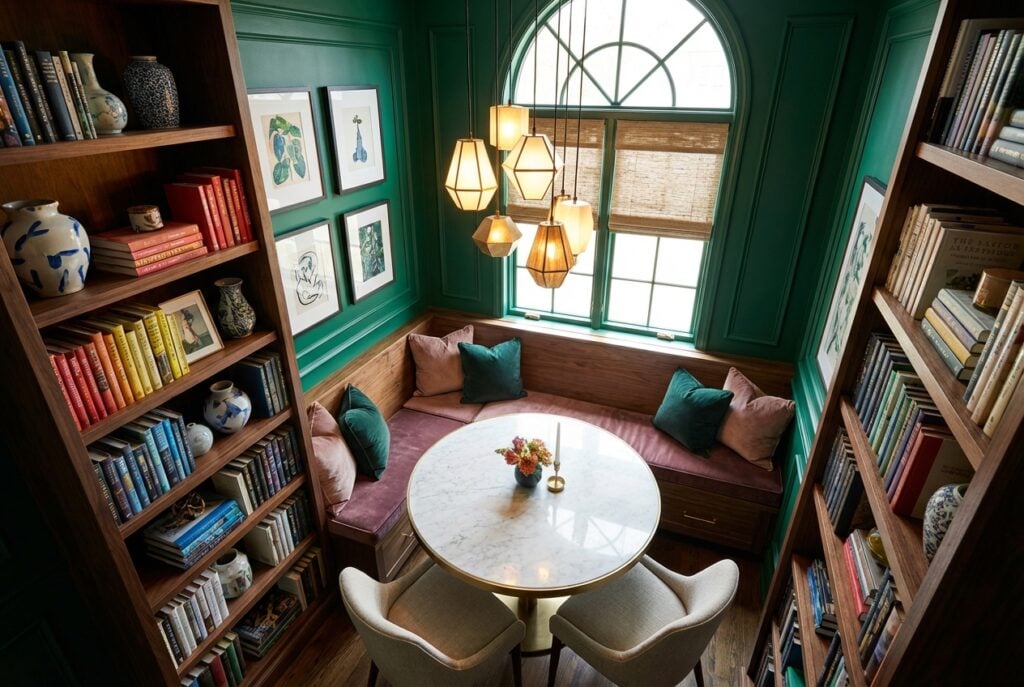
Books make surprisingly good room dividers. Floor-to-ceiling shelving around a small dining table creates that “room within a room” effect, especially in open concept spaces where your dining area might just be a corner of the living room.
The books absorb sound too, which is one of the many strategic reasons why libraries feel so quiet and peaceful. The same principle works for a dining nook. Conversations feel more intimate when there’s less echo bouncing around.
IKEA Billy bookcases work fine for this, though they look better painted to match your walls. Three 80-inch units will surround a small table nicely – about $180 total. Add LED strip lights inside the shelves for ambient lighting that makes the whole corner glow softly.
Choose a dark wood table to ground the space. Something substantial enough to balance all those books visually. World Market usually has good options around $250-350.
4. Does a Mirrored Wall Backdrop Truly Expand a Small Area?
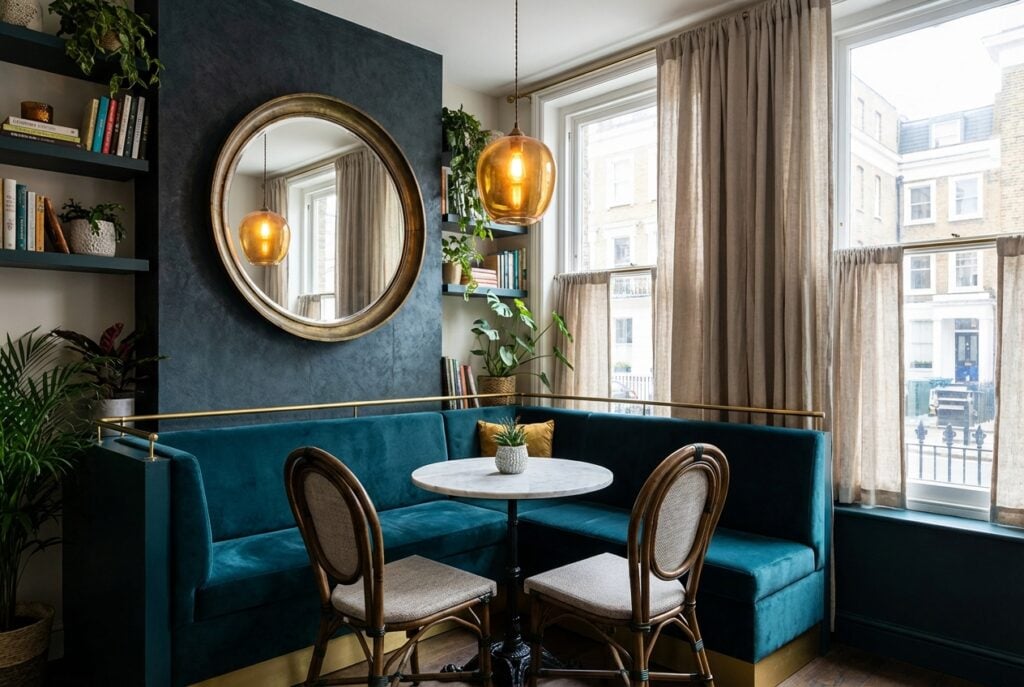
Mirrors definitely make spaces look bigger, but in dining corners they do something more specific. They create the illusion of a busy restaurant. You catch glimpses of movement and light in your peripheral vision, like other diners at nearby tables.
An antiqued mirror works better than a crisp new one. The slight haziness softens reflections so you’re not staring directly at yourself while eating, which gets weird fast.
You can find large vintage-style mirrors at HomeGoods for around $60-120. Or fake the aged look by applying mirror spray to the back of a regular mirror in patches – creates that mercury glass effect for about $15 in supplies.
Position the mirror to reflect your pendant light or a nearby window. The bounced light makes everything feel more dynamic. Just avoid reflecting the kitchen if it’s usually messy. Nobody wants to see dirty dishes during dinner.
5. Why Is a Window Seat Conversion the Ultimate Morning Spot?
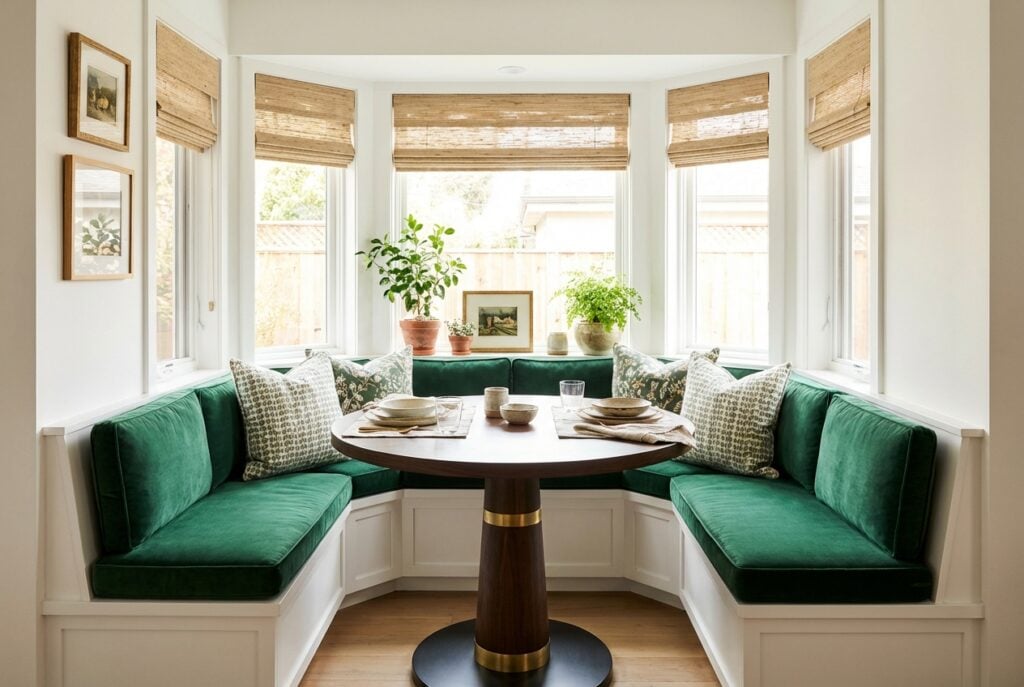
Window seats are basically built-in banquettes with a view. If you have a window in your small space, extending the sill into a bench creates dining seating without using any floor space.
The natural light legit makes food look better and people look more awake during morning coffee. Plus there’s something inherently cozy about being tucked up against a window while eating, like a breakfast nook in a country cottage, but in your studio apartment.
Building a simple window seat isn’t too complicated if you’re decent with tools. Basic frame construction with a hinged top for storage runs about $150 in materials. Add a custom cushion in outdoor fabric; some of them handle sun exposure really well.
A small oval table works well here since it echoes the soft lines of the cushioned seating. Something around 24×30 inches gives you surface area but doesn’t block the window. Cost Plus World Market usually has good options under $200.
6. Can Dark and Moody Color Drenching Create Intimacy?
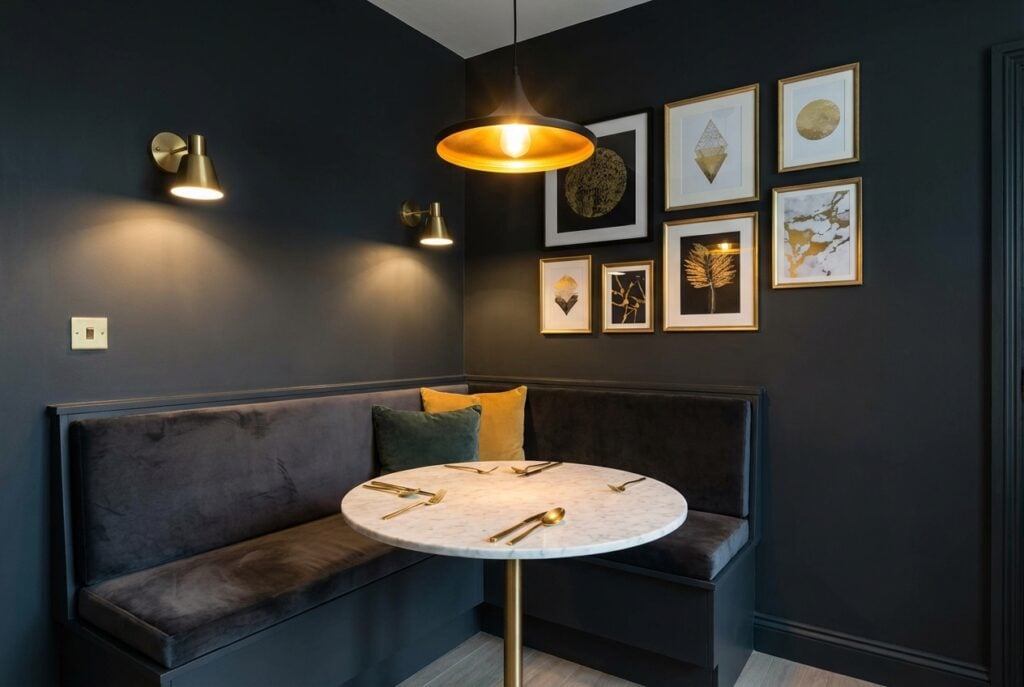
Painting everything the same dark color – walls, ceiling, trim – sounds like it would make a small space feel cramped. Actually does the opposite. When you can’t see where the walls end, the boundaries disappear.
Think about high-end steakhouses or wine bars. They’re often painted deep colors because it makes the lighting more dramatic and conversations feel more private. Same effect works when designing a small dining area.
Benjamin Moore Hale Navy is reliable for this. One quart covers most small corners – around $55. The trick is layering warm light sources so it doesn’t feel like a cave. A brass pendant light pops against dark walls. CB2 has good options around $120-180.
White or light wood furniture stands out beautifully against dark walls. The contrast makes everything look more expensive than it probably was.
7. Is a Floating Breakfast Bar the Best Solution for Narrow Spaces?
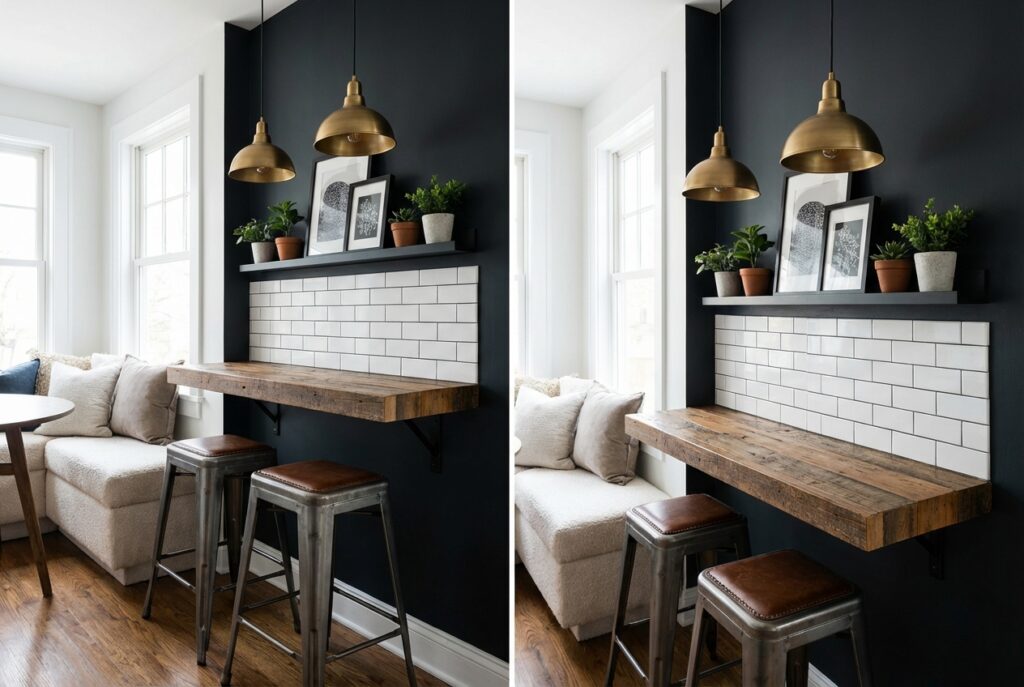
When you literally can’t fit a table and chairs, a wall-mounted bar eliminates the leg situation entirely. Mount a thick slab at counter height and pair it with stools that tuck completely underneath.
This works especially well in narrow galley kitchens (I’ve had one) or hallways where a regular table would block traffic. The clean lines look modern and intentional rather than like you’re making do with limited space through clever furniture arrangement.
A 36-inch butcher block slab from Home Depot costs around $80. Heavy-duty wall brackets add another $40. The key is getting it level and securely anchored – this isn’t a job for drywall anchors.
Backless stools disappear visually when not in use. Target’s metal ones work fine for around $60 each. Add a couple of wall sconces above the bar to create that defined dining zone feeling.
8. How Do Tiny Dining Corners with Velvet Upholstery Enhance Comfort?
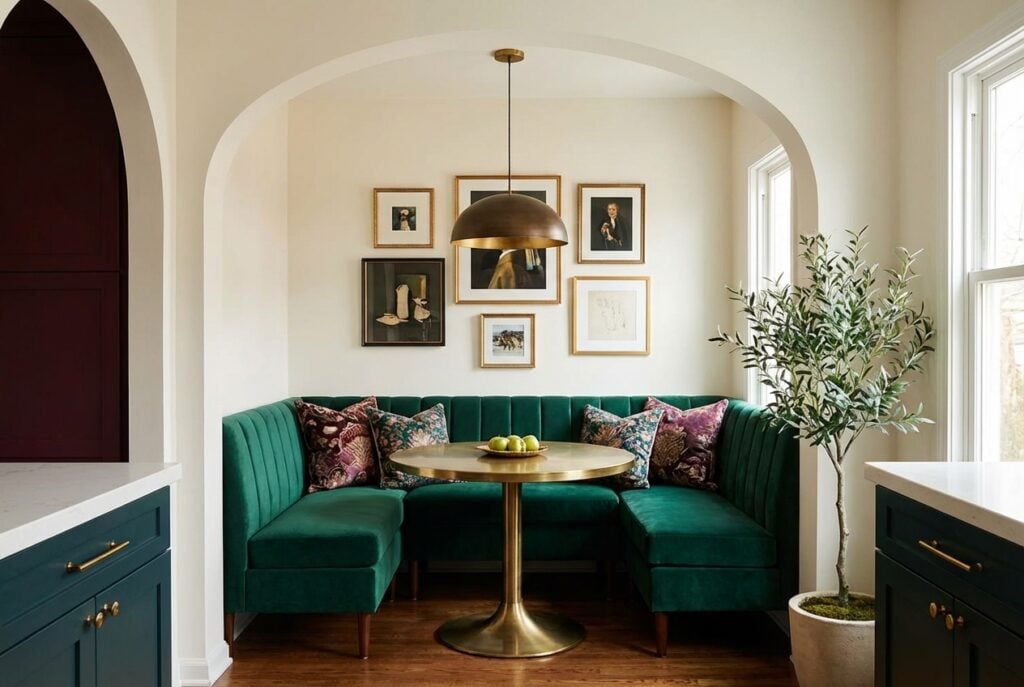
Soft textures make small spaces feel luxurious rather than cramped. A built-in banquette wrapped in velvet or heavy linen creates that exclusive booth experience – like being seated in the VIP section.
The fabric also absorbs sound, which is why upholstered restaurants feel more intimate than hard-surfaced ones. Your conversations stay contained instead of echoing around the room.
Velvet upholstery isn’t cheap – expect around $200-300 to have a small banquette professionally covered. But the impact is immediate. Deep jewel tones like emerald or sapphire photograph beautifully and hide stains better than lighter colors.
For a budget version, use peel-and-stick wallpaper in a velvet-look pattern on the back wall of your nook. Spoonflower has good options around $30 per roll.
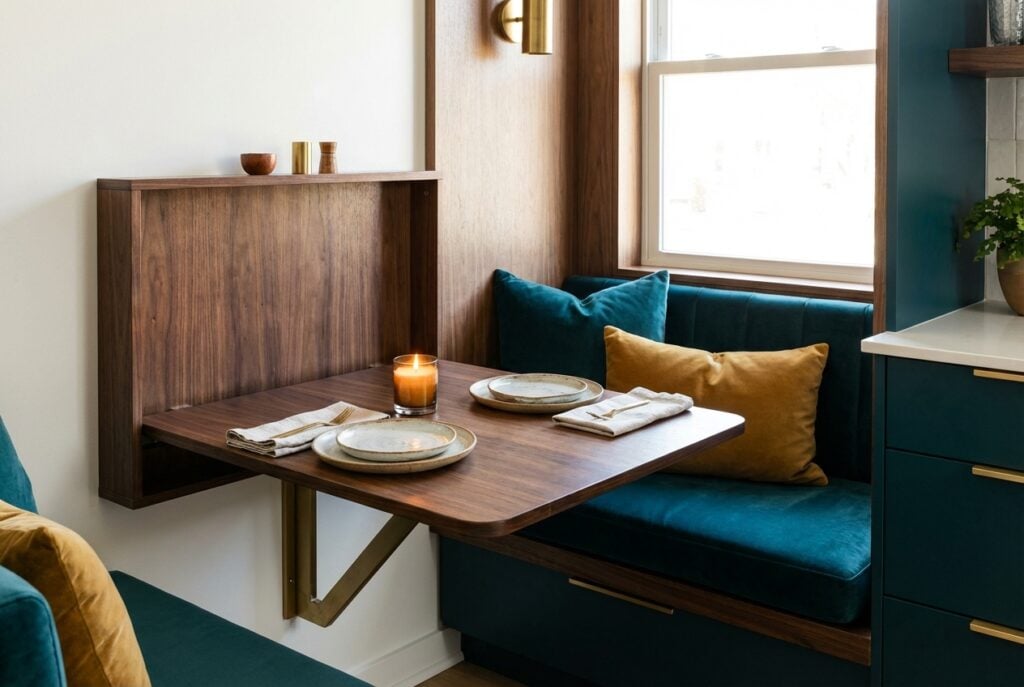
9. Is a Fold-Down Murphy Table the Ultimate Space Saver?
Modern Murphy tables aren’t the flimsy fold-out trays you’re picturing. Good ones are engineered with solid wood and quality hardware that supports real weight. When closed, they look like wall art or a decorative panel.
This is perfect for studio apartments where your dining corner needs to disappear completely when not in use. The same wall space works as a dining room at breakfast and clear floor space for yoga in the afternoon.
A decent Murphy table runs $300-500, but it’s essentially buying a dining room that takes up zero square feet most of the time. Resource Furniture makes beautiful ones, though IKEA has started carrying simpler versions around $150.
Pair it with folding cafe chairs that hang on wall hooks when not needed. The French bistro ones from Cost Plus are sturdy and actually comfortable for around $80 each.
10. How Can a Pendant-Defined Zone Create a Room Within a Room?
A single pendant light hung low over a small table does more to define a dining space than any piece of furniture. It creates a pool of warm light that separates the eating area from everything else around it.
Restaurants use this trick constantly – low lighting over tables makes each one feel like its own private space even in a crowded room. You can steal the same effect in an open floor plan apartment through strategic interior design choices.
Hang the pendant about 30-32 inches above the tabletop. Any higher and you lose the intimacy, any lower and tall people will hit their heads. Use a warm bulb – 2700K looks more like candlelight than office lighting.
IKEA’s pendant lights are surprisingly good quality for around $40-80. The black dome ones look expensive and cast nice focused light downward while keeping the bulb hidden.
Frequently Asked Questions
Q: How do I choose the right table size for tiny dining corners?
A: Start with clearance space. You need at least 30 inches between the table edge and any wall or furniture for people to sit comfortably. In really tight corners, 24 inches works if you’re using a banquette where people slide in sideways. A 30-inch round table is the sweet spot for most small spaces – seats four people reasonably well without overwhelming the room. Pedestal bases give you more legroom than four-leg tables.
Q: Can a small dining area actually accommodate more than two people?
A: Built-in seating is your best bet for squeezing in extra people. A banquette along one wall plus two chairs on the other side can seat four around a 36-inch table. People can scrunch together on a bench way easier than in separate chairs. Backless stools work too since they tuck completely under the table when not needed. I’ve seen corner banquettes that wrap around two walls seat six people for big dinners, though that’s pretty cozy.
Q: How do I prevent a small dining nook from looking cluttered?
A: Keep surfaces clear and choose furniture you can see through or under. Wire chairs, glass tables, anything that doesn’t block sightlines. Store stuff vertically instead of on the table – floating shelves for salt and pepper, napkins, whatever you need handy. One small vase or candle on the table max. The goal is making it look intentional, not like you crammed furniture wherever it fit.