



Gold is having a moment again. Not the brassy, overdone gold from the 80s, but actual polished gold accents with that warm, reflective quality that makes everything look expensive. It works because it catches light in a way that feels luxurious without screaming “look at me.”
The thing about polished gold is that it plays well with almost everything. Dark walls, light walls, modern furniture, vintage pieces. It adds warmth where chrome feels cold and sophistication where brass sometimes feels too casual. Plus you don’t need much of it to make an impact.
Here are six ways to work polished gold into your space without turning your home into a jewelry box:
- Mirrors: Gold-framed mirrors double as art and light amplifiers
- Lighting Fixtures: Chandeliers and lamps that actually enhance the room’s warmth
- Furniture Details: Hardware and legs that add shine without overwhelming
- Decorative Objects: Vases and trays you can move around and restyle
- Wall Art and Frames: Gallery walls that look intentional, not random
- Textiles and Trims: Embroidery and details that catch light subtly
1. Mirrors: More Than Just Reflection

A good mirror does two things: bounces light around and makes your space feel bigger. A gold-framed mirror does those things while looking like actual furniture instead of something you grabbed from a hotel bathroom.
The frame style matters more than you’d think. Those heavy, ornate Baroque-style frames from places like Anthropologie or even HomeGoods work if you want drama. They run anywhere from $180 to $600 depending on size. For something cleaner, West Elm has some nice minimalist gold frames around $200 that don’t compete with your other pieces.
Size is everything with mirrors. A tiny gold mirror on a big wall looks like an afterthought. Go bigger than feels comfortable. That 36-inch round mirror that seems too large in the store will probably look perfect once it’s up. I learned this the hard way after buying three mirrors that were too small for my hallway.
Place it across from a window if you can. The light reflection actually works, though it’s not magic. Just makes mornings feel less grim when there’s more brightness bouncing around. In dining rooms, a gold mirror adds some formality without being stuffy. Hallways benefit from both the light and the sense that the space continues beyond what you can see.
Keep it clean though. Nothing kills the luxury vibe like a smudgy mirror, even if it’s in a $400 gold frame.
2. Lighting That Actually Enhances the Room with Polished Gold Accents
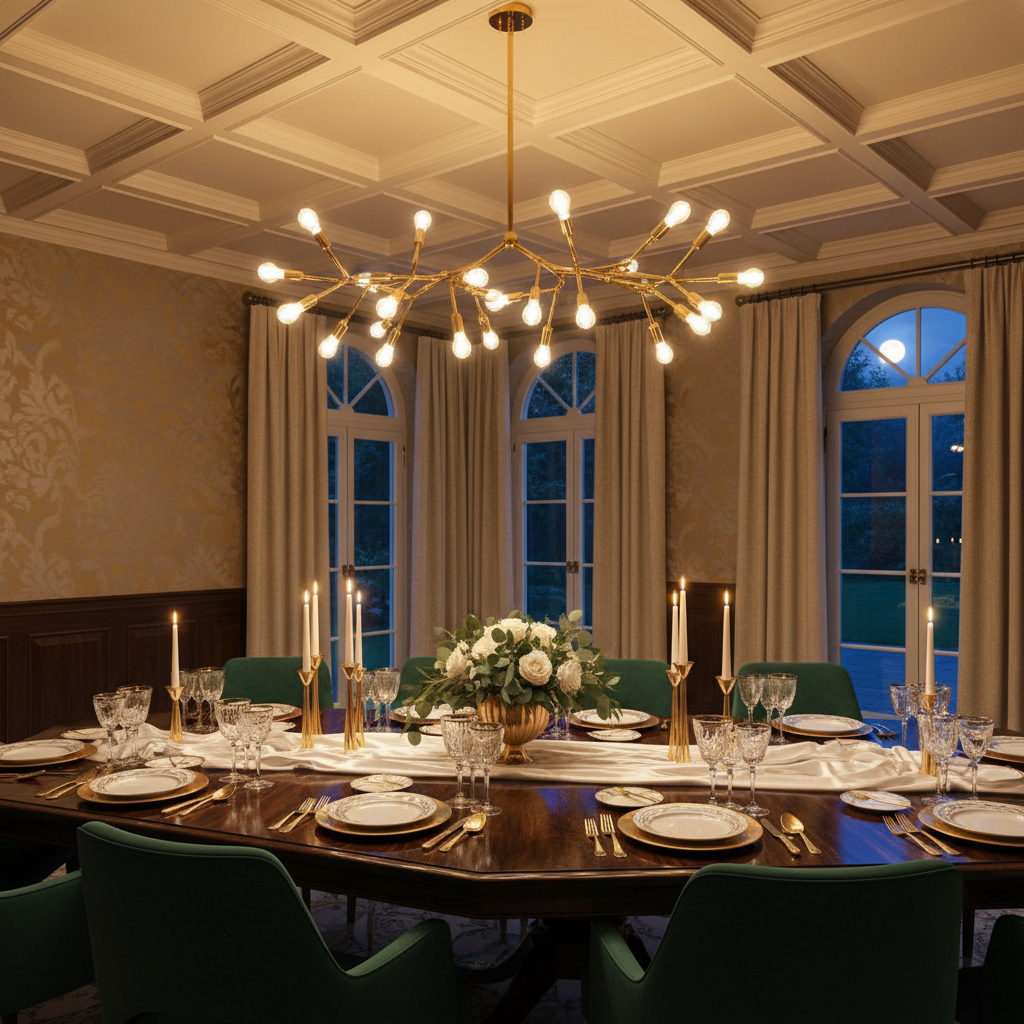
Lighting in gold finishes does something that chrome and black fixtures can’t. It makes the light itself feel warmer. Not technically warmer, but there’s something about how the gold reflects that makes everything feel more comfortable. This approach to luxury lighting design has become increasingly popular among interior decorators.
Chandeliers are the obvious choice, but they’re not the only one. CB2 has some great geometric pendant lights in brass and gold finishes for around $150 each. Hang three over a kitchen island and you’ve got something that looks custom. For table lamps, try the classic gold gourd lamps from places like Pottery Barn, though Target’s version for $80 looks surprisingly similar to the $200 one.
Wall sconces work well in bathrooms and hallways. The Savoy House makes some nice traditional ones around $120 each, while more modern options from West Elm run about $90. Just make sure your electrician knows what they’re doing because badly installed sconces look terrible no matter how much you spent.
Consider dimmers for everything. Gold fixtures with dimmer switches let you control not just brightness but mood. Bright for cooking or reading, lower for dinner parties or late evenings. The combination of warm gold and adjustable lighting makes rooms feel more expensive than they are.
One thing to watch: too many gold light fixtures in one space starts feeling like a theme restaurant. Stick to one statement piece per room, maybe two if the room is large and they’re different styles.
3. Furniture Details That Add Shine Without Overwhelming

The easiest way to add gold to furniture is through hardware. Cabinet pulls, drawer knobs, table legs. Small changes that make a bigger impact than you’d expect.
Gold hairpin legs transform basic furniture. You can buy them on Amazon for around $60 for a set of four, then attach them to a piece of wood or an old coffee table top. Suddenly your DIY project looks like it came from West Elm. Same concept works for console tables and desks. This approach to styling furniture pieces on a budget has gained popularity with home renovation enthusiasts.
For existing furniture, swapping out hardware is straightforward if the screw holes line up. Anthropologie has beautiful gold cabinet pulls for about $16 each, which adds up quickly but makes old dressers look custom. CB2’s options run cheaper at around $8 each and have a more modern feel.
Nailhead trim on upholstered pieces adds gold in a more subtle way. You can have this done professionally for maybe $200 on a chair, or buy nail head strips and do it yourself if you’re patient. The gold studs catch light just enough to add interest without being flashy. This technique for updating vintage furniture has become a go-to method among interior stylists.
One piece I’ve seen work well is a dark wood dresser with new gold pulls. The contrast makes both the wood and the hardware look more expensive. Same effect happens with gold legs on a marble or dark wood table top. The materials complement each other instead of competing.
Don’t go overboard though. Gold hardware on every piece in a room starts looking like you bought a furniture set, which isn’t the look you want.
4. Decorative Objects You Can Actually Move Around

Decorative objects are where you can experiment with gold without committing to anything permanent. A gold tray, some brass bowls, maybe a sculptural piece that catches light. This approach to incorporating metallic finishes allows for seasonal decorating flexibility.
Start with a tray. Anthropologie has some gorgeous ones for around $40-80, or you can find similar styles at Target for under $25. Use it to corral remotes and candles on a coffee table, or style it with a few bottles and glasses on a bar cart. The gold gives structure to whatever you put on it.
Vases work even without flowers in them. The textured gold ones from CB2 around $60 each look good in groups of two or three, different heights. Or go minimal with one large gold vase from West Elm for about $80. Brass and gold planters work too if you want to add some greenery. These styling techniques for modern living spaces create visual interest without clutter.
Sculptural pieces are trickier because they can look pretentious if you’re not careful. Simple geometric shapes work better than complicated art pieces. Think spheres, cubes, or abstract forms that don’t require explanation. Jonathan Adler has some fun options, though they’re pricey at $100-300 each.
The nice thing about decorative objects is you can move them around until something clicks. Gold looks particularly good against dark wood, white marble, and black surfaces. The contrast makes both materials look more expensive.
Just don’t scatter gold objects everywhere. Group them intentionally and leave some breathing room. Three gold pieces clustered on one surface usually looks better than six gold pieces spread around the room.
5. Gallery Walls That Look Intentional

Gold frames make cheap prints look expensive and expensive art look even better. They add weight and importance to whatever you’re framing, which is why museums use them.
The trick is choosing the right style of gold frame for your space. Thin, simple gold frames from places like IKEA work well for modern art and photography. They’re maybe $15-30 each and look clean without being boring. For something with more presence, try the ornate frames from Michaels or Hobby Lobby, especially when they’re running their constant 50% off sales.
Gallery walls in all gold frames look more intentional than mixed metals. It’s like choosing a color palette but for frames. You can mix frame styles – some thin, some thick, some ornate, some simple – as long as they’re all gold. This wall art arrangement strategy creates visual cohesion throughout your home.
Black and white photography looks particularly good in gold frames. There’s something about that contrast that feels classic, like something you’d see in a fancy hotel lobby. Color prints work too, especially if there are warm tones that pick up the gold.
Size variation matters for gallery walls. Start with your largest piece and build around it, mixing different proportions. But don’t overthink the arrangement. Cut out paper templates the size of your frames and tape them to the wall first. Move them around until it looks balanced, then hang the actual pieces.
Gold frames work against almost any wall color, though they’re especially striking on dark walls or soft neutrals. The frames become part of the art instead of just holding it.
6. Textiles That Catch Light Subtly

This is probably the most understated way to get gold into your space. Throw pillows with gold embroidery, curtains with gold trim, bedding with subtle metallic threads. It’s glamour that doesn’t announce itself.
Velvet pillows with gold embroidery from places like Pottery Barn run around $40-60 each. The velvet already feels luxurious, and the gold threading catches light when people move around the room. It’s subtle during the day but more noticeable in evening lighting. This approach to adding metallic details through soft furnishings works particularly well in bedroom design ideas.
For curtains, gold trim makes basic panels look custom. You can buy trim at fabric stores for a few dollars per yard and sew it on yourself, or have it done professionally. Even simple linen curtains from IKEA look more expensive with gold braid trim along the edges.
Bedding with metallic threads is trickier to find, but when you do find pieces that work, they make the bedroom feel more hotel-like. The key is subtle – threads that catch light rather than full gold patterns that look like costumes.
The texture combination matters. Gold threads on smooth cotton look different than gold on nubby linen or soft velvet. Each creates a different kind of reflection and feel. Velvet tends to make the gold look richer, while linen keeps it more casual.
Don’t overdo the gold textile pieces. One or two per room is usually enough. A gold-embroidered pillow mixed with solid colored ones, or curtains with gold trim paired with simple furniture. The idea is to catch the eye without demanding attention.
Frequently Asked Questions About Polished Gold Accents
Q: What colors work best with polished gold accents?
A: Gold is surprisingly versatile, though some combinations definitely work better than others. Neutrals like cream, white, and gray are safe choices that let the gold be the star. For more drama, try jewel tones like emerald or sapphire blue. Black creates striking contrast, while navy feels more sophisticated than you’d expect. Colors to be careful with: orange and yellow can clash, making everything look too warm.
Q: How do I keep polished gold accents from tarnishing?
A: Real gold doesn’t tarnish, but most “gold” home accessories are actually brass or gold-plated metal that can lose their shine. Clean them with a soft, slightly damp cloth regularly to prevent buildup. Avoid harsh cleaners or anything abrasive. For brass pieces, you can use specialized brass cleaner occasionally, but test it somewhere inconspicuous first. Some people prefer the slightly aged look that develops over time.
Q: Can I mix gold with other metals in the same room?
A: Yes, but there’s a right way to do it. Gold works well with brass (they’re similar enough to feel intentional) and can work with silver or chrome if you’re careful about proportions. Choose one metal as dominant and use others as accents. For example, gold lighting with silver picture frames, or brass hardware with one chrome mirror. The key is making it look intentional rather than like you couldn’t decide.
