


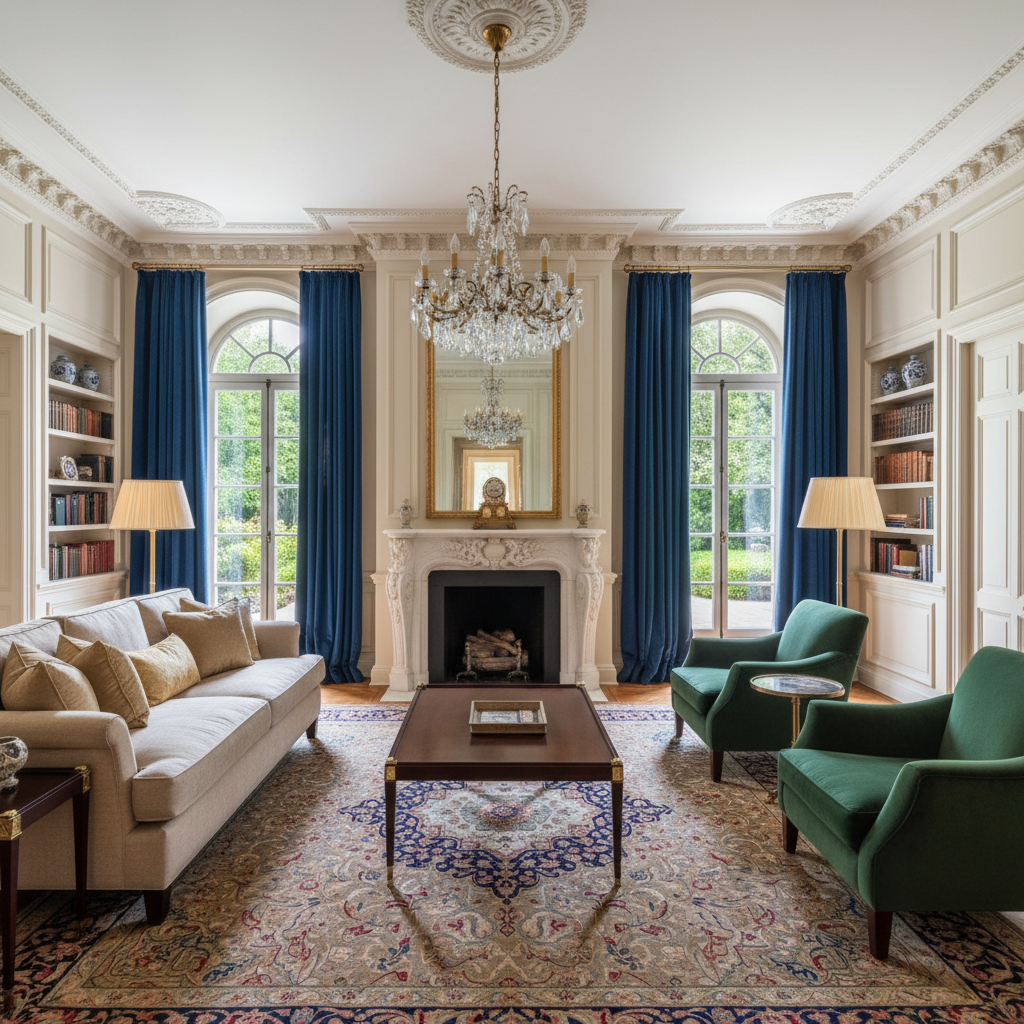
You know that feeling when you walk into certain homes and they just feel right? Not trendy or Instagram-perfect, but genuinely elegant in a way that never gets old. That’s what classic interior elements do. They create spaces with staying power through thoughtful interior design principles that transcend fleeting trends.
These aren’t necessarily expensive choices, though some can be. More importantly, they’re thoughtful ones. Crown molding from Home Depot costs maybe $3 per linear foot. A well-made linen sofa from West Elm runs around $1,200. But the impact goes way beyond the price tag.
Classic design works because it focuses on proportions that make sense to our brains. Quality materials that age well. Details that add interest without screaming for attention. The beige minimalism trend will fade, but a room with good bones and thoughtful layers tends to improve with age.
Some elements show up in nearly every enduring space. Architectural details that give walls personality. Furniture built to last decades, not seasons. Fabrics that feel substantial in your hands. Lighting that creates actual ambiance instead of just illumination. Color palettes that work with your life, not against it.
How Can Architectural Moldings and Trim Enhance a Space?
Molding transforms flat walls into something with actual character. Not in some abstract design theory way, but visibly. A room with crown molding and baseboards just looks more finished than one without.

Crown molding bridges that awkward gap between wall and ceiling. Makes standard 9-foot ceilings feel taller. Wainscoting protects walls from chair dings while adding texture below eye level. Chair rails create a natural break that helps rooms feel more proportioned.
The material matters more than you’d think. Real wood looks and ages better than MDF, but costs about three times more. For most people, a good painter can make MDF crown molding look nearly identical to wood, especially once it’s installed and painted. Benjamin Moore Advance paint in semi-gloss holds up well on trim that gets handled.
Installation separates amateur from professional results. Coping inside corners instead of mitering them. Pre-painting everything before installation. Using a pneumatic nailer instead of hammering by hand. Most contractors charge $8-15 per linear foot installed, depending on complexity.
You don’t need elaborate Victorian-style profiles to get the effect when decorating traditional spaces effectively. Simple 3-inch baseboards and 4-inch crown molding work in most rooms. Scale matters though. A 12-foot ceiling can handle wider molding than an 8-foot one. Too narrow looks skimpy. Too wide overwhelms the space.
The return on investment varies by market, but real estate agents generally agree that quality millwork helps homes sell faster. Buyers notice the difference, even if they can’t articulate why one house feels more expensive than another.
What Role Does Classic Furniture Play in Enduring Interior Design?
Good furniture gets better with age. Cheap furniture just gets old. That’s really the difference between classic pieces and everything else.

A Chesterfield sofa from the 1960s often looks better than one made last year. The leather develops patina. The frame settles into perfect comfort. Compare that to most contemporary furniture, which starts looking tired after five years of normal use.
Solid wood furniture ages gracefully because wood is a living material. A walnut dining table from Ethan Allen, around $2,000, develops character over time. Dings and scratches become part of the story. Particle board furniture just looks damaged when it gets dinged.
Classic shapes work because they solve real human comfort problems. Wingback chairs actually block drafts, which mattered in old houses. The proportions feel right because they’ve been refined over centuries. A Lawson-style sofa sits at the right height for most people’s legs.
Upholstery makes or breaks classic furniture. Leather develops beautiful patina but costs $4,000+ for a quality sofa. Linen from companies like Lee Industries, maybe $2,500, ages well and can be reupholstered when needed. Avoid anything that looks too perfect or uniform. Real materials have natural variations.
Mixing classic pieces with contemporary ones keeps rooms from feeling like museum displays when creating timeless interiors on a budget. A mid-century modern coffee table works perfectly with a traditional sofa. Contemporary art looks great above an antique console. The contrast actually makes both styles more interesting.
How Do Fabrics and Textiles Contribute to a Classic Aesthetic?
Fabric quality shows immediately when you touch it. Cheap polyester feels plasticky. Good linen feels substantial. Silk has weight and drape that synthetic versions can’t match.

Velvet adds richness without being flashy. West Elm’s Performance Velvet, around $80 per yard, combines classic texture with practical cleanability. Real linen wrinkles beautifully in ways that linen-look polyester doesn’t. Belgian lace curtains from companies like Country Curtains, maybe $200 for a standard window, filter light better than synthetic alternatives.
Natural fibers breathe. Cotton and linen bedding feels cooler in summer than polyester blends. Wool rugs wear better than nylon ones and don’t develop that flattened look in high-traffic areas. A wool Persian-style rug from Rugs USA, around $400 for 8×10, improves with gentle wear.
Color depth comes from fiber quality, not just dye. Silk holds rich jewel tones better than cotton. Linen develops beautiful fading patterns over time. Even indigo denim looks different on quality cotton versus cheap blends.
Layer different textures instead of matching everything perfectly when planning sophisticated room design choices. Smooth leather with nubby linen. Polished cotton with raw silk. The slight variations make rooms feel collected over time rather than ordered from a catalog.
Natural fabrics cost more upfront but often last decades with proper care. A linen sofa might need professional cleaning once a year, around $200, but can look great for 15 years. Most synthetic upholstery starts looking worn after 5-7 years of normal use.
Classic Interior Elements: Why Statement Lighting Matters
Overhead lighting from a single ceiling fixture makes every room feel flat. Layered lighting creates actual atmosphere and serves as one of the most impactful home decorating fundamentals you can master.
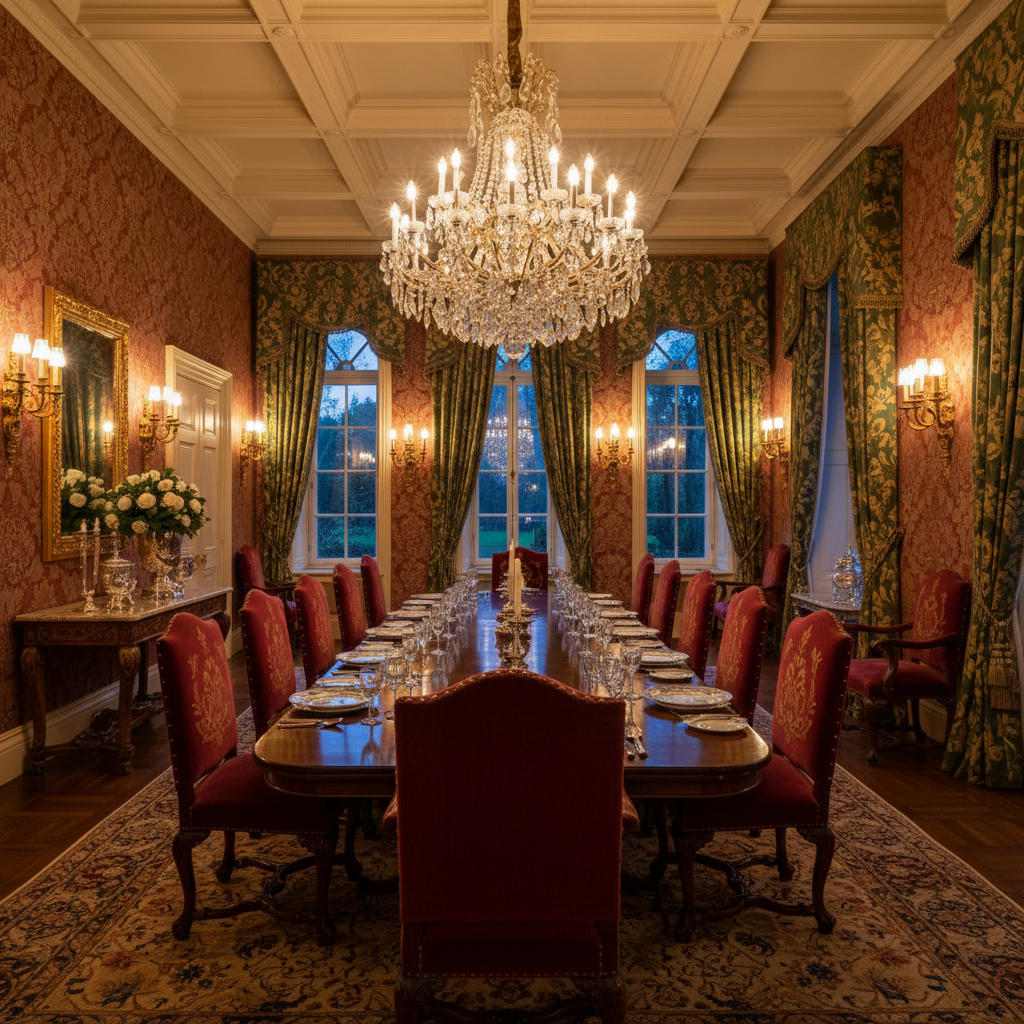
Chandeliers work because they put light at human scale instead of ceiling level. A brass chandelier from Rejuvenation, maybe $800, casts light downward and outward, creating pools of illumination that feel more natural than recessed ceiling lights.
Scale matters enormously with chandeliers. Too small disappears. Too large dominates the room. General rule: add room length and width in feet, convert to inches for chandelier diameter. So a 12×14 room works with a 26-inch chandelier.
Wall sconces provide ambient lighting without taking up floor space. They work especially well in hallways and bedrooms where table lamps don’t make sense. Schoolhouse Electric makes clean-lined versions, around $300 each, that work in both traditional and contemporary rooms.
Table lamps add personality and task lighting while supporting your overall decorative scheme approach. A ceramic base from CB2, maybe $150, with a linen shade creates warm pools of light perfect for reading. Mix lamp heights and base materials for visual interest.
Dimmer switches transform harsh lighting into something livable. Lutron Caseta dimmers, around $50 each, work with most bulb types and can be controlled from your phone. Being able to adjust light levels throughout the day makes rooms feel more comfortable.
LED bulbs now come in warm color temperatures that match incandescent light quality. Look for 2700K or 3000K color temperature. Avoid the blue-white LEDs that make everything look like a hospital.
Frequently Asked Questions About Classic Interior Elements
Q: What are the key characteristics of classic interior design?
A: Classic design prioritizes quality materials, good proportions, and details that improve with age. Think crown molding instead of plain walls. Linen upholstery instead of microfiber. Brass hardware instead of plastic. The pieces work together without matching perfectly. Rooms feel collected over time rather than decorated all at once.
Q: How can I incorporate classic elements into a modern home?
A: Start with architectural details. Crown molding and substantial baseboards work in any style house. Add classic furniture pieces gradually – maybe a vintage leather chair or antique side table mixed with contemporary pieces. Quality fabrics like linen or wool feel classic regardless of the furniture style. Good lighting always improves a space.
Q: What are some common mistakes to avoid when designing a classic interior?
A: Don’t buy everything at once from the same store. Rooms should feel layered, not matched. Avoid cheap versions of classic elements – thin crown molding or synthetic fabrics that mimic natural ones usually look obviously fake. Don’t prioritize trends over quality. A well-made piece that costs more upfront often costs less over time than replacing cheaper alternatives every few years.
