


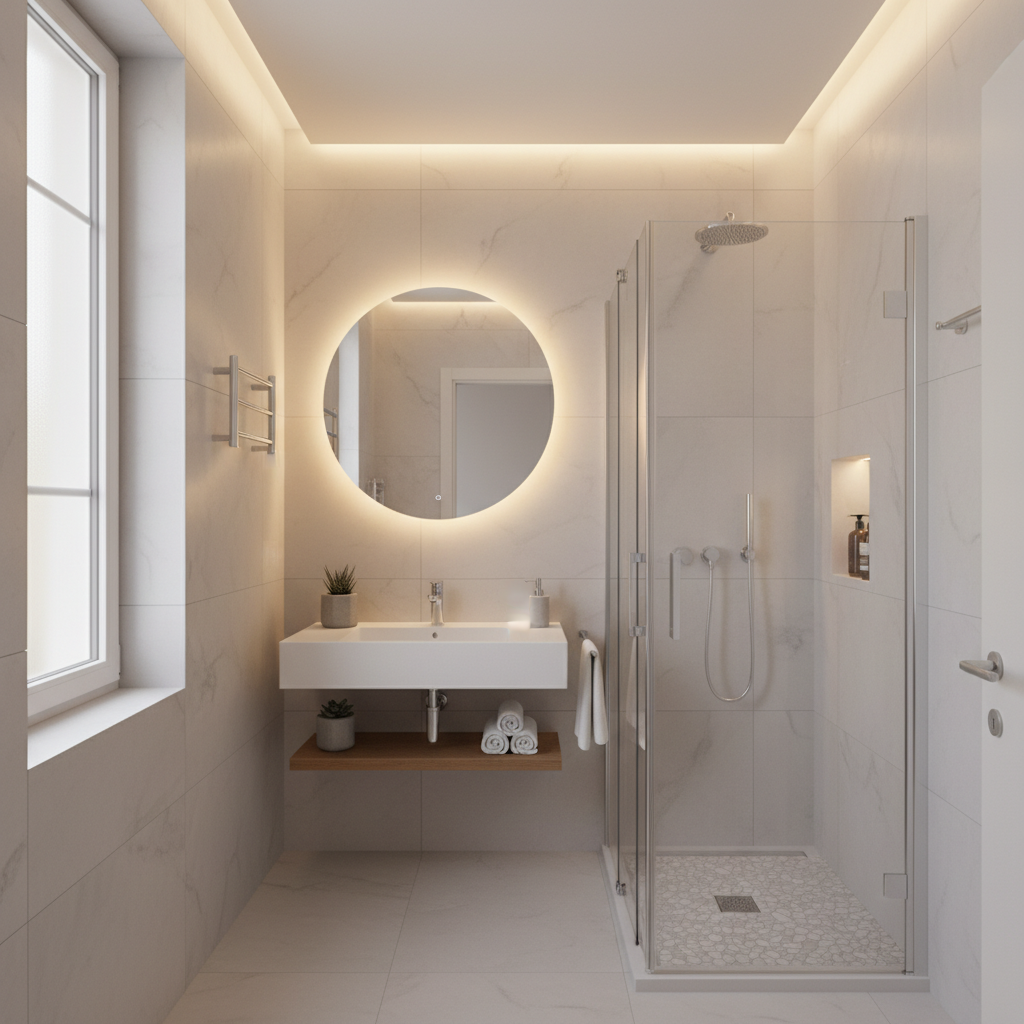
Small baths are tricky. You’ve got maybe 30 square feet to work with, and somehow you need to fit a toilet, sink, shower, storage, and make it feel like somewhere you actually want to spend time. But honestly, constraints force creativity. Some of the most impressive bathroom designs I’ve seen have been in spaces barely larger than a closet. These clever small baths prove that limited square footage doesn’t mean limited possibilities.
The approach that works is simple. Go vertical with storage. Strip out anything that isn’t essential. Light everything properly, and use every visual trick in the book to make the space feel bigger than it actually is. Also, the fixtures you choose matter more in a small bathroom than anywhere else. A bulky vanity will kill your space faster than anything.
Most people think small bathrooms are automatically a problem to solve. But there’s something satisfying about a space where everything has its exact place and purpose. No wasted square inches. Just thoughtful design that actually works.
What Are The Best Space-Saving Fixtures for Tiny Bathrooms?
Wall-mounted everything is your starting point. Toilets, sinks, vanities. When fixtures float off the floor, you get back visual space and actual floor space. Plus cleaning becomes way less annoying when you can actually reach under things.
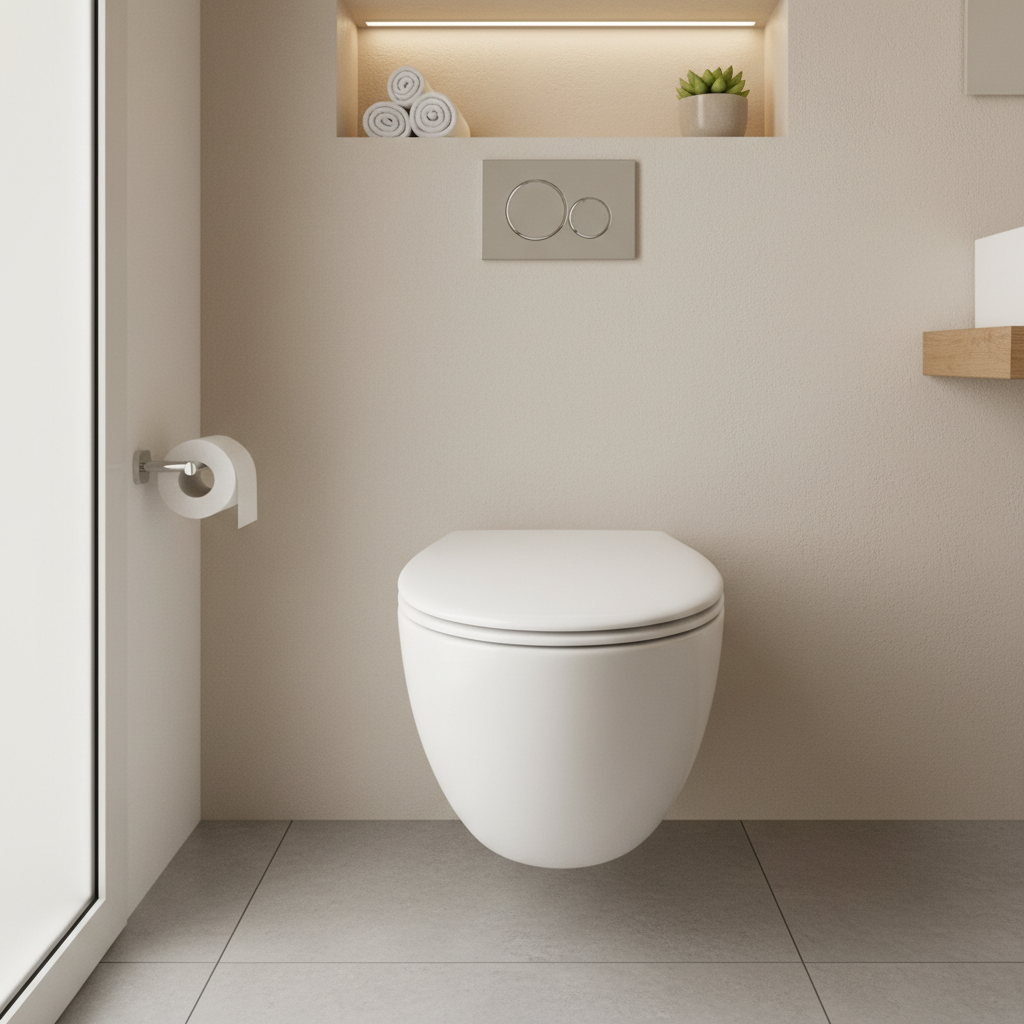
The wall-mounted toilet thing used to be mostly European, but now you can find them at Home Depot for around $300. Duravit makes a good one, though you’ll pay closer to $500. The installation is more complicated since the mounting hardware goes inside the wall, so budget another $400-600 for a plumber unless you’re comfortable with serious DIY.
Corner sinks work in spaces where a regular vanity just won’t fit. IKEA’s Lillången corner sink is maybe $80 and comes in a few finishes. The downside is you lose counter space, but if you’re working with a bathroom that’s 4×6 feet, counter space was already a fantasy.
For showers, glass enclosures beat curtains every time in small spaces. The visual barrier disappears. You can go frameless for around $800-1200 installed, or semi-frameless for $400-600. Both make the bathroom feel significantly larger than a plastic curtain rod and shower liner from Target.
Walk-in showers with minimal glass screens work well if you have the floor space. The shower area becomes part of the overall room instead of a separate compartment. Though you need proper drainage and waterproofing, which adds complexity and cost.
Wet rooms are having a moment. Basically, you waterproof the entire bathroom and put a floor drain wherever the shower area is. No enclosure needed. This approach is common in Scandinavian design and works especially well in very small spaces. The main challenge is getting the floor slope right so water drains properly instead of pooling near your toilet.
Multi-functional fixtures earn their keep in small bathrooms. Medicine cabinets with built-in lighting. Towel warmers that also help control humidity. Vanities with electrical outlets built into the drawers for hair dryers and electric toothbrushes.
How Can I Maximize Storage in Clever Small Baths?
Think vertical first. The space above your toilet is usually wasted. A simple cabinet there can hold enough toiletries and cleaning supplies for months. CB2 sells a decent over-toilet cabinet for around $200. West Elm has a bamboo one that’s maybe $150.

Floating shelves work if your walls can handle the weight. The IKEA Lack shelves are like $10 each but they’re basically particle board with veneer. Fine for toiletries, not great for storing heavy bottles. For something more substantial, look at solid wood floating shelves from places like Crate & Barrel, around $40-60 per shelf.
The space behind your door is usually ignored. Over-the-door organizers from Container Store run $25-50 and can hold surprisingly much stuff. Just make sure the door can still close properly with whatever you hang there.
Vanity storage is where you can really gain ground. Instead of a pedestal sink, get something with drawers. The Home Decorators Collection makes narrow vanities specifically for small bathrooms, usually 18-24 inches wide instead of the standard 30-36. Prices start around $200 for basic models.
Built-in niches in shower walls are worth considering if you’re doing a renovation. Much cleaner than hanging caddies or corner shelves that are always falling down. Standard niche sizes are 12×12 or 12×24 inches. Your contractor can frame these during construction for maybe $100-150 per niche.
Baskets and containers keep things organized, but choose them carefully. Clear acrylic containers work well for cotton balls and Q-tips. Bamboo baskets from Target are around $15-25 and handle the humid bathroom environment reasonably well. Just avoid anything with metal hardware that will rust.
The area under your sink often gets wasted because of the plumbing. Stackable drawers or sliding organizers can work around pipes. The Container Store has systems designed specifically for this, usually $50-100 depending on how elaborate you want to get. This type of bathroom organization transforms even the most challenging layouts.
What Design Tricks Make These Spaces Feel Larger?
Light colors reflect light. This isn’t revolutionary design theory, just physics. White subway tile from Home Depot runs about $3 per square foot. Benjamin Moore’s Cloud White paint is around $57 per gallon and covers most small bathrooms with one gallon.
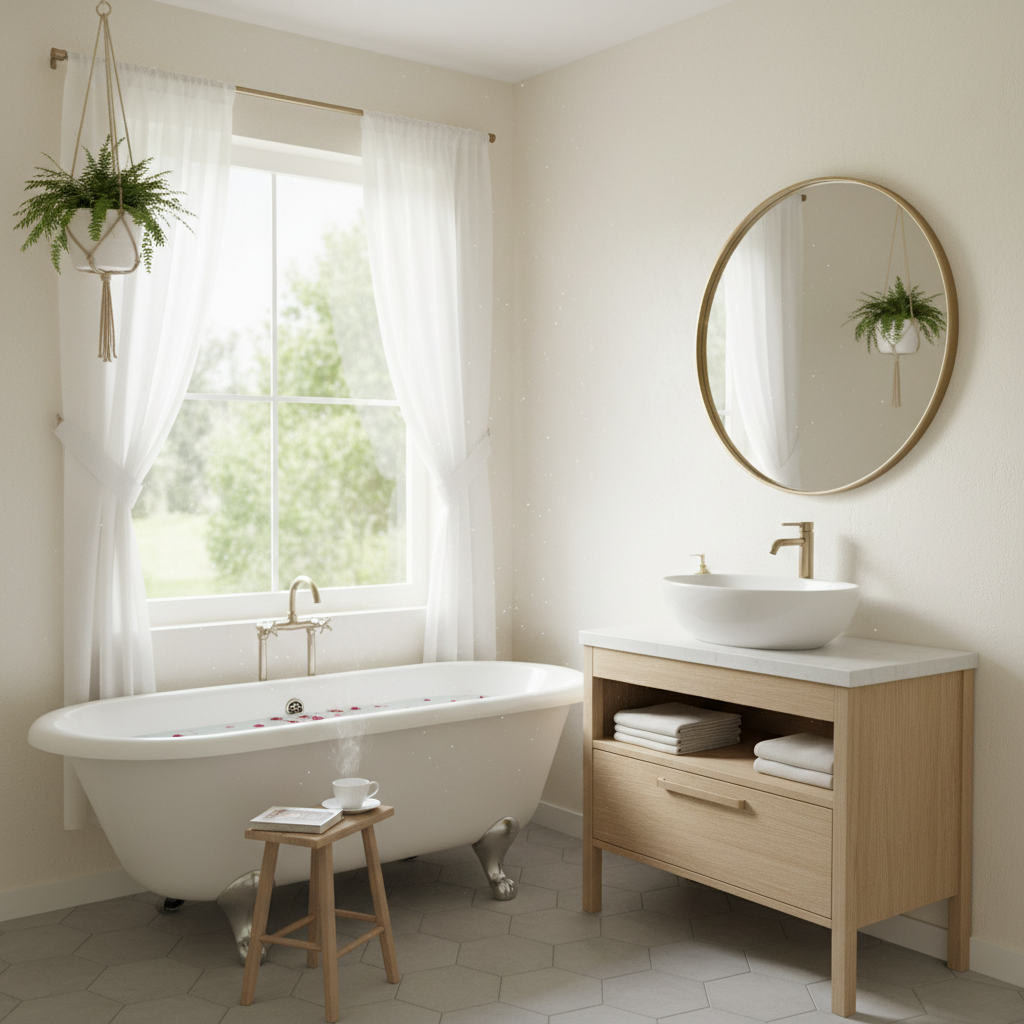
Mirrors work, but size matters. Those 18×24 inch medicine cabinet mirrors don’t do much for visual expansion. Go as large as your wall allows. A 30×40 inch mirror from Wayfair costs around $80-120 and makes a noticeable difference. Frameless mirrors feel less cluttered than framed ones.
Lighting in small bathrooms is usually terrible. That single overhead fixture casts shadows everywhere and makes everything feel cramped. Add vanity lighting on either side of your mirror. Good LED fixtures run $60-150 each. Recessed lighting helps too, though it requires ceiling work. Proper illumination is crucial for small bathroom renovations that actually feel spacious.
Natural light beats artificial light when you can get it. If privacy isn’t an issue, skip window treatments entirely. If you need privacy, cellular shades let in light while blocking the view. Hunter Douglas makes decent ones, though you’ll pay $100-200 per window. Joydeco has more highly-rated, more affordable alternatives starting at $26.
Consistent flooring helps. If you can use the same tile from the bathroom into the hallway, the bathroom feels like part of a larger space instead of a separate box. Large format tiles with minimal grout lines work better than small mosaic tiles for this effect. This approach to spatial design creates visual continuity that tricks the eye.
Glass shower doors instead of curtains make a huge difference. Even a basic framed glass door from Lowe’s ($200-300) opens up the sight lines compared to an opaque shower curtain.
Avoid visual clutter. This means keeping counters clear, choosing simple fixtures, and resisting the urge to add too many decorative elements. The space is small enough that every object registers visually. Minimalist bathroom aesthetics work particularly well in confined spaces.
Are There Any Specific Tile Choices That Work Best for Small Spaces?
Large format tiles create fewer grout lines, which makes surfaces look more continuous. 12×24 inch porcelain tiles are common now and cost roughly the same as smaller formats, around $4-8 per square foot depending on quality. The installation is slightly trickier, so expect to pay a bit more for labor.

Subway tile remains popular because it works. The 3×6 inch size feels larger than traditional 3×3 squares but isn’t so big that it overwhelms a small space. Heath Ceramics makes beautiful handmade versions for around $15 per square foot. For something more budget-friendly, Daltile’s subway tile runs $3-5 per square foot.
The direction you lay rectangular tiles matters. Horizontal installation makes a room feel wider. Vertical makes it feel taller. Most small bathrooms benefit from the width, so horizontal usually wins. These small space design strategies can dramatically alter perception.
Using the same tile on floors and walls creates continuity. This works especially well with natural stone or concrete-look porcelain. The effect is subtle but makes the space feel more cohesive and larger.
Mosaic tiles can work as accents, but use them sparingly. A single strip as a border or behind the vanity adds interest without overwhelming the space. Glass mosaics reflect light better than ceramic ones. Expect to pay $8-15 per square foot for decent quality.
Grout color affects the overall look more than people realize. White grout with white tile creates a seamless appearance. Contrasting grout emphasizes the tile pattern, which can work with larger tiles but gets busy with small ones.
Natural stone works in small bathrooms if you keep it simple. Carrara marble subway tiles run around $8-12 per square foot. The veining adds subtle visual interest without being overwhelming. Just seal it properly since marble etches with acidic cleaners.
Frequently Asked Questions
Q: What is the single most important thing to consider when designing a small bathroom?
A: Figure out what you actually need versus what you think you want. A soaking tub sounds nice until you realize it takes up half your floor space and you haven’t taken a bath in three years. Most people use their bathroom for quick showers, daily routines, and storage. Design for how you actually live, not for some idealized version of yourself who takes relaxing baths every evening.
Q: How can I make my small bathroom feel more luxurious on a budget?
A: Good lighting makes the biggest difference for the least money. A decent LED vanity light runs $80-120 and transforms how everything looks. Heated towel bars are around $150-250 installed and feel genuinely luxurious. Nice hand towels from somewhere like Parachute ($30-40 each) or even Target’s Casaluna line ($12-15) make daily use feel more spa-like. A rainfall showerhead from Moen or Delta costs $60-150 and makes every shower feel more indulgent. These budget bathroom upgrades deliver maximum impact.
Q: Are there any design trends that should be avoided in small bathrooms?
A: Dark colors shrink space visually, though deep navy can work if you have good lighting. Avoid busy patterns in small doses – they just create visual chaos. Skip pedestal sinks unless you have storage elsewhere, since you lose all that under-sink cabinet space. Trendy fixtures often cost more and go out of style quickly. Stick with simple, well-made pieces that won’t look dated in five years.
