


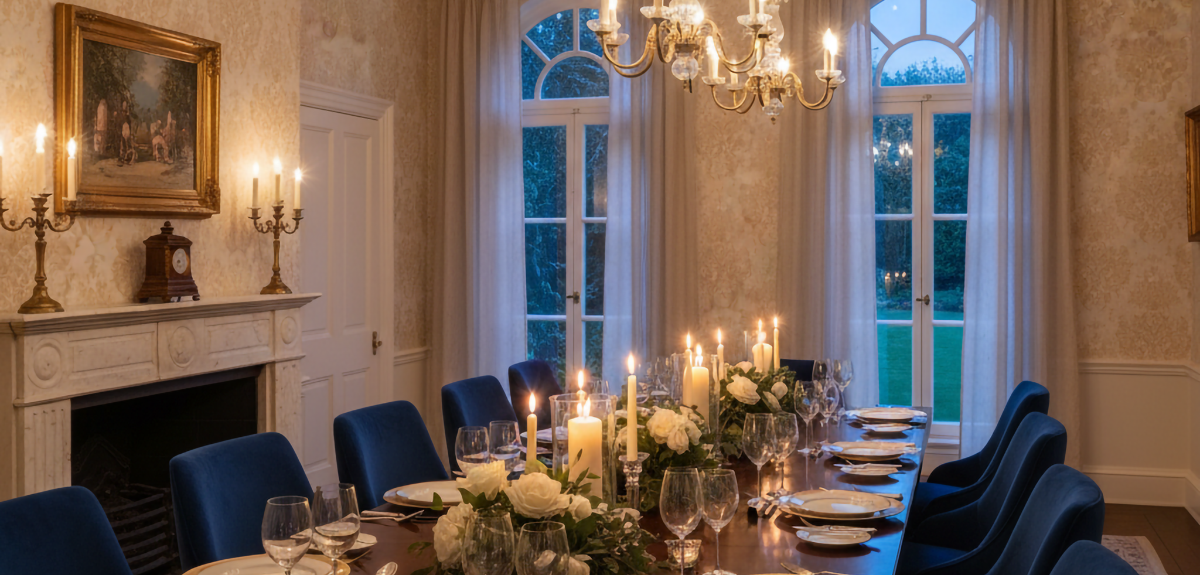
Your dining room does more work than you think. Sure, it’s where you eat, but it’s also where your kid announces they made honor roll. Where your friends linger after dinner parties until 2 AM. Where holiday arguments happen and get resolved over dessert.
The difference between a room that creates these moments and one that doesn’t often comes down to dining room ambiance. Which sounds fancy but really just means making people feel good when they’re there.
Four things make the biggest impact. Lighting that actually works for human faces, not just Instagram photos. Colors and textures that feel intentional instead of accidental. Table settings that show you care without requiring a culinary degree. And personal touches that make the space yours, not something from a furniture showroom.
How Can Lighting Transform Your Dining Room Ambiance?
Most dining rooms have terrible lighting. Either the overhead fixture is too bright and makes everyone look like they’re being interrogated, or it’s too dim and you can’t see what you’re eating.
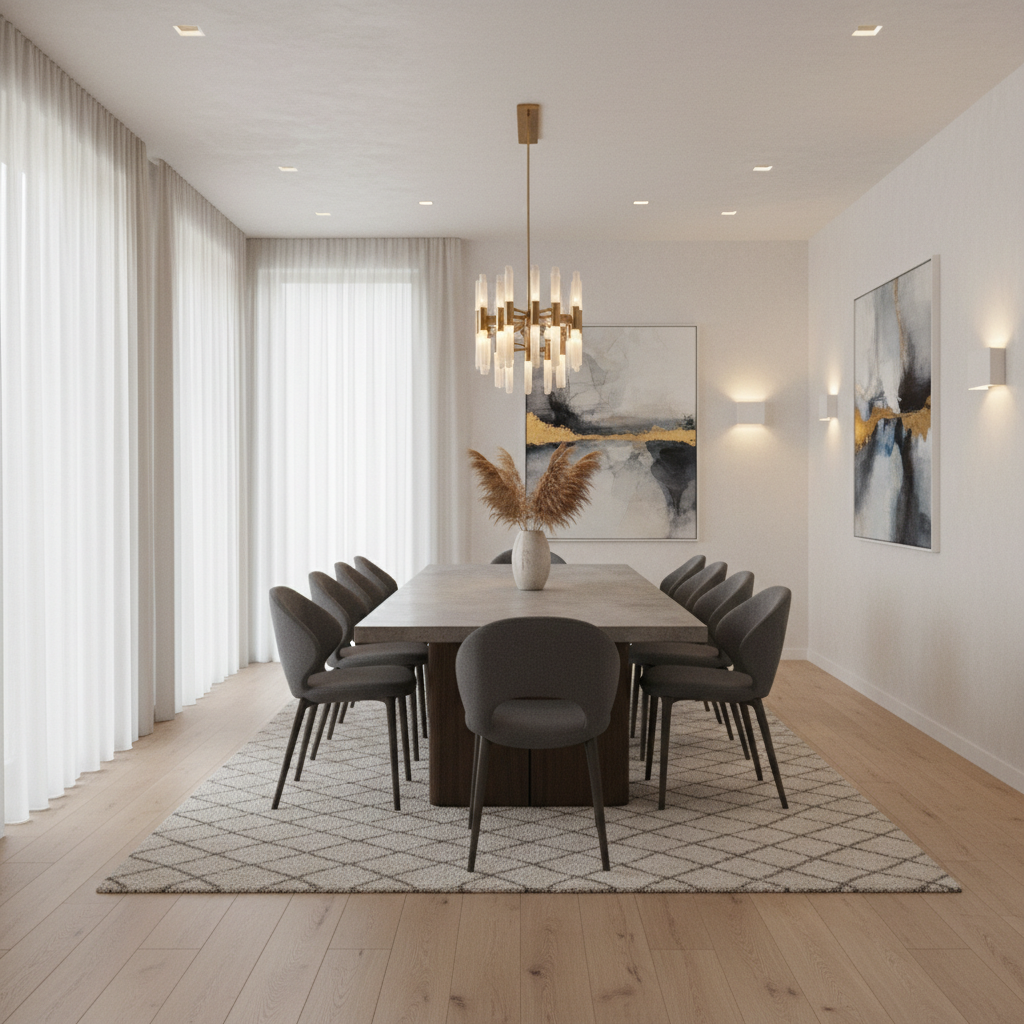
Start with your main light source. That chandelier or pendant over your table needs to be on a dimmer. Non-negotiable. The Lutron Caseta dimmer switches run about $50 and you can install them yourself if you’re comfortable with basic electrical work. Otherwise, any electrician can do it in maybe 20 minutes.
Size matters with overhead fixtures. The rule is roughly your table length plus width in inches equals the fixture diameter. So a 6-foot by 3-foot table needs about a 36-inch wide fixture. IKEA’s pendant lights start around $40 and actually look decent. West Elm has some interesting brass ones for $200-400 if you want something with more personality.
But don’t stop there. You need other light sources. Wall sconces flanking a buffet or artwork add depth without taking up floor space. The swing-arm kind from CB2 are around $150 and let you direct light where you need it. Or go simple with battery-operated picture lights if you’re renting.
Bulb temperature makes a huge difference. Those cool white LED bulbs from the hardware store make everything look like a dentist’s office. You want warm white, around 2700K. Philips makes good ones, maybe $8 for a 4-pack at Target. Your dining space should feel like candlelight, not an operating room.
Candles work too, obviously. Real ones, not the fake flickering LED things. A mix of pillar candles and tea lights creates layers of warm light that make everyone look better. Plus there’s something about actual fire that makes dinner feel more significant.
Natural light counts during daytime meals. If your windows face east, weekend brunches will feel completely different than evening dinners. Sheer curtains from IKEA soften harsh afternoon sun without blocking it completely. Our sophisticated living room guide has some other inspired ideas around layered lighting.
How Do Colors and Textures Affect the Dining Room's Atmosphere?
Color psychology is real, though not as dramatic as design magazines make it sound. Red doesn’t automatically make people hungrier, but it does feel energizing. Deep blues feel calmer but can make food look weird under certain lights. We talk about it extensively in our article about mood-boosting shades.
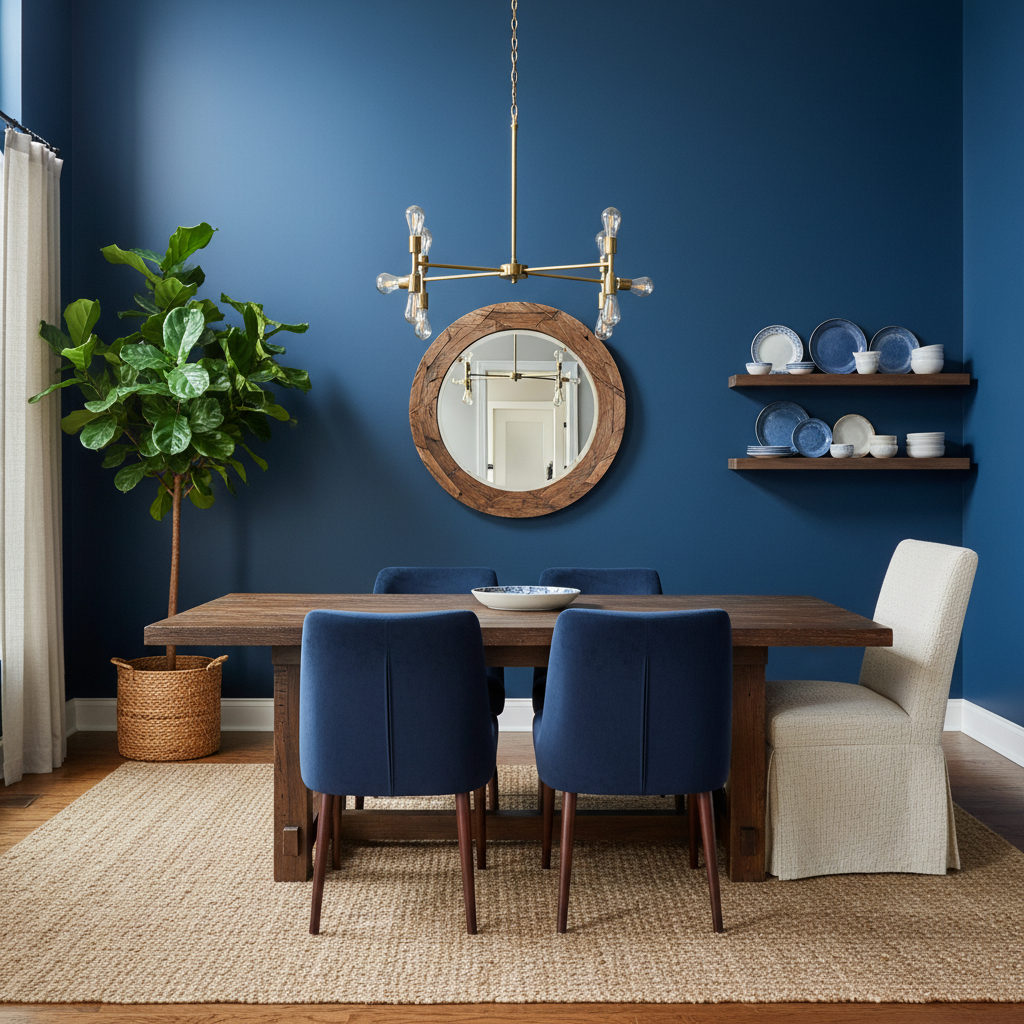
Paint is your cheapest transformation. Benjamin Moore’s Hale Navy is popular for good reason. It’s sophisticated without being too moody. Their White Dove works in almost any dining room and makes other colors pop. A gallon runs $55-65, and you can probably do most dining rooms with one gallon plus a quart for touch-ups.
If you’re renting, removable wallpaper has gotten surprisingly good. Tempaper and Chasing Paper both make versions that actually stay up but come off cleanly. Around $30 per roll, and most dining rooms need 3-4 rolls for an accent wall.
Texture matters more than color sometimes. A jute rug from the Lena Rug Store on Amazon adds warmth underfoot for maybe $170 in an 8×10 size. Linen curtains feel more expensive than cotton but cost about the same at places like H&M Home. Velvet dining chair cushions from Pier 1 instantly make IKEA chairs look custom.
Wood brings everything together. Even if your table isn’t wood, a wooden bowl on the sideboard or floating shelves adds warmth. Live edge pieces are trendy but expensive. Honestly, sometimes a simple cutting board propped against the wall as decor works just as well.
Plants help too, though dining rooms can be tricky for light requirements. Snake plants tolerate low light and look architectural in tall planters. A fiddle leaf fig works if you have good natural light, though they’re drama queens about watering. Even fake plants look decent now if you buy quality ones and dust them occasionally.
The goal is layering textures so the room feels collected over time rather than bought all at once. Smooth glass table, nubby linen placemats, rough ceramic dishes, soft upholstered chairs. Your hands want different things to touch. This thoughtful interior design approach creates visual interest without overwhelming the space.
What Role Does Table Setting Play in Creating a Memorable Dining Experience?
Table setting intimidates people more than it should. You don’t need to memorize which fork goes where for a Tuesday night dinner. But putting in a little effort signals to everyone, including yourself, that this meal matters.
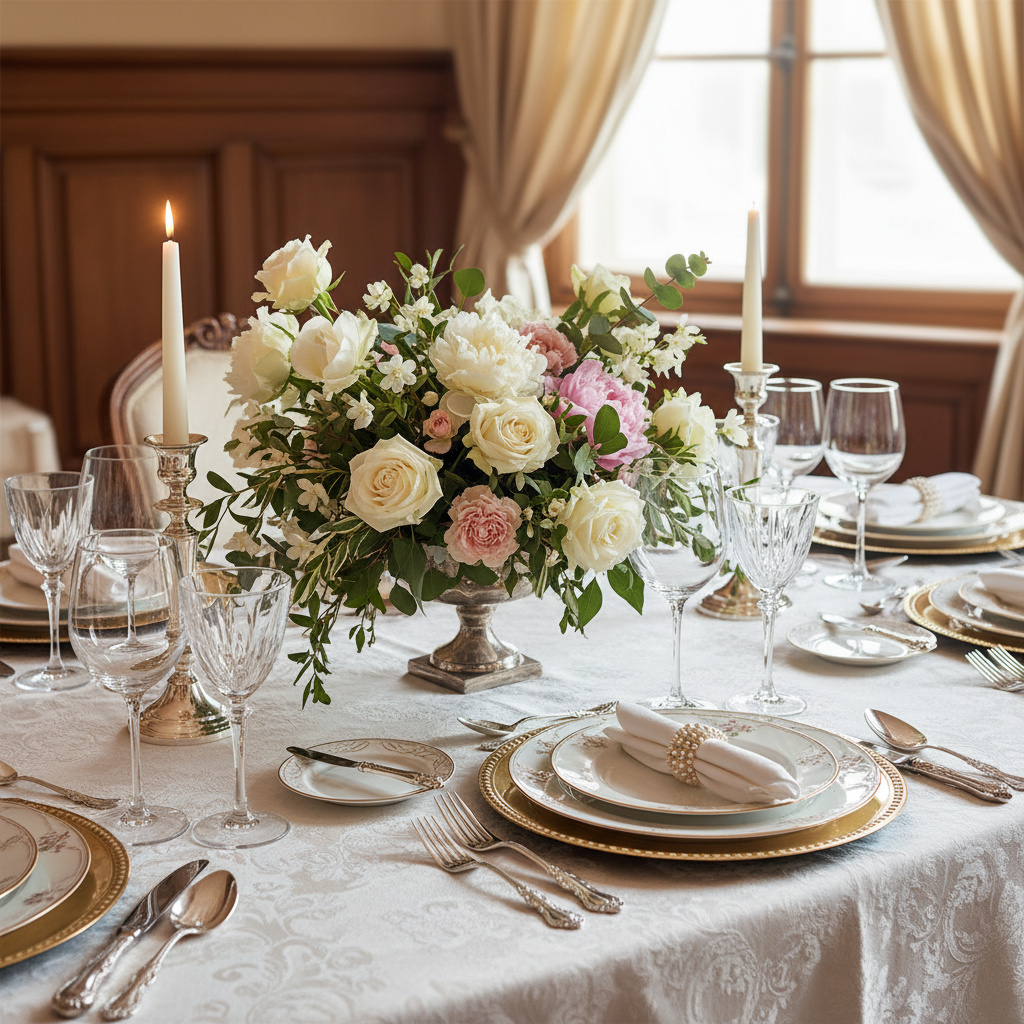
Start with what you put the food on. You don’t need matching china, but you do need plates that aren’t chipped or stained. Target’s Threshold line has simple white plates that look more expensive than they are, around $4 each. Or hit up estate sales for vintage pieces that have character.
When decorating a small dining room on a budget, placemats vs tablecloth depends on your table and lifestyle. If you have a beautiful wood table, placemats let you show it off. Williams Sonoma has woven ones that feel substantial, though they’re pricey at $15 each. Cost Plus World Market usually has similar styles for half that. Tablecloths work better for tables you want to hide or protect. Linen feels best but wrinkles constantly. Cotton blends from places like Crate & Barrel are more practical.
Napkins matter more than you think. Paper napkins say “we’re eating quickly and moving on.” Cloth napkins, even cheap ones, say “we’re going to sit here and enjoy this.” You can find decent linen napkins at HomeGoods for $3-4 each. They don’t need to match your tablecloth or plates perfectly.
Centerpieces should be low enough that people can see each other across the table. Fresh flowers feel special but die quickly. A wooden bowl filled with lemons or a collection of different-sized candles works for everyday. The grocery store usually has decent flower arrangements for $8-12 that last through a dinner party.
Glassware doesn’t need to be crystal, but it should be appropriate for what you’re serving. Mason jars work for casual dinners but feel wrong with wine. BENETI’s basic wine glasses are fine and cheap enough that breaking one isn’t a crisis.
The point isn’t perfection. It’s showing that you put thought into making people comfortable. Even simple touches like folded napkins instead of crumpled ones make a difference. This home styling approach transforms ordinary meals into memorable experiences.
How Can You Personalize Your Dining Room and Make it Unique?
Generic dining rooms feel like hotel restaurants. Nice enough but forgettable. Personal touches turn your dining room into a place people remember and want to come back to.
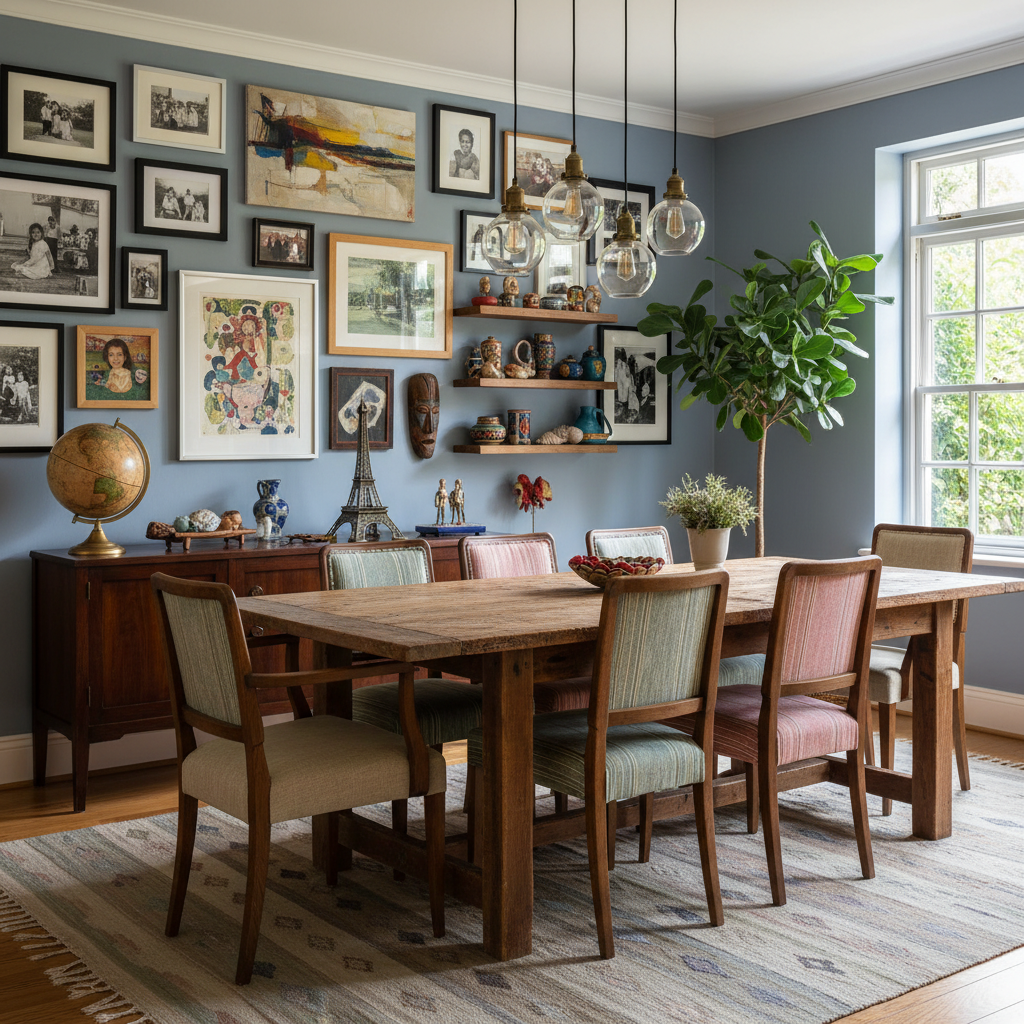
Art makes the biggest impact. Not necessarily expensive art, just things you actually like looking at. Frame your kid’s drawings alongside prints from Etsy. Mix family photos with vintage posters from flea markets. The key is creating a collection that feels intentional, not random.
Gallery walls look complicated but follow simple rules. Cut paper templates the size of each frame and tape them to the wall first. Arrange them until they look balanced, then use the templates as guides for hanging. Start with the largest piece at eye level and work around it. Frame everything in similar colors even if the art is different styles.
Vintage pieces add instant character. An antique sideboard from Facebook Marketplace often costs less than new furniture from West Elm but looks way more interesting. Refinishing isn’t always necessary, sometimes worn wood really does look better than perfect wood. These decorative accents bring personality that mass-produced furniture simply can’t match.
Books work in dining rooms, especially cookbooks on open shelving. They add color and give people something to flip through after dinner. Used bookstores often have beautiful vintage cookbooks for $5-10 each.
Collections displayed thoughtfully feel intentional. Your grandmother’s china on plate rails. Vintage glassware catching light on floating shelves. Even something like colorful ceramic bowls becomes decor when grouped together.
Plants bring life to the space, literally. A large fiddle leaf fig in the corner makes any room feel more expensive. Smaller plants along a windowsill or on a sideboard add freshness without taking up floor space.
Creating a cozy dining room atmosphere means making your dining room feel like yours, not like you bought everything from the same catalog page. Mix expensive pieces with DIY projects, new finds with family heirlooms. People should be able to walk in and know something about who you are. This thoughtful furniture arrangement creates flow and encourages natural conversation.
Frequently Asked Questions
Q: What are the key elements to consider when creating a cozy dining room ambiance?
A: Cozy comes down to warmth and intimacy. Start with lighting you can control. Put dimmers on everything, use candles when possible, avoid harsh overhead lights. Choose warm paint colors or add warmth through textiles like curtains, rugs, and cushions. Keep the scale appropriate; oversized furniture in a small room kills coziness. Add personal touches that spark conversation. And consider sound – hard surfaces echo, soft surfaces absorb. A rug and curtains make a room feel more intimate just by changing the acoustics.
Q: How can I make my small dining room feel larger and more inviting?
A: Light colors help, but don’t go stark white unless that’s your style. Pale gray or cream feels warmer. Mirrors really do make spaces feel bigger, especially large ones that reflect windows. Choose appropriately scaled furniture – a glass table takes up less visual space than solid wood. Keep clutter minimal and use vertical space for storage. Good lighting matters even more in small spaces because shadows make rooms feel cramped. Achieving elegant room aesthetics in tight quarters requires restraint and smart planning.
Q: What are some simple ways to update my dining room ambiance without a complete renovation?
A: Paint makes the biggest impact for the least money. New light fixtures change everything. Even switching from a basic builder chandelier to something with personality transforms the whole room. Update window treatments if yours are dated or too small. Add or change artwork. Refinish your existing table instead of buying new. A large rug can completely change the feel of a space. Fresh flowers or plants bring immediate life to any room. Sometimes just rearranging furniture creates better flow and conversation areas. These budget-friendly dining room makeover tips deliver maximum impact for minimal investment.
