


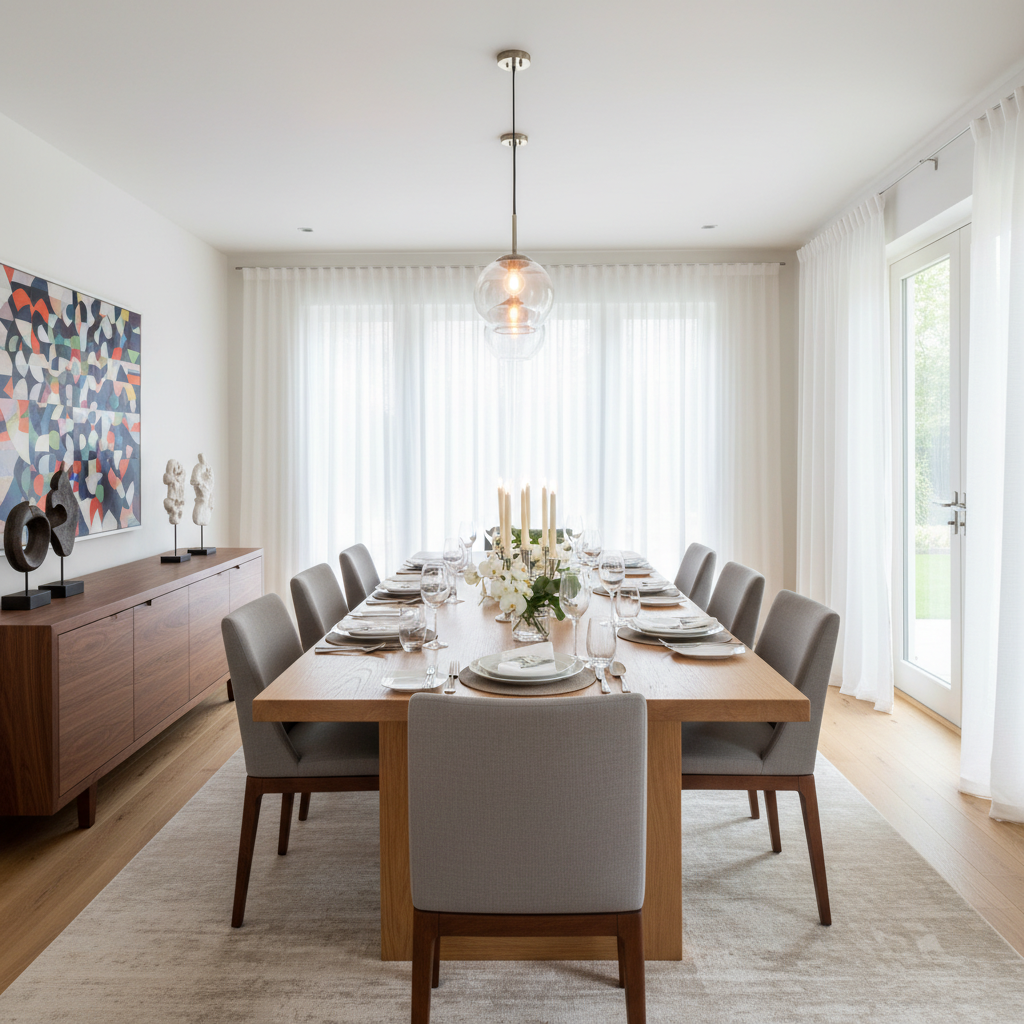
Your dining room space shouldn’t feel like an afterthought.
It’s where you’ll host birthday dinners, holiday meals, and those random Tuesday nights when takeout containers just won’t cut it. Get these modern dining essentials right, and everything else falls into place.
Most people think they need to gut their entire dining space to make it feel modern. Not true. Seven specific pieces can transform how your room functions and looks. Some cost under $50, others require more investment, but each one actually earns its place through thoughtful home design.
Here’s what we’re covering:
- Statement Dining Table: The foundation that everything else builds on
- Comfortable & Stylish Chairs: Because nobody wants to fidget through dinner
- Eye-Catching Lighting Fixture: Sets the mood better than candles alone
- Functional and Elegant Sideboard: Storage that doesn’t look like storage
- Chic Dinnerware & Serveware: Makes even pasta feel fancy
- Textural Table Linens: The difference between sterile and inviting
- Thoughtful Centerpiece or Decor: Finishing touches that tie it together
1. Statement Dining Table: The Heart of the Gathering
Your dining table does most of the heavy lifting in the room. Get this wrong, and expensive chairs and lighting can’t save you. Get it right, and even budget accessories look intentional.
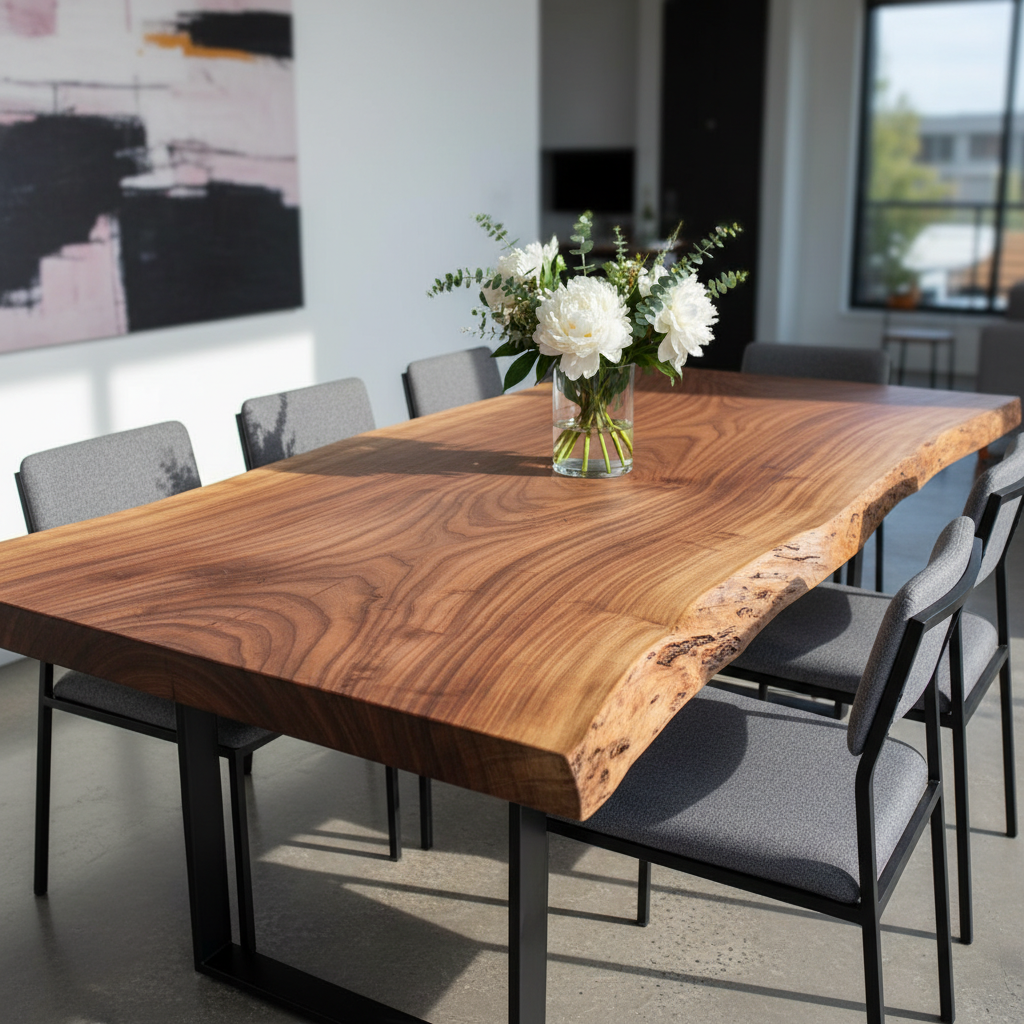
Live-edge wood tables are having a moment right now, and for good reason. West Elm’s version runs around $1,200 for a six-seater, though you can find similar styles at World Market for closer to $800. The natural edge creates visual interest without being trendy in a way that’ll look dated in three years.
Glass-topped tables work if your space feels cramped. They don’t add visual weight, which matters in smaller rooms. CB2’s round glass tables start around $600, and the lack of sharp corners makes them work better for families with kids. Round tables also force better conversation because nobody gets stuck at the awkward middle seats.
Size matters more than most people realize. You need 24 inches of table space per person minimum, 30 inches if you want people to actually enjoy eating. A 72-inch rectangular table seats six comfortably, eight if you’re okay with cozy. Measure your room first. You want 36 inches of clearance on all sides so chairs can pull out without bumping walls or other furniture.
Extendable tables solve the hosting problem without taking up extra space daily. IKEA’s EKEDALEN extends from seats four to six for around $280. Not heirloom quality, but it works. Higher-end options from Room & Board or Design Within Reach run $1,500 to $3,000 but use better mechanisms that won’t wobble after two years of use.
Material choice affects maintenance more than aesthetics. Solid wood shows water rings and scratches but ages well if you don’t mind patina. Glass needs constant cleaning but hides dust better than dark wood. Laminate gets a bad rap but high-quality versions from companies like Caesarstone look remarkably like stone and handle abuse better than natural materials.
2. Essential Modern Dining Chairs: Seating in Style
Uncomfortable dining chairs kill conversation faster than politics. People shift, fidget, and find excuses to leave the table early. You don’t need matching sets anymore. Actually, mixing chairs looks more curated and costs less than buying eight identical pieces.
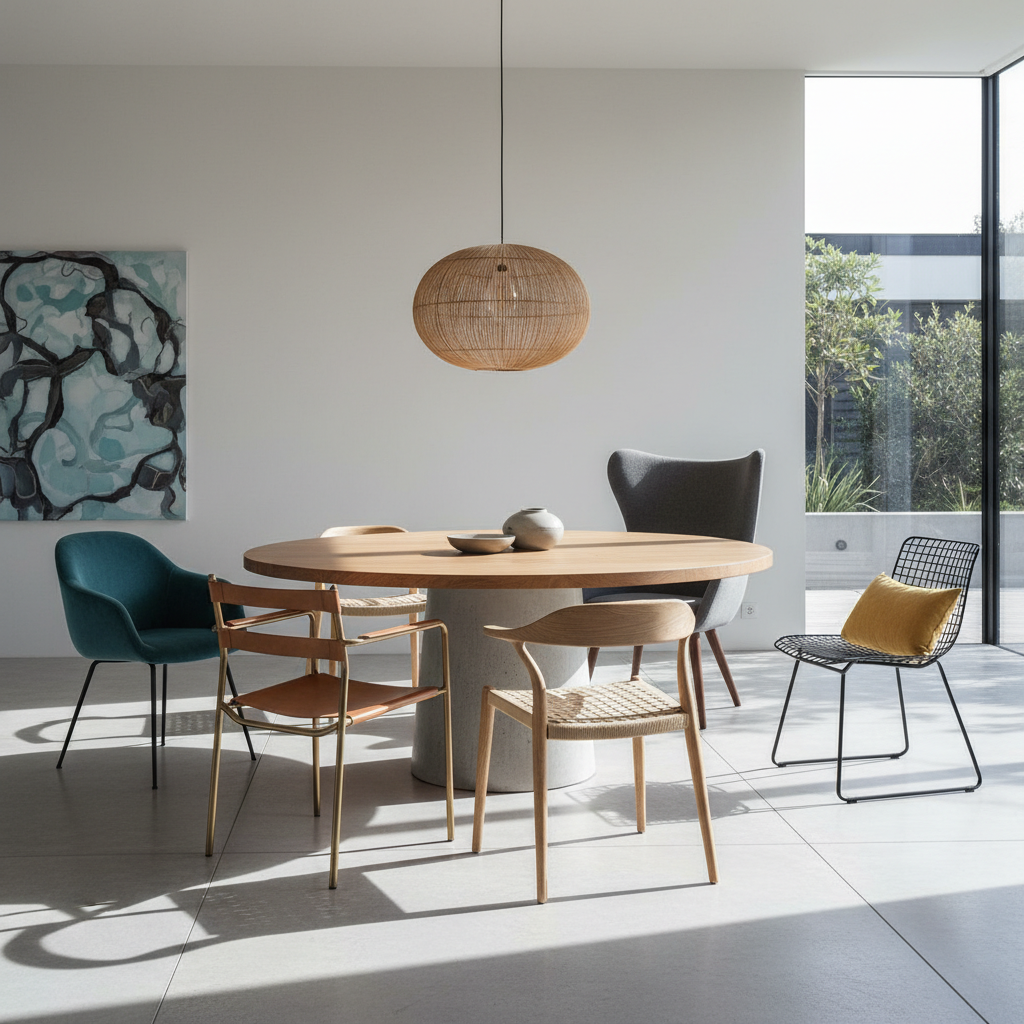
Start with two upholstered chairs for the head and foot of the table. Article’s Sede chairs run about $280 each and have enough padding for long dinners. The curved back actually supports your spine instead of forcing you to sit bolt upright like church pews.
Fill in the sides with something simpler. IKEA’s ODGER chair costs $65 and comes in colors that don’t scream IKEA. The molded plastic works for families because you can actually clean it. Kids spill things. A lot.
Wood chairs add warmth but check the seat depth before buying. Most contemporary furniture designs prioritize looks over comfort, leaving you with seats too shallow for anyone over 5’6″. West Elm’s penelope chair looks great in photos but measures only 16 inches deep. Your thighs will go numb after thirty minutes.
Metal chairs work in industrial spaces but get cold in winter and hot in summer. The Tolix A-chair knockoffs at Target cost around $60 each and stack for storage, but add cushions unless you enjoy the experience of sitting on sheet metal.
Chair height matters as much as table height. Standard dining tables measure 30 inches high, so chair seats should hit 18 inches. Bar-height tables need 24-inch seats. Get this wrong and people either feel like children at the grown-up table or struggle to get their legs underneath.
Consider armchairs for the heads of the table only. Arms add comfort for longer meals but take up more space and can’t tuck under the table completely. They also limit where people can sit if you need to squeeze in extra guests.
3. Eye-Catching Lighting Fixture: Setting the Ambiance
Overhead lighting makes or breaks the mood. Most people get this wrong by choosing fixtures that are either too small, too bright, or positioned incorrectly. Your dining room isn’t an operating theater.
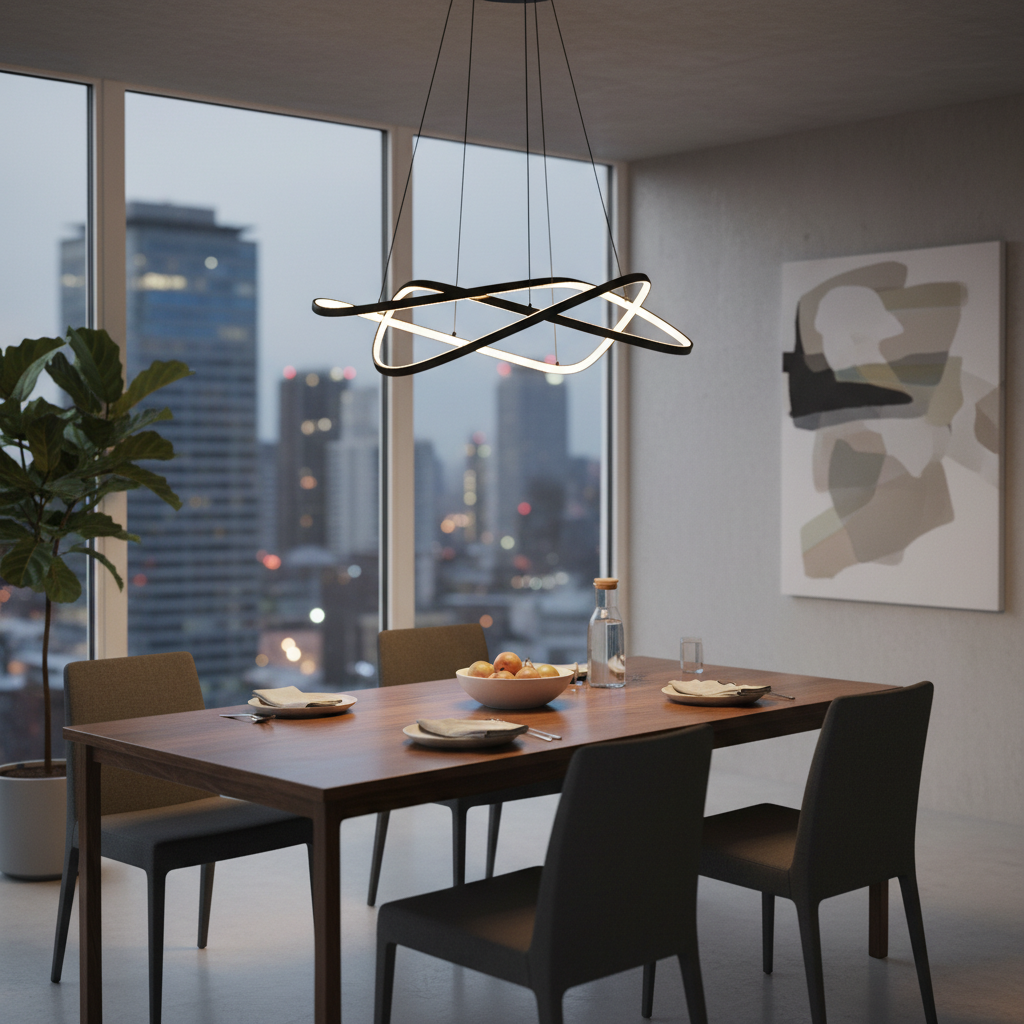
Linear pendants work best over rectangular tables. West Elm’s metallic linear pendant measures 50 inches long and costs around $400. It provides even light distribution without creating dark spots at the table ends. For tables longer than 72 inches, consider two smaller pendants instead of one oversized fixture.
Round tables need centered fixtures. A chandelier or large pendant should measure about half the table’s width. So a 48-inch round table needs roughly a 24-inch fixture. Any smaller looks disproportionate, like a tiny hat on a large head.
Hang fixtures 30 to 36 inches above the table surface. Lower creates intimacy but blocks sightlines across the table. Higher feels disconnected from the dining space. If you have 8-foot ceilings, err on the lower side. Higher ceilings can handle more dramatic proportions.
Dimmable lighting is non-negotiable. Bright light works for family breakfast, but dinner parties need atmosphere. Install dimmer switches even if your fixture doesn’t come with them. Most LED bulbs now work with standard dimmers, though check compatibility before assuming.
Modern chandeliers don’t have to look like crystal wedding cakes. CB2’s Sphere chandelier uses simple glass orbs for around $500. Schoolhouse Electric makes linear chandeliers that feel industrial without being harsh, starting around $800 for smaller versions.
Consider your ceiling height when choosing fixture styles. Low ceilings need flush-mount or semi-flush fixtures to avoid head injuries. Standard 8-foot ceilings work with most pendant styles. Higher ceilings let you use dramatic proportions and longer drops.
Skip trendy finishes that’ll look dated quickly. Brass had its moment five years ago and still works but feels predictable now. Matte black works in most spaces and doesn’t show water spots like chrome or polished metals. Natural materials like wood or rattan add warmth without committing to specific color schemes.
4. Functional and Elegant Sideboard: Storage and Style
Sideboards solve the dining room storage problem without looking like storage. Good ones hide serving pieces, linens, and seasonal dishware while providing surface space for lamps, art, or bar setups.
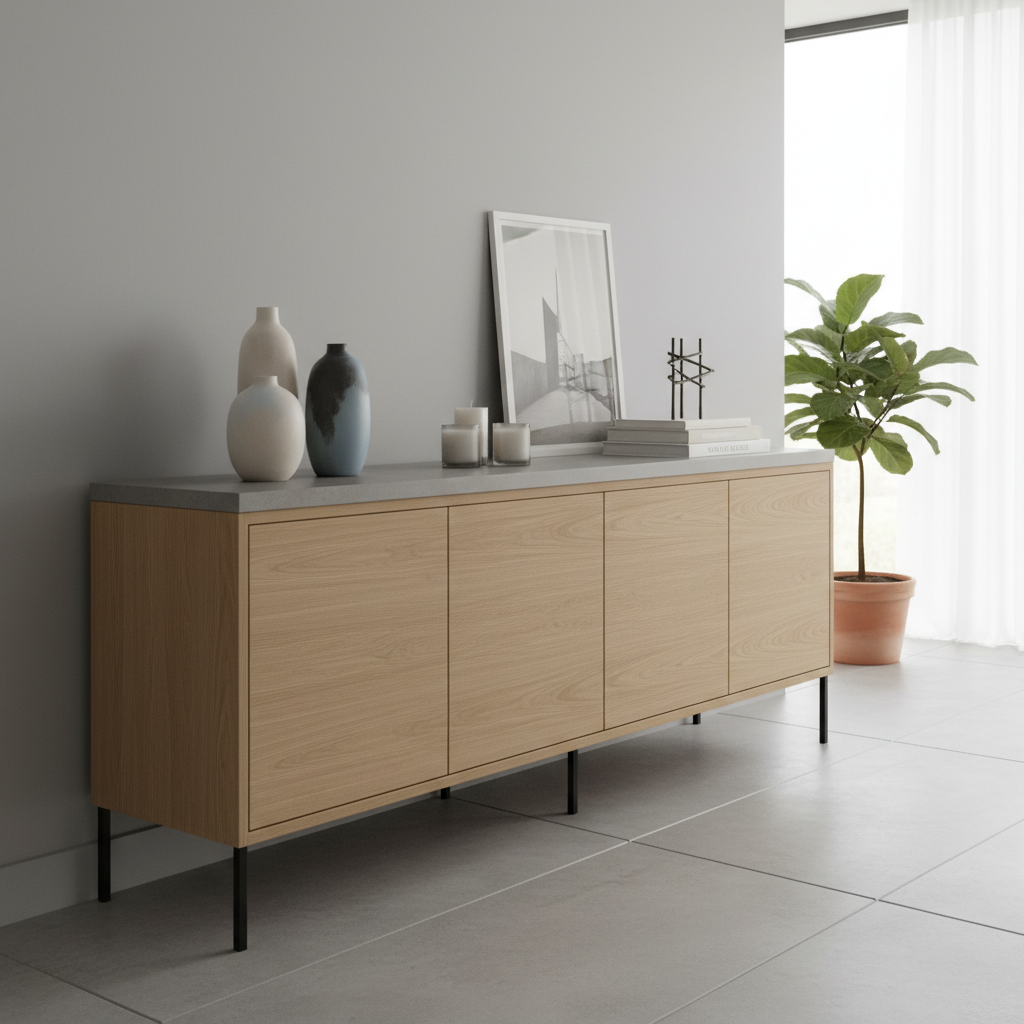
IKEA’s IVAR sideboard costs under $200 and works in most spaces, though the pine wood needs staining or painting to look intentional. The modular design lets you add components later. Not heirloom furniture, but functional for renters or people still figuring out their style.
Mid-range options from West Elm or CB2 run $800 to $1,500 and offer better proportions and materials. Look for pieces with adjustable shelves inside. Fixed shelves work fine until you need to store tall serving platters or odd-shaped items.
Credenzas work similarly but usually sit lower and longer. The term gets used interchangeably with sideboard, but credenzas traditionally have sliding doors instead of hinged ones. Either works functionally for space planning purposes.
Size the piece to your room, not your table. A 60-inch sideboard can work with a 48-inch round table if the room proportions make sense. Match the visual weight, not exact measurements. Heavy, dark pieces need larger rooms to avoid overwhelming the space.
Use the top surface for items you actually enjoy looking at. Three or four pieces work better than collections of small objects that create visual clutter. A table lamp adds ambient lighting for evening meals. Large artwork can lean against the wall above the sideboard instead of hanging, which looks more casual and current.
Wine storage works if you actually drink wine regularly. Built-in wine racks sound appealing but limit flexibility if your habits change. Removable wine inserts or a small wine fridge tucked inside work better long-term.
Consider cord management for modern needs. Phone charging stations, tablet storage, or even small appliances like coffee makers need power access. Some new sideboards include built-in USB ports and cord routing, which sounds gimmicky but proves useful daily.
5. Chic Dinnerware & Serveware: Setting the Perfect Table
Your dinnerware gets used more than any other design element in the room. Invest here because cheap plates look cheap every single day, while expensive lighting only matters when guests visit.
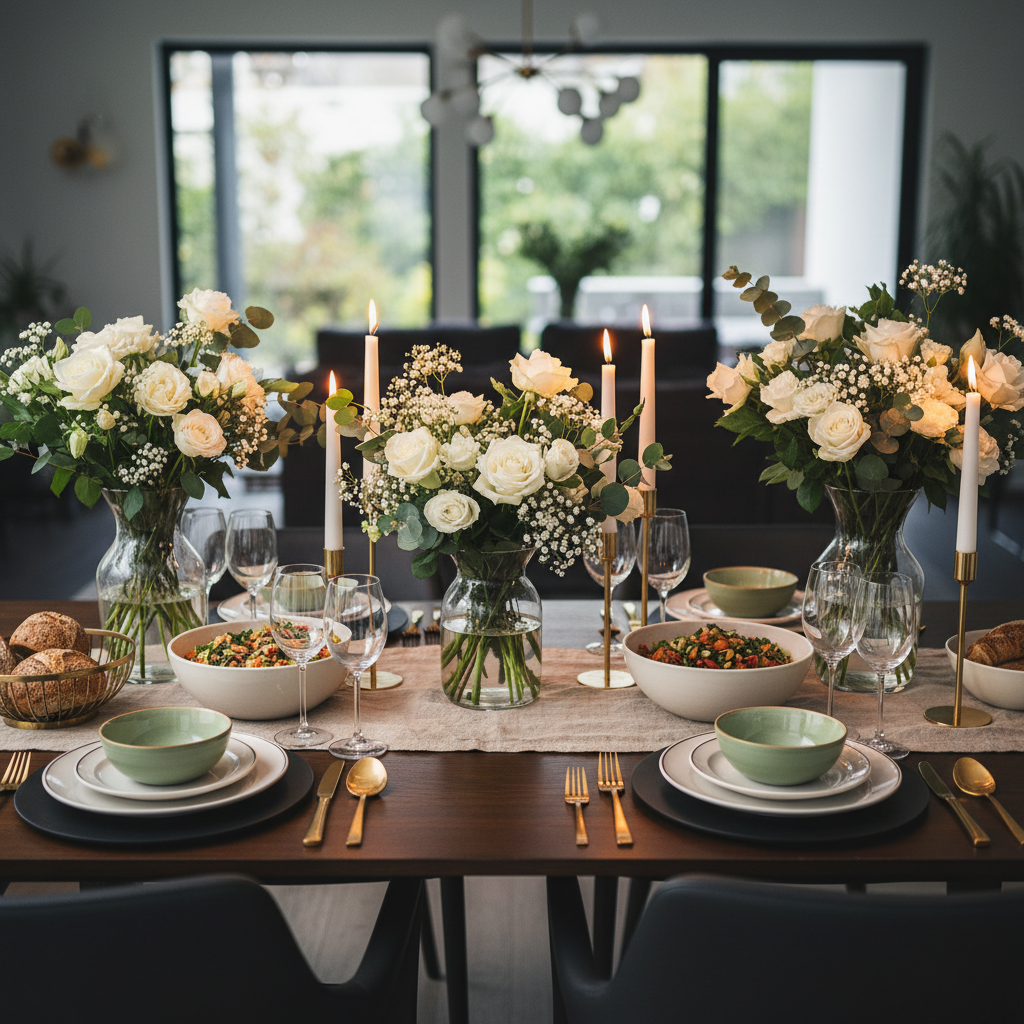
White dishes work with everything and never look dated. Heath Ceramics makes beautiful organic shapes starting around $45 per dinner plate. Expensive, but these last decades with proper care. The irregular edges and matte finish feel handmade without being precious.
For more budget-conscious options, IKEA’s 365+ line offers clean white porcelain for under $5 per plate. The shapes feel modern and the weight suggests quality. Not as special as artisan pottery, but functional and attractive for everyday dining room use.
Colored or patterned dishes add personality but limit flexibility. If you love them enough to see them daily, go for it. Just remember that trendy colors date quickly. The dusty pink dishes that look perfect now might annoy you in two years.
Serving pieces matter more than most people realize. A beautiful platter elevates even simple roasted vegetables. Heath Ceramics platters start around $90, but you can find similar organic shapes at Target for $25. Look for pieces that work multiple ways – a large shallow bowl serves salad for dinner parties but holds fruit for daily use.
Glassware follows the same quality rules as plates. Good glasses feel substantial in your hands and don’t chip after three dishwasher cycles. Schott Zwiesel makes restaurant-quality wine glasses for around $15 each. The crystal is thin enough to feel elegant but strong enough for real life.
Don’t buy complete sets of anything. Most dinner parties need more water glasses than wine glasses, more dinner plates than salad plates. Buy pieces individually based on how you actually eat and entertain.
Silverware should feel balanced in your hands. Lightweight flatware feels cheap regardless of the price. CB2’s Rush flatware runs about $8 per place setting and has enough weight to feel substantial. The matte black finish hides water spots better than stainless steel.
6. Textural Table Linens: Adding Warmth and Personality
Table linens soften all the hard surfaces in dining rooms. Wood tables, metal chairs, and ceramic dishes need something organic to balance the materials. Linen works best because it looks elegant but not fussy.
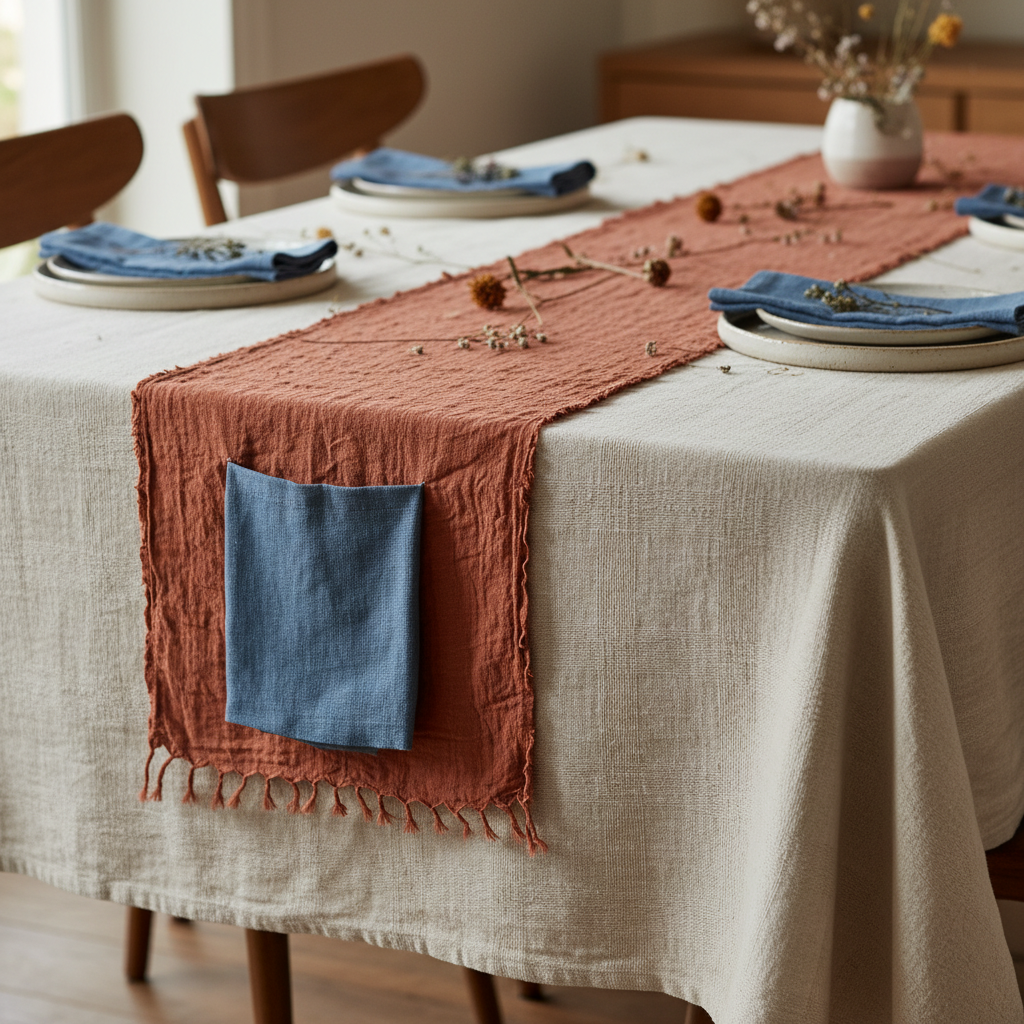
Pure linen wrinkles no matter what you do. Accept this or buy linen blends that maintain the look with easier care. Pottery Barn’s linen tablecloths start around $80 for standard sizes and come pre-washed to minimize shrinkage.
Runners offer an easier starting point than full tablecloths. You can use them alone on beautiful wood tables or layer them over simpler tablecloths. A 90-inch runner works for most standard tables and costs around $40 at West Elm.
Skip the matching napkin sets unless you’re hosting formal dinners. Mix colors and textures for a more collected look. Cloth napkins always look better than paper, and good ones last years with proper care. Look for cotton or linen in colors that hide stains – deep blues, greens, or grays work better than whites or pastels.
Placemats work better than full tablecloths for families with young kids. Easier to wash individual mats than entire table coverings. Natural materials like jute or bamboo add texture without showing every spill, creating visual appeal that serves practical purposes.
Seasonal changes keep the room feeling fresh. Lighter colors and fabrics for summer, richer tones for fall and winter. You don’t need complete seasonal sets – swapping the runner or napkins provides enough change without storage hassles.
Consider your table finish when choosing linens. Beautiful wood deserves to show, so use runners or placemats that leave wood visible. Less attractive surfaces benefit from full coverage tablecloths.
7. Thoughtful Centerpiece or Decor: Completing the Look
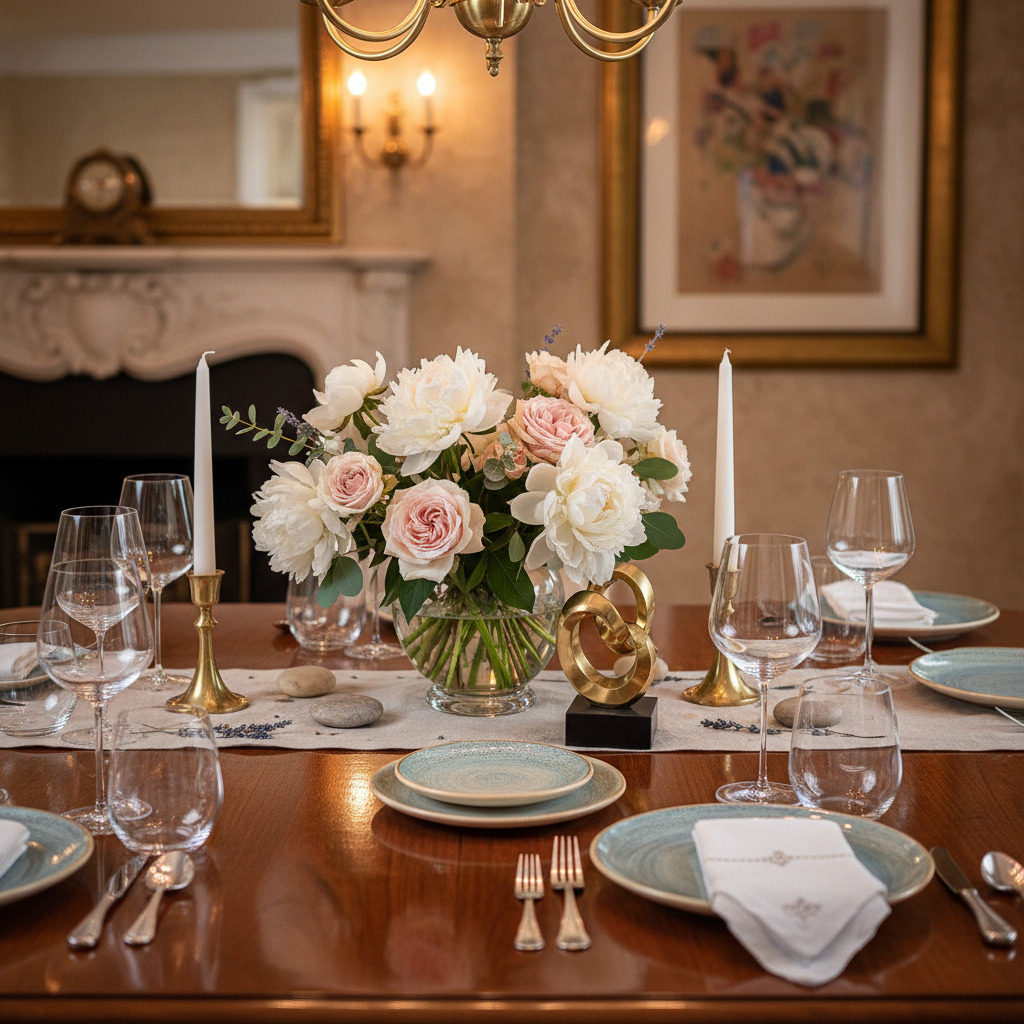
Centerpieces should enhance conversation, not block it. Keep arrangements under 12 inches tall so people can see each other across the table. This rules out most grocery store flower arrangements, which seem designed for reception desks rather than dinner tables.
Low ceramic bowls filled with seasonal fruit work year-round and cost almost nothing. Change the fruit with the seasons – citrus in winter, stone fruits in summer, apples in fall. The bowl becomes the investment piece, fruit provides the color.
Candles add atmosphere but skip the heavily scented ones during meals. Food has its own aromas that shouldn’t compete with vanilla or pine scents. Simple white or cream pillar candles in varying heights create warmth without overwhelming other senses.
Single statement pieces work better than collections of small objects. A beautiful ceramic vase, wooden bowl, or sculptural object anchors the table without creating clutter. Heath Ceramics makes simple cylinder vases starting around $60 that work with any flowers or alone as sculptural elements.
Fresh flowers obviously look beautiful but require weekly replacement and daily maintenance. Dried arrangements last longer and suit certain aesthetics, though they collect dust and can look stale after a few months. High-quality faux arrangements have improved dramatically but still rarely fool anyone up close.
Consider your lifestyle honestly. If you barely have time to water houseplants, elaborate centerpieces won’t happen consistently when styling your dining space for guests. A beautiful wooden bowl or ceramic object requires no maintenance and always looks intentional.
Seasonal swaps keep the room feeling fresh without major expense. Branches with autumn leaves in October, evergreen sprigs in December, flowering branches in spring. Work with what’s available locally rather than forcing expensive out-of-season elements.
