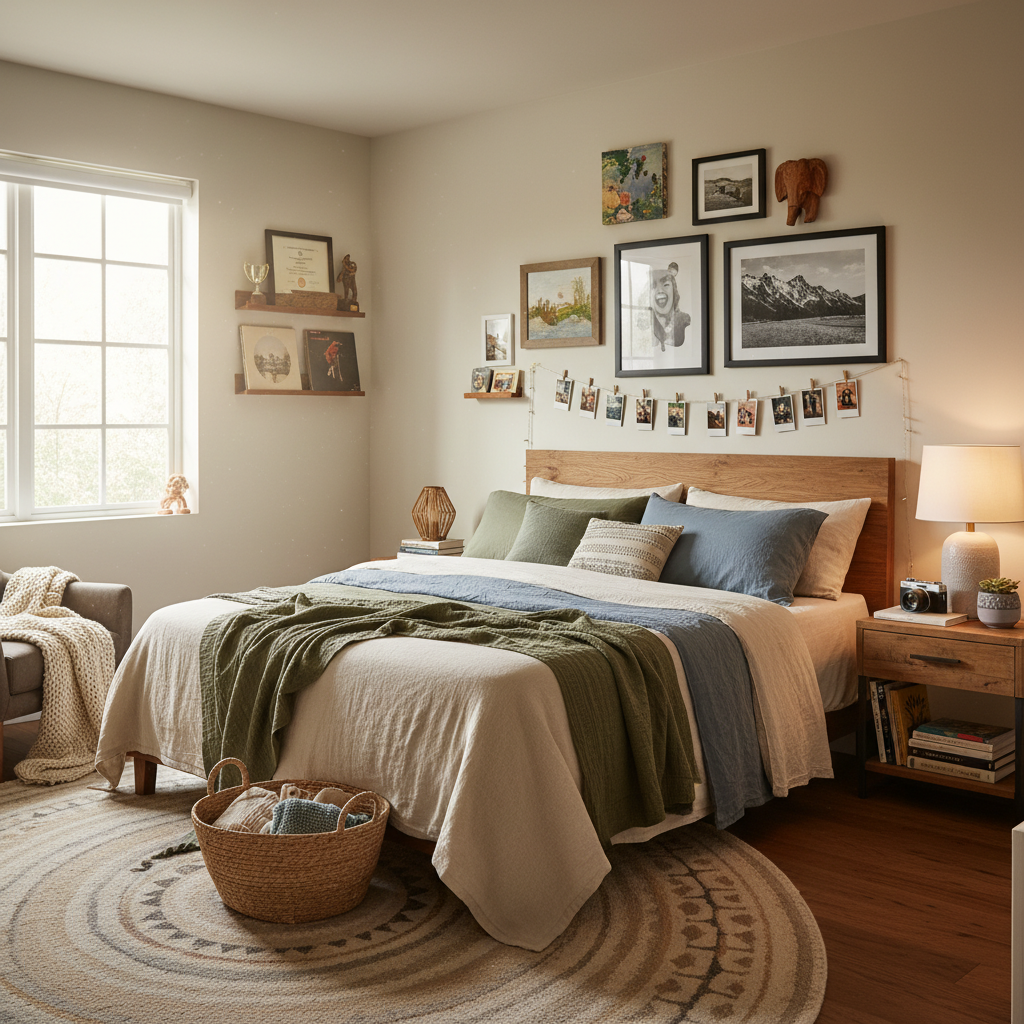


Your bedroom should feel like crawling into a warm hug at the end of a long day. Most bedrooms don’t, though. They’re functional at best, sterile at worst. The good news is that creating a cozy, serene space doesn’t require a complete overhaul or a massive budget.
These five bedroom refresh ideas focus on what actually makes a room feel inviting. We’re talking about texture layering that makes sense, lighting that doesn’t hurt your eyes, and storage solutions that don’t scream “I bought this at Target.” Plus natural elements that won’t die if you forget to water them for three weeks.
Each approach works on its own, but they’re designed to layer together. Start with one that speaks to you and build from there.
1. Layer Textures for Ultimate Comfort
Texture layering sounds complicated, but it’s mostly about mixing things that feel different under your hands. A flat cotton sheet next to a chunky knit throw. Smooth linen against nubby wool. The contrast is what makes it work.
Start with your bed since it takes up most of the visual space. A basic approach: cotton sheets (the Brooklinen Core Set runs about $130 and actually stays soft), add a lightweight quilt from somewhere like Parachute, then a heavier throw blanket. The West Elm Cozy Weave throw costs around $50 and comes in colors that don’t look like every other throw blanket.
Pillows are where you can get creative without spending much. Mix a couple of basic cotton pillowcases with one velvet throw pillow. Target’s Project 62 line has decent velvet pillows for under $15. Add something with texture like a cable-knit or boucle pillow if you want to go further.
The floor matters too, especially if you have hardwood. And texture layering isn’t just beautiful in elevated farmhouse style spaces. A jute rug adds texture and warmth without feeling too precious. IKEA’s LOHALS rug is basically bulletproof and costs under $100 for an 8×10. If jute feels too scratchy, try a wool rug. They’re more expensive but they last forever and get softer over time.
Don’t forget about curtains. Heavy linen drapes make a room feel more finished than those basic cotton panels everyone has. They’re an investment, maybe $200-300 for a decent set, but they change how light enters the room. Plus they help with temperature control, which your heating bill will appreciate.

2. Embrace Soft Lighting and Warm Hues
Overhead lighting is the enemy of cozy. Those ceiling fixtures that came with your apartment blast light from above like an interrogation room. You need light sources at different levels, and they need to be warm, not that harsh blue-white LED that makes everyone look tired.
Start with bedside lighting. Table lamps are obvious, but make sure they’re the right height. The bottom of the shade should be at eye level when you’re sitting in bed. IKEA’s FADO lamp is under $25 and gives off decent warm light, though the cord situation is not elegant. For something nicer, CB2 has good options around $100.
Add a floor lamp in a corner for ambient lighting. The kind you can dim down to almost nothing when you want the room to feel like a cave. Those arched brass floor lamps are everywhere now, but they work because they cast light in a nice pool instead of straight down.
For color temperature, look for bulbs labeled 2700K or “soft white.” The 3000K ones marked “warm white” are too cold. This is one of those details that makes a bigger difference than you’d expect. Your brain processes warm light as relaxing and cool light as alerting. Science backs this up, though most people figure it out just by noticing how different bulbs make them feel.
Wall color wise, avoid pure white unless you’re going for a Scandinavian minimalist thing. Warm grays work well. Benjamin Moore’s Classic Gray or Behr’s Perfect Taupe are safe choices that look different throughout the day as light changes. If you pick the right neutral, that can be key in mood-boosting shades for creating calm atmospheres. They’re complex enough to feel interesting but neutral enough that you won’t get tired of them.
If you’re renting and can’t paint, work with what you have through textiles and accessories. A warm gray throw or cream-colored curtains can shift the feeling of a room even with white walls.

3. Incorporate Natural Elements for a Calming Effect
Plants are the obvious choice here, but let’s be realistic about what actually survives in bedrooms. Snake plants tolerate low light and neglect. Zanzibar Gem (ZZ) plants are basically unkillable. Pothos will grow in a corner with minimal light and let you know when they need water by drooping dramatically.
Skip the fiddle leaf fig unless your bedroom gets tons of natural light and you enjoy plant drama. They’re Instagram-famous for a reason, but that reason isn’t their easy-going nature.
For plant containers, avoid the plastic nursery pots. A simple ceramic planter from CB2 runs about $30 and looks intentional. Or hit up thrift stores for ceramic vessels. Just make sure there’s drainage or you’ll end up with root rot.
Natural wood adds warmth without requiring care and feeding. If you’re buying furniture, look for pieces with visible grain rather than painted finishes. Even something small like a wooden tray for your bedside table or a bamboo organizer for your dresser top makes a difference.
West Elm’s mid-century furniture line has decent wood pieces, though the quality is hit-or-miss. Article and CB2 are worth checking for solid wood options that don’t cost thousands. Vintage stores often have better-made wood pieces for less money, assuming you don’t mind some character marks.
Natural fiber textiles work too. Linen curtains, cotton waffle-weave blankets, wool rugs. They feel different from synthetic materials in a way that’s hard to describe but easy to notice. More substantial, maybe. Like they belong in the room rather than just sitting on top of it.
The goal isn’t to turn your bedroom into a botanical garden or a log cabin. Just adding a few elements that didn’t come from a factory can shift how the space feels. More grounded, less sterile.

4. Declutter and Organize for a Stress-Free Zone
A messy bedroom affects sleep quality. Not in some mystical feng shui way, but practically. Visual clutter makes your brain work harder to process the space, which isn’t what you want when you’re trying to wind down.
Start with surfaces. Bedside tables, dresser tops, that chair where clothes accumulate. Clear everything off and only put back what you actually use regularly. Phone charger, water glass, maybe a book. Everything else finds a home somewhere else or gets donated.
For the clothes chair situation, either embrace it with a proper valet stand or eliminate it entirely. Half-measures don’t work here. If you’re going to have a place for clothes that aren’t dirty enough for the hamper but aren’t clean enough for the closet, make it intentional.
Under-bed storage boxes work well for out-of-season clothes or extra bedding. The clear plastic ones let you see what’s inside, which means you might actually use what you stored. IKEA’s SKUBB boxes are under $10 and fit under most beds.
Closet organization is its own project, but two quick improvements make a big difference. Get matching hangers so everything hangs the same way. Those thin velvet ones save space and prevent clothes from sliding off. Second, organize by category rather than color. All pants together, all shirts together. Your morning routine will thank you.
Nightstand organization comes down to having designated spots for small items. A small tray or shallow bowl for jewelry, charging cables, lip balm. Without containers, these items just scatter across the surface.
The goal isn’t minimalism for its own sake. Just removing the excess so what remains feels intentional rather than accidental.
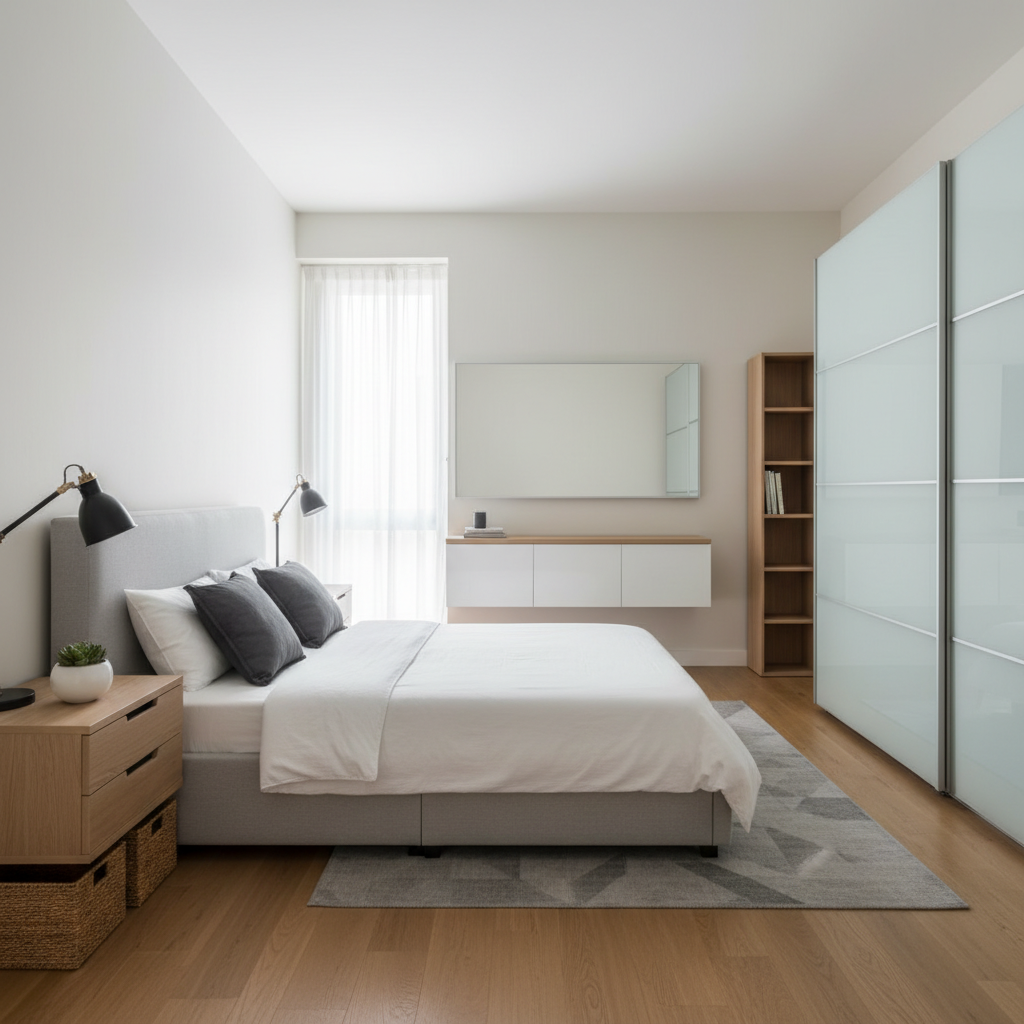
5. Personalize with Meaningful Touches and Artwork
Generic hotel room vibes are cozy’s biggest enemy. The space needs to feel like yours, not like you’re staying somewhere temporarily. This is about choosing a few meaningful items rather than filling every surface with decorative objects.
Art matters more than you might think. Even if you’re not an “art person,” having images on the walls that you actually like changes how a room feels. Minted has affordable prints, usually around $30-50 for an 11×14. Etsy has vintage posters and photographs. Frame them simply and hang them at eye level.
A gallery wall works if you have enough pieces, but three framed prints arranged in a line is easier and often looks cleaner. Measure twice, hang once. Those Command Strip picture hanging strips work for lightweight frames and won’t damage rental walls.
Family photos belong in bedrooms more than in living spaces. This is your private area, so personal images make sense here. Just frame them nicely instead of propping up smartphone prints against lamp bases.
Books add personality and color. A small stack on your nightstand or a simple shelf with books you’ve actually read looks lived-in without being messy. Thrift store hardcovers cost almost nothing and often have more interesting cover designs than new books.
Personal objects should tell a story but not require explanation. A ceramic bowl you bought on vacation, a vintage camera that belonged to your grandfather, a plant cutting from a friend’s garden. Things that have meaning to you specifically.
The balance is between anonymous and overwhelming. You want the room to feel like someone interesting lives there, not like someone who collects everything lives there.