


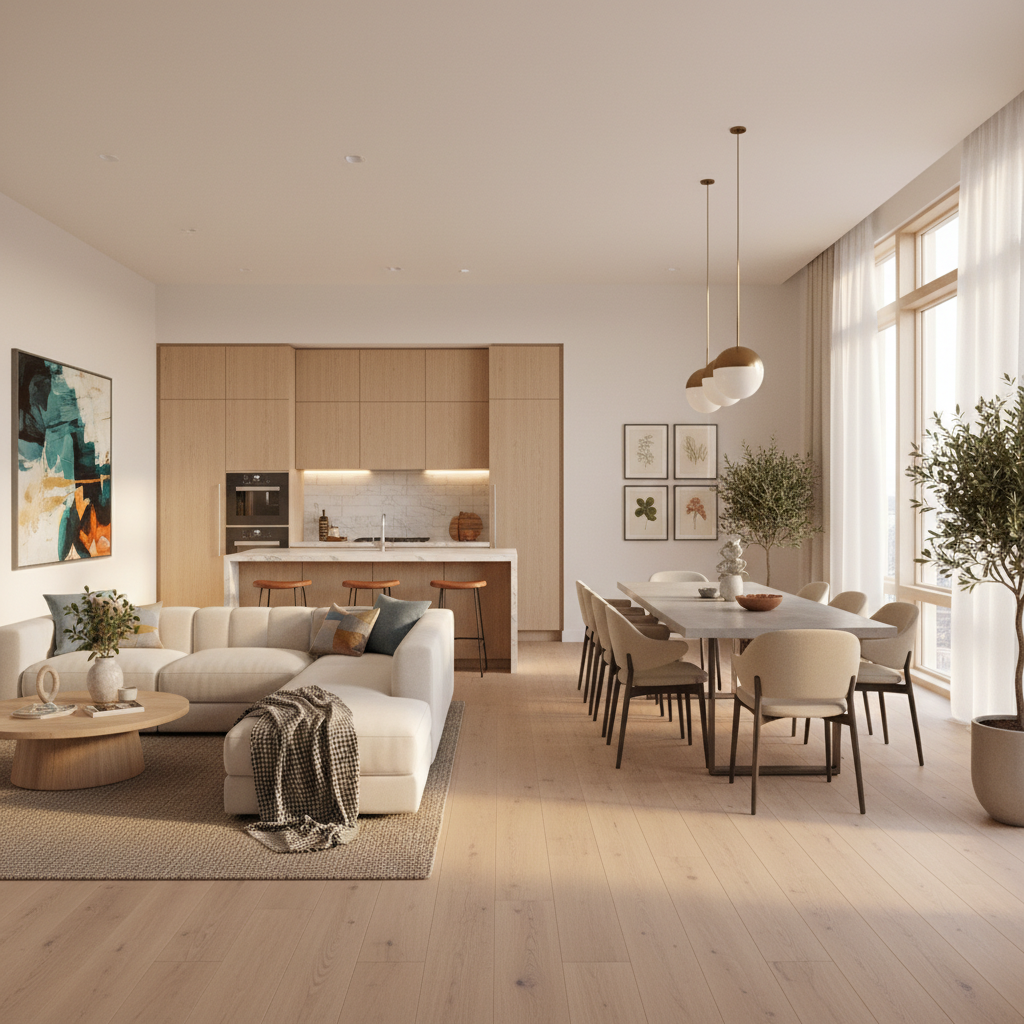
Tired of your open concept space feeling disjointed and lacking that harmonious flow? Creating true cohesion in an open floor plan comes down to strategic design choices that visually connect different zones while maintaining individual functionality. It’s about crafting a space that feels both unified and dynamic.
- Define Zones Purposefully: Learn how to establish clear zones within your open floor plan using rugs, furniture placement, and subtle architectural details.
- Establish a Consistent Color Palette: Discover how to create visual harmony by implementing a cohesive color scheme throughout your open concept space.
- Use Consistent Flooring & Lighting: Explore the impact of flooring and lighting choices on creating a unified and flowing open-concept layout.
- Maintain Visual Sightlines: Learn how to arrange furniture and décor to maintain clear sightlines that promote connectivity and flow.
- Incorporate Shared Design Elements: Add subtle design touches that tie disparate spaces together, like artwork, patterns, or accessories.
How Can Strategic Furniture Placement Define Zones in My Open Concept Space?
Strategic furniture placement is essential for defining zones within an open-concept space, creating a sense of order and purpose. Without clear boundaries, the space can feel chaotic and undefined. Furniture acts as a visual divider, helping to distinguish the living area from the dining area or the kitchen from the family room.
The key is to arrange furniture in a way that naturally directs traffic flow and creates distinct areas for different activities. For example, a large sectional sofa can define the living room space, while a dining table and chairs clearly delineate the dining area.
Consider using area rugs to anchor these zones further, providing a visual cue that marks the boundaries of each space. Rugs can also contribute to the overall aesthetic, adding warmth and texture while reinforcing the design scheme.
Well-defined zones contribute to a greater sense of relaxation and comfort in open-concept homes. Think about creating pathways using furniture to guide people from one space to another, ensuring smooth transitions and preventing the space from feeling cluttered or cramped. Incorporating elements like console tables, bookshelves, or even strategically placed plants can further enhance the definition of zones without completely closing off the space.
Remember, the goal is to create a functional and visually appealing layout that maximizes the potential of your open concept design. Take a deep-dive into exactly how to use furniture effectively throughout a space.

How Does a Cohesive Color Palette Contribute to Open Concept Harmony?
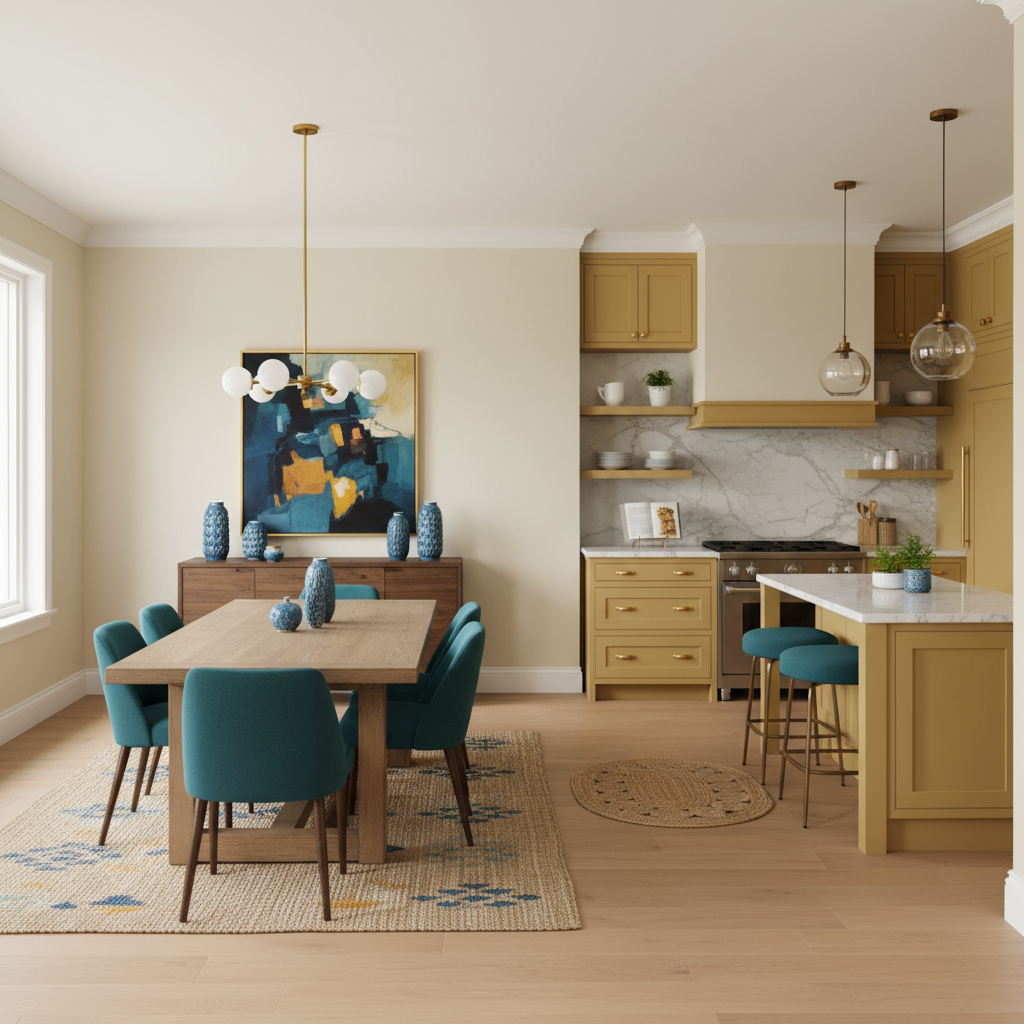
A cohesive color palette is paramount in creating harmony within an open-concept space. It’s the thread that ties everything together, visually linking different areas and creating a sense of unity. When colors are inconsistent or clash, the space can feel disjointed and chaotic, negating the benefits of the open floor plan.
Begin by selecting a core color palette of two to three main colors and a few accent shades. These colors should be used consistently throughout the space, appearing in furniture, wall paint, textiles, and accessories. Neutral colors like whites, grays, and beiges are excellent foundations, as they provide a calming backdrop and allow for pops of color in specific areas. For example, you might choose a light gray for the walls throughout the open space, then use a warm beige for the sofa in the living room, and introduce accent colors like blue and green in the throw pillows and artwork. This creates a harmonious flow while still allowing each zone to have its own distinct character.
The 60-30-10 rule can also be applied: 60% dominant color, 30% secondary color, and 10% accent color. This ratio allows you to maintain balance and add visual interest without overwhelming the space. Don’t be afraid to play with variations of your chosen colors, using lighter and darker shades to create depth and dimension. According to color psychology, certain color combinations can evoke specific moods and feelings, so consider the overall atmosphere you want to create when selecting your palette.
What Role Do Consistent Flooring and Lighting Play in Unifying an Open Concept Design?
Consistent flooring and lighting are pivotal in unifying an open-concept design. Flooring acts as the foundation, literally and visually, providing a continuous surface that ties different zones together. Inconsistencies in flooring can disrupt the flow and create a fragmented feel.
Opting for a single flooring material throughout the open space, such as hardwood, tile, or laminate, can create a sense of seamlessness. If you prefer to use different flooring types in specific areas, ensure that the transitions are smooth and intentional. For example, you might use hardwood in the living and dining areas and tile in the kitchen, but choose tiles that complement the hardwood tones to maintain visual harmony.
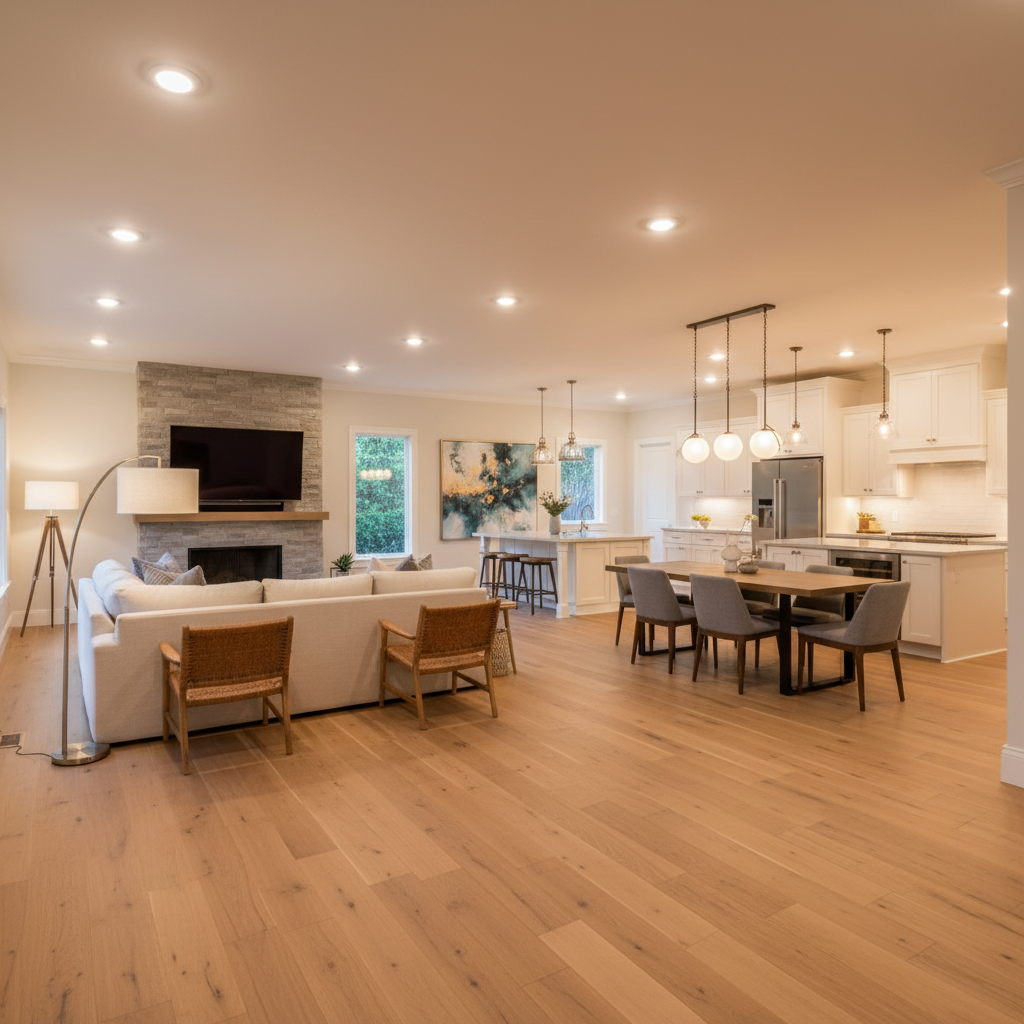
Lighting also plays a crucial role in creating a cohesive ambiance. Using a combination of ambient, task, and accent lighting can help to define zones while ensuring that the overall space is well-lit and inviting. Ambient lighting, such as recessed lights or a statement chandelier, provides overall illumination. Task lighting, like pendant lights over a kitchen island or floor lamps in the living room, offers focused light for specific activities. Accent lighting, such as spotlights highlighting artwork or uplighting to accentuate architectural features, adds visual interest and depth.
Ensure that the lighting fixtures and lampshades complement each other in terms of style and color, reinforcing the overall design scheme. Consistent lighting and flooring are among the top design elements that contribute to a sense of spaciousness and flow in open-concept homes. The key is to create a lighting plan that enhances the functionality of each zone while maintaining a unified and cohesive aesthetic.
How Do Visual Sightlines Impact the Feeling of Flow in an Open Floor Plan?
“Visual sightlines” are the uninterrupted lines of sight that allow you to see from one area of your open floor plan to another. Maintaining clear visual sightlines is crucial for creating a sense of openness, connectivity, and flow. When sightlines are obstructed, the space can feel cramped and disjointed, diminishing the benefits of the open concept design.
Arrange furniture and décor in a way that allows for unobstructed views across the space. Avoid placing tall furniture pieces or bulky accessories in areas that could block the line of sight. Instead, opt for lower profile furniture and strategically placed artwork or plants that add visual interest without creating barriers.
Consider the placement of doorways and windows, as these elements naturally influence the flow of light and movement through the space. Ensure that doorways are clear of obstructions and that windows are positioned to maximize natural light and views.
Mirrors can also be used to enhance visual sightlines, reflecting light and creating the illusion of more space. Place mirrors strategically to reflect views from other areas of the open concept space, further enhancing the sense of connectivity. Homes with clear visual sightlines and ample natural light are typically seen and felt as more spacious and comfortable.
Remember, the goal is to create a layout that encourages interaction and allows you to easily see and communicate with others in different areas of the open concept space. Embrace open shelving, glass partitions or furniture pieces with open framework to further enhance these sightlines.

