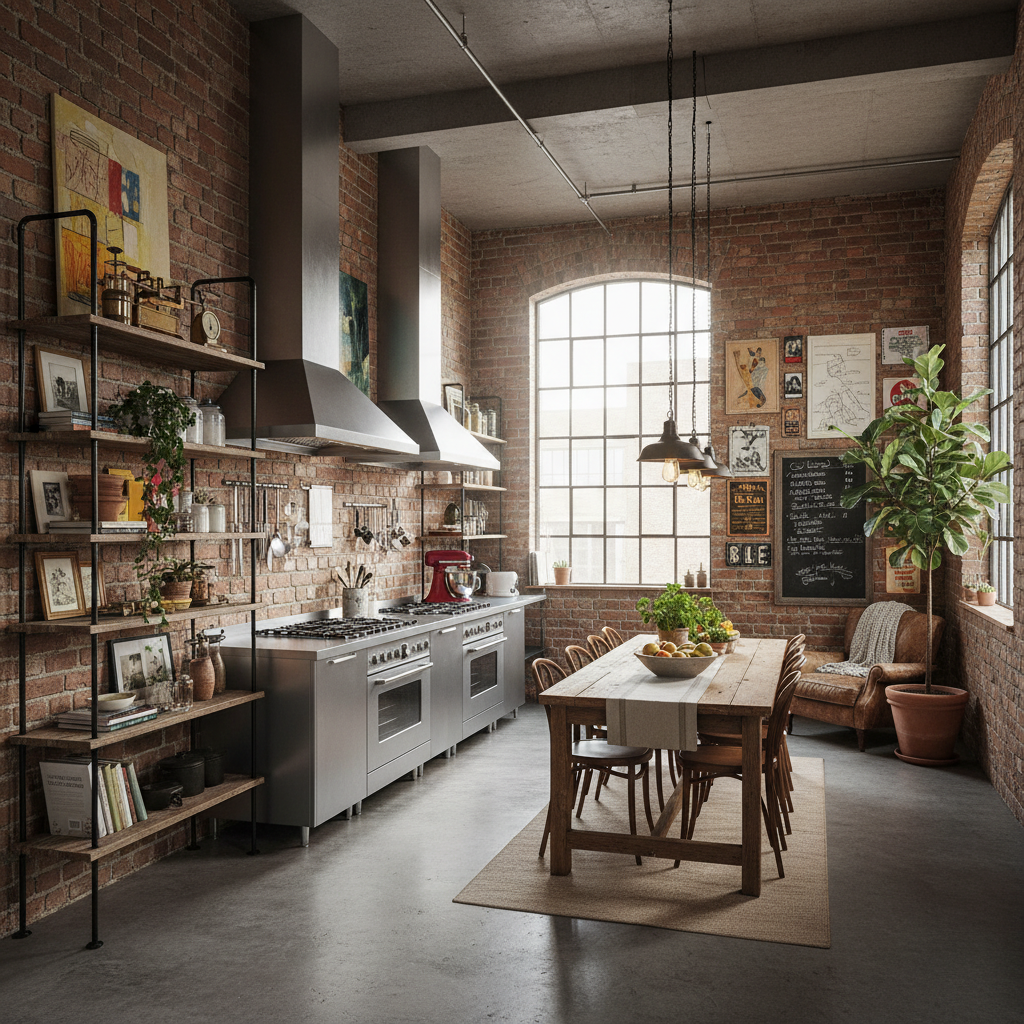

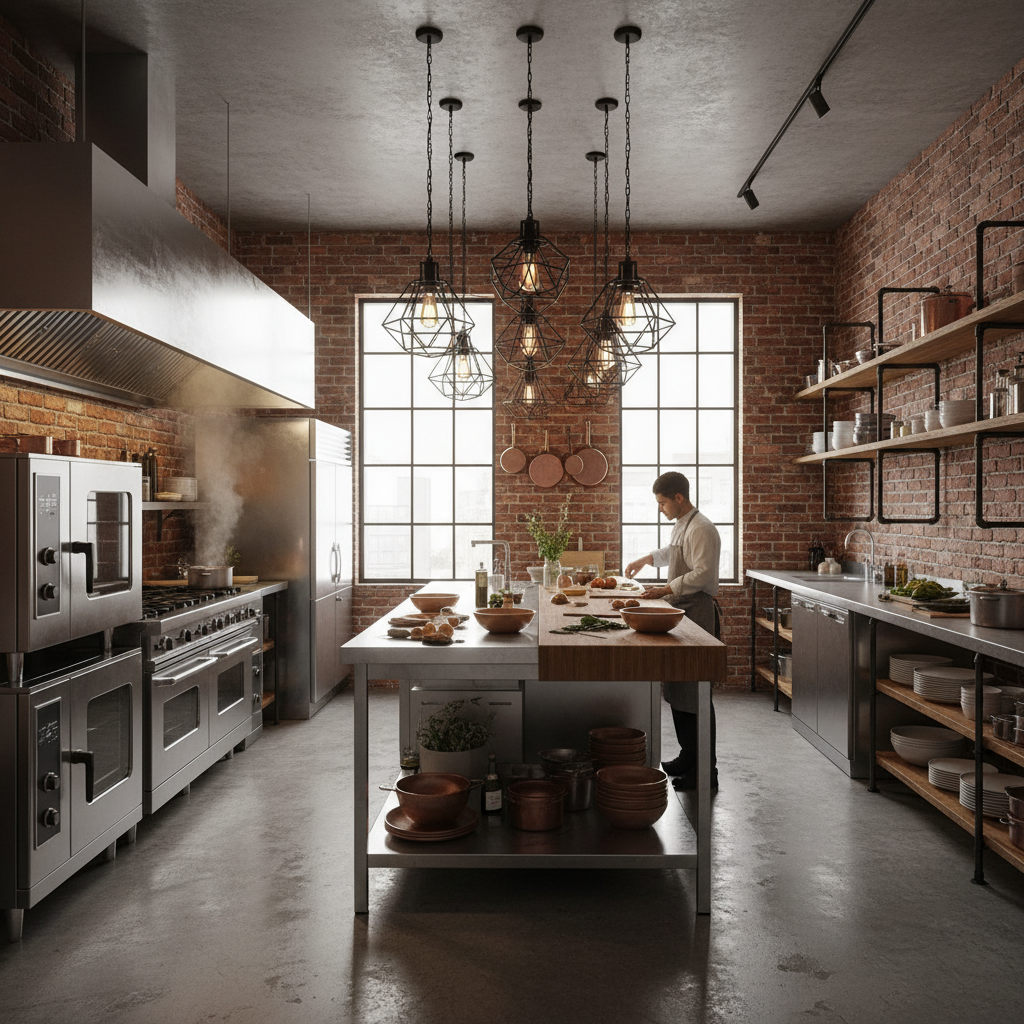
Want a kitchen that’s both functional and makes a bold statement? Embracing the industrial kitchen vibe is the answer.
We love designing a kitchen rich in color. But sometimes, you need to strip things down and go industrial. This style celebrates using raw materials, open spaces, and functional design, creating a space that’s as practical as it is visually striking. Let’s explore how you can achieve this look in your own home.
- Embrace Raw Materials: Think exposed brick, concrete, and metal. These form the foundation of the industrial aesthetic.
- Focus on Functionality: Prioritize practical elements like stainless steel appliances, ample storage, and durable surfaces.
- Incorporate Open Shelving: Display your cookware and dishes for easy access and a visually interesting element.
- Don’t Be Afraid of Contrast: Juxtapose rough textures with sleek finishes for a balanced and sophisticated look.
- Personalize the Space: Add your own touches with artwork, plants, and unique accessories to make the space your own.
What are the Key Elements of an Industrial Kitchen Vibe?
The industrial kitchen vibe is all about showcasing the building’s bones and celebrating functionality. It’s a style that rejects overly polished or ornate design in favor of a more utilitarian and honest approach. The key lies in understanding and incorporating the core elements that define this aesthetic.
The foundation of any industrial kitchen is its use of raw and unrefined materials. Think exposed brick walls, concrete flooring (or concrete-look tile), and metal accents. Stainless steel is a dominant player, finding its way into appliances, countertops, and even shelving. According to a recent survey by the National Kitchen and Bath Association (NKBA), stainless steel appliances remain the most popular choice for kitchen upgrades, with 67% of homeowners opting for them. The beauty of these materials lies in their durability and their ability to add texture and visual interest to the space. Exposed pipes and ductwork, often painted a dark color or left in their natural metallic state, contribute to the raw, unfinished feel that is central to the industrial aesthetic. The trick is to balance these elements to avoid a cold or sterile feeling.
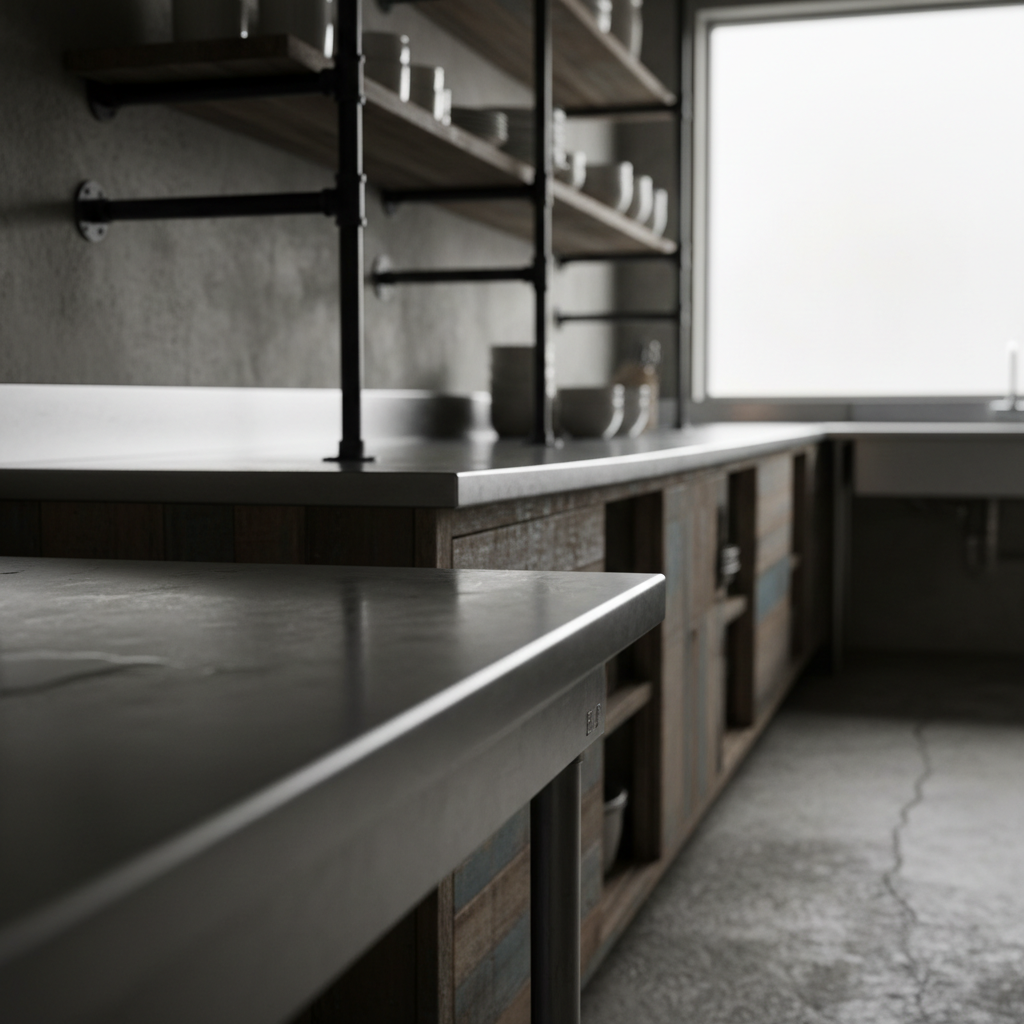
To further enhance the industrial look, consider incorporating open shelving made of metal and wood. This allows you to display your cookware, dishes, and other kitchen essentials, adding a personal touch to the space. The open shelving concept also aligns with the emphasis on functionality, providing easy access to frequently used items.
Lighting plays a crucial role in setting the right mood in an industrial kitchen. Pendant lights with exposed bulbs or metal shades are a popular choice, casting a warm and inviting glow. Track lighting is another great option, allowing you to direct light where it’s needed most. Natural light is also essential, so be sure to maximize the amount of sunlight that enters the space.
How Can I Incorporate Exposed Elements into My Kitchen Design?
Exposing the architectural elements of your kitchen is a hallmark of the industrial style. But how do you do it effectively without creating a messy or unfinished look? The key is to be intentional and strategic in your approach. Not every kitchen will have existing brick walls or exposed pipes, but there are ways to mimic these features and achieve a similar effect.
If you’re fortunate enough to have exposed brick walls in your kitchen, consider highlighting them as a focal point. Clean and seal the brick to protect it from moisture and stains, and then consider painting it a light color to brighten the space or leaving it in its natural red hue for a more rustic look. If you don’t have existing brick, you can create a similar effect by installing brick veneer or using brick-patterned wallpaper.
Exposed pipes and ductwork can also add an industrial touch to your kitchen. If you have exposed pipes, consider painting them a dark color, such as black or charcoal gray, to make them stand out. You can also wrap them in copper or stainless steel for a more polished look. If you don’t have existing exposed pipes, you can create the illusion of them by running decorative pipes along the walls or ceiling.
Another way to incorporate exposed elements is to use reclaimed wood for your cabinets, shelving, or countertops. Reclaimed wood has a rustic and weathered appearance that perfectly complements the industrial aesthetic. You can find reclaimed wood at salvage yards, antique stores, or online retailers. When using reclaimed wood, be sure to seal it properly to protect it from moisture and stains.
Remember that imperfection is part of the charm of the industrial style. Don’t be afraid to embrace the flaws and imperfections in your materials. These imperfections add character and create a unique and authentic look.
What Types of Materials Work Best in an Industrial Kitchen?
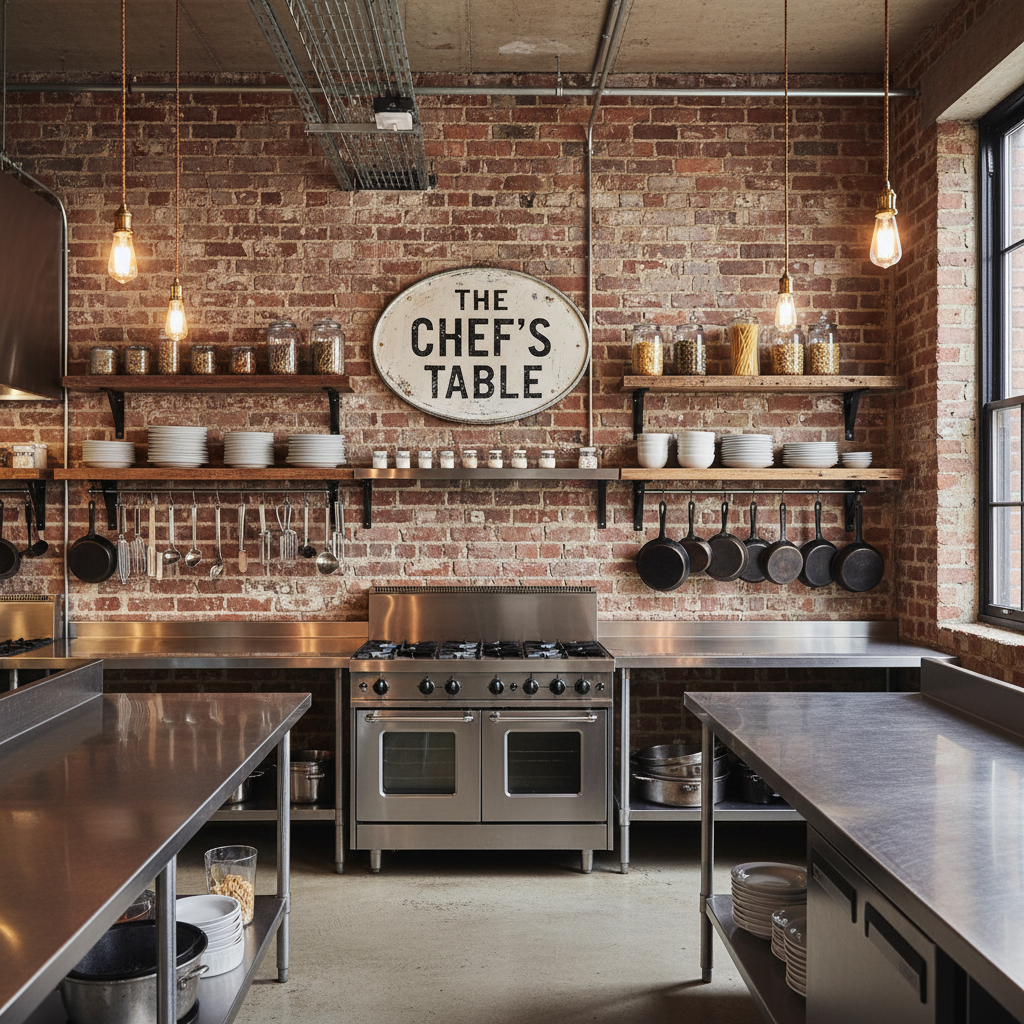
The choice of materials is paramount in achieving a true industrial kitchen vibe. Think rugged, durable, and honest materials that showcase their natural texture and character. While stainless steel and concrete often take center stage, there’s a whole range of options that can contribute to the overall aesthetic.
Stainless steel is undoubtedly a staple of the industrial kitchen. It’s durable, easy to clean, and has a sleek, modern look that complements the raw and unrefined elements of the style. Stainless steel countertops are a popular choice, providing a functional and hygienic surface for food preparation. Stainless steel appliances, such as refrigerators, ovens, and dishwashers, are also essential for creating a cohesive industrial look. In fact, Statista reports that stainless steel is the most commonly used material for large kitchen appliances in the United States, accounting for over 60% of the market share.
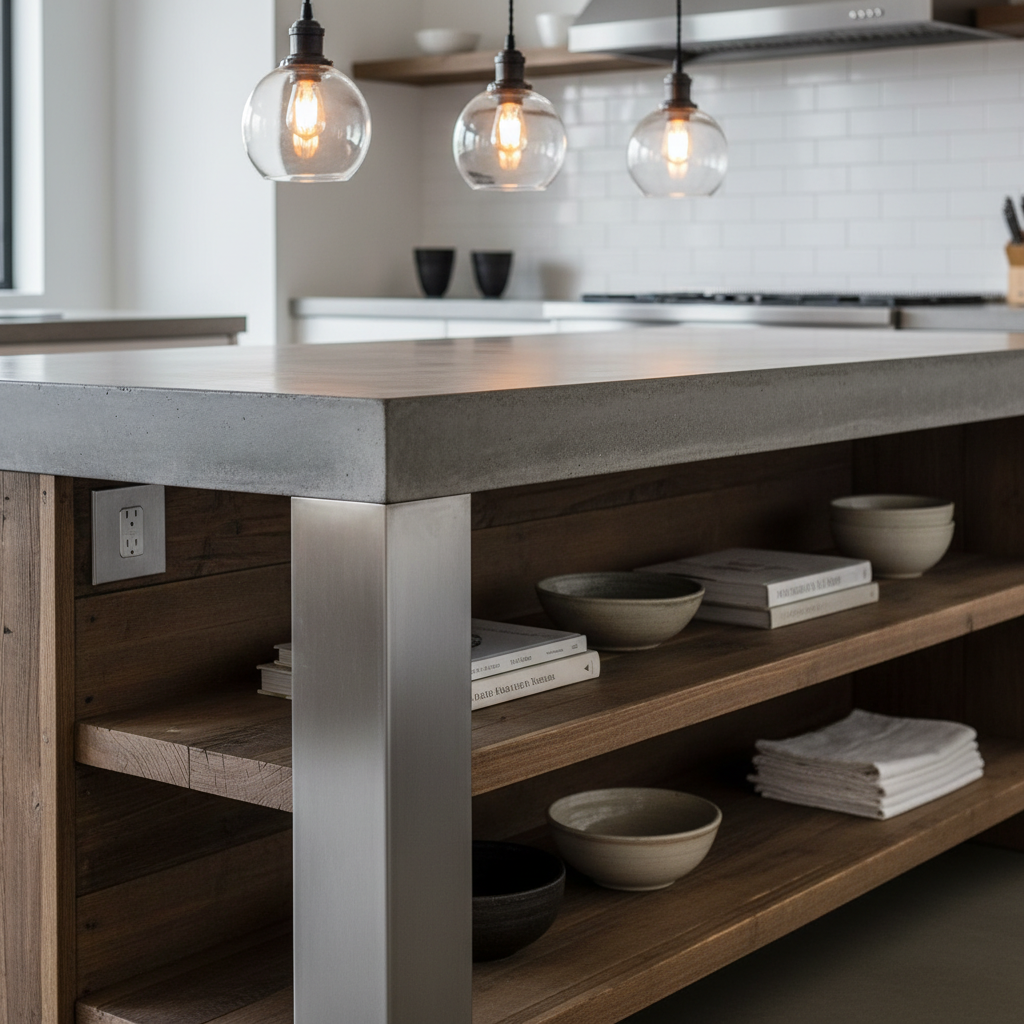
Concrete is another key material in the industrial kitchen. It can be used for flooring, countertops, and even walls, adding a sense of solidity and permanence to the space. Concrete is also incredibly versatile, and can be stained, polished, or stamped to create a variety of different looks. Concrete countertops are particularly popular, offering a durable and heat-resistant surface for cooking and baking.
Wood, particularly reclaimed wood, can also play a significant role in an industrial kitchen. Reclaimed wood adds warmth and character to the space, and its rustic appearance contrasts nicely with the sleekness of stainless steel and the coolness of concrete. Reclaimed wood can be used for cabinets, shelving, countertops, or even as a decorative accent wall.
Metal, in various forms, is another important material to consider. Black iron pipes can be used for shelving supports, light fixtures, or even as decorative accents. Copper is another great option, adding a touch of warmth and sophistication to the space. Metal mesh can be used for cabinet doors or as a decorative element on walls.
How Can I Add Personal Touches to My Industrial Kitchen?
While the industrial kitchen vibe is defined by its raw materials and functional design, it’s important to personalize the space to reflect your own style and personality. After all, the kitchen is the heart of the home, and it should be a place that you enjoy spending time in.
One of the easiest ways to add personal touches to your industrial kitchen is to incorporate artwork and accessories. Hang a large abstract painting on the wall, or display a collection of vintage metal signs. Add some potted plants to bring life and color into the space. Consider using unique and interesting containers for your herbs and spices.
Another way to personalize your industrial kitchen is to choose furniture and lighting that reflects your own style. Opt for bar stools with metal frames and leather seats, or pendant lights with unique and interesting shades. Choose a dining table made of reclaimed wood or metal to complement the overall aesthetic.
Don’t be afraid to mix and match different styles and eras to create a unique and eclectic look. Combine vintage finds with modern pieces, or incorporate elements from other design styles, such as farmhouse or mid-century modern. The key is to create a space that feels authentic and reflects your own personal taste.
Another great way to personalize your industrial kitchen is to incorporate your own hobbies and interests. If you’re a passionate cook, display your favorite cookbooks on open shelving. If you’re a wine enthusiast, create a wine rack out of reclaimed wood or metal pipes. If you’re a coffee lover, set up a coffee bar with all of your favorite brewing equipment.
Remember that the goal is to create a space that feels comfortable, inviting, and reflects your unique personality. Don’t be afraid to experiment and have fun with it. For more kitchen layout inspiration, check out our guide to efficient kitchen layouts.